
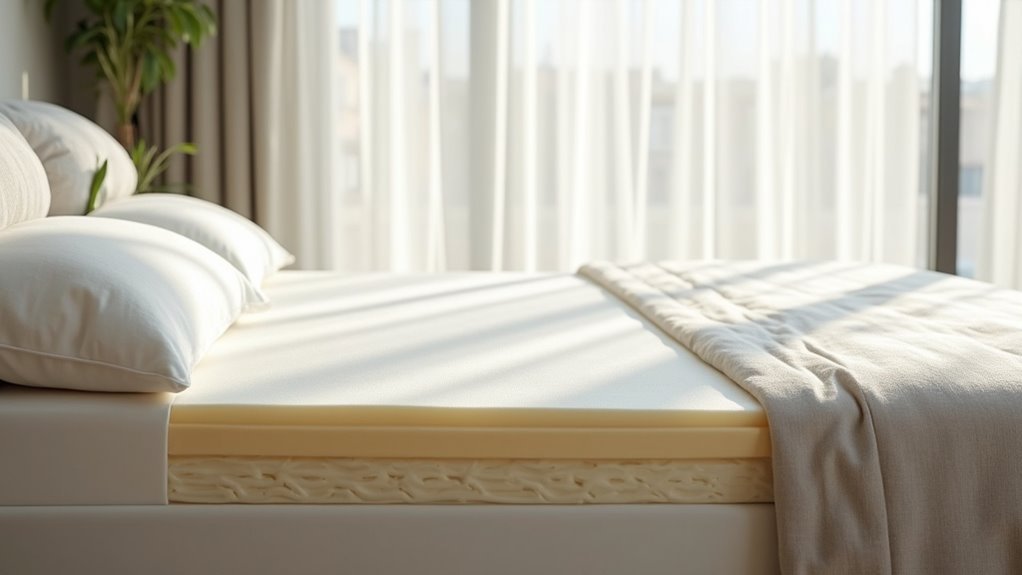

A memory foam mattress is a type of foam bed that softens with body heat and pressure to contour to the sleeper. It relieves pressure on shoulders and hips while supporting spinal alignment. The foam’s density and firmness determine how much sink and support occur. Multiple foam layers and cooling features control temperature and responsiveness. Many sleepers find reduced partner motion transfer and tailored comfort from this design.
What Is a Memory Foam Mattress?
This foam comes from viscoelastic chemistry, which gives it both softness and slow recovery. It also has NASA heritage, since engineers initially developed it in the 1960s for comfort and safety under pressure.
Today, you’ll find it in beds that support your shoulders, hips, and back with gentle care. Because it molds to you, the surface can help you feel settled, not lost in the crowd of too-firm bedding.
Should you desire a mattress that feels made for you, this one often fits that need well.
How Memory Foam Works
As soon as you lie down on memory foam, the mattress starts to respond to your body’s weight and warmth right away. You feel the top layer soften through thermal sensitivity, so it shapes itself to your shoulders, hips, and back. This close fit comes from tiny foam cells opening and shifting, while cellular collapse lets the material sink where you press most.
| Pressure point | Foam response | What you feel |
|---|---|---|
| Shoulders | Sinks gently | Less pinching |
| Hips | Molds deeper | Even support |
| Back | Spreads load | A steadier feel |
Then, once you move, the foam slowly rises again. That delayed recovery gives you that familiar slow, cozy hug that many sleepers look for whenever they want a bed that feels like it understands them.
Benefits of a Memory Foam Mattress
Memory foam mattresses can make a big difference in how you sleep, because they don’t just sit under you, they work with your body. You get support that feels personal, which can help you feel settled and less restless at night.
The foam molds to your shape, so it eases pressure on your shoulders, hips, and back. That can support pain management, especially should you wake up stiff. It also improves sleep ergonomics through helping your spine stay in a more natural line.
Because the mattress absorbs movement, you and your partner can rest with fewer interruptions. So, in case you want a bed that feels comforting and helps you feel like you belong in your own space, memory foam can make bedtime feel easier.
Memory Foam Mattress Drawbacks
Still, memory foam mattresses aren’t perfect, and it’s fair to know where they can fall short before you buy one.
You could notice a warm feel, because the foam holds body heat as it hugs you closely. Some sleepers also dislike the slow response, since changing positions can feel a little sticky.
Another common issue is off gassing concerns whenever a new mattress initially comes out of the box. That smell usually fades, but it can bother sensitive noses.
Memory foam can also feel too soft if you need a firmer, more lifted surface. And because it’s synthetic, you may seek eco alternatives in case lower-impact materials matter to you.
Being aware of these tradeoffs helps you choose with confidence and feel good about your bed.
Memory Foam vs. Innerspring Mattresses
Upon comparing memory foam and innerspring mattresses, the biggest difference usually comes down to how they feel under your body and how they handle movement at night.
You’ll notice memory foam hugs your shape, easing pressure on your shoulders and hips, while innerspring beds feel firmer and more lifted.
Should you share a bed, memory foam usually quiets motion so you’re less likely to feel every toss and turn.
Innerspring mattresses often give more bounce perception, which can feel lively when you prefer a classic bed feel.
They also tend to offer stronger edge support, so you might sit or sleep near the side with more confidence.
Choose the feel that helps you rest with your people, not against them.
Memory Foam vs. Hybrid Mattresses
Although both options can feel soft and supportive, hybrid mattresses add a layer of springs that changes the whole sleep experience.
You might like memory foam should you want deeper contouring, more motion control, and a cozy feel that hugs your body. It often helps you relax whenever you share a bed, since movement stays on one side.
A hybrid can suit you better ought you want more bounce, stronger edge support, and easier movement whenever you get in or out. It can also feel cooler, which matters should temperature sensitivity makes warm nights harder.
Still, memory foam can feel more personal and calming, like your mattress gets you. So, assuming you want that snug, tucked-in comfort, you’ll likely feel at home with it.
Memory Foam Mattress Layers and Types
Once you look at a memory foam mattress, you’ll usually find more than one layer working together.
The top comfort layer shapes itself to your body, while the firmer support layers help keep you stable and supported.
After you know the main memory foam types, it gets much easier to choose the feel that fits you best.
Memory Foam Layers
Build the comfort layer initially, because that’s where a memory foam mattress starts to feel like yours. You sink in, and the top foam eases pressure on your shoulders and hips. Below that, a support layer keeps you steady, so you don’t feel stuck. Some beds add a thin intermediary layer for smoother balance.
| Layer | Job | Feel |
|---|---|---|
| Comfort | Cushions you | Soft |
| Transition | Bridges support | Medium |
| Base | Holds shape | Firm |
| Cover | Adds finish | Clean |
When you choose recycled memory foam, you might also get scent elimination that helps the bed feel fresher. Each layer works together, and that teamwork could make you feel held, not crowded, while you rest.
Memory Foam Types
Memory foam comes in a few different types, and each one changes how the mattress feels under you. You’ll usually meet standard, gel, plant-based, and high-density foam. Standard foam hugs you closely, while gel foam feels cooler and calmer on warm nights. Plant-based foam can reduce off gassing concerns, which helps should you want a fresher start. High-density foam gives you steadier support and lasts longer, so you can feel like you belong on a bed that truly fits you.
- Standard foam for deep, cozy sink-in comfort
- Gel foam for less heat and more ease
- Plant-based foam for a cleaner initial-night feel
- High-density foam for travel mattresses and everyday support
Because each type responds a little differently, you may match your sleep style and feel confident in your choice.
How Firm Should Memory Foam Be?
How firm your memory foam feels should match how you sleep, because side sleepers often need a softer surface while back and stomach sleepers usually need more support.
Your body weight matters too, since a mattress that feels perfect for one person can feel too soft or too hard for another.
In the end, you want a level of firmness that supports you well and still feels comfortable enough to let you relax.
Firmness and Sleep Position
As you’re choosing a memory foam mattress, firmness matters just as much as foam quality, because the right feel can change how well your body rests through the night.
Should you sleep on your side, a softer bed can help your shoulders and hips sink in and feel cared for.
Back sleepers often feel better on a medium feel that keeps the spine steady.
Stomach sleepers usually need a firmer surface so their middle doesn’t dip too far.
- You can feel at home whenever pressure fades.
- You can share the bed without more tossing.
- A sleep trial helps you evaluate comfort with less worry.
- Good edge support can make the whole mattress feel dependable.
Body Weight and Support
Should you carry more body weight, the right memory foam firmness matters even more, because your mattress needs to cradle you without letting you sink too deeply.
Whenever you lie down, better weight distribution helps keep your body level and eases pressure on your shoulders, hips, and lower back.
A medium-firm to firm feel often gives you the support mapping you need, so heavier areas don’t drop out of line.
That support also helps the foam respond with you, not against you.
In case the bed feels too soft, you might feel trapped and restless.
In the event it feels too hard, you can lose contouring where you need it most.
You deserve a mattress that holds you steady and feels like it belongs under you.
Personal Comfort Preferences
Your body weight matters, but so does the way you want a bed to feel as you climb in at night. Should you love a hug-like cradle, choose softer foam. Should you want more lift, go medium-firm or firm.
- Softer foam can feel cozy and calming.
- Medium-firm foam often fits a balanced sleep preference.
- Firmer foam can help you feel steady and supported.
- Suppose you have temperature sensitivity, pick foam with cooling layers.
You’re not choosing alone. Many sleepers want that “this is my spot” feeling, and the right firmness can give it.
Try to match comfort with support, then notice how your body responds after a few minutes. That’s the moment the bed starts speaking your language, and you’ll know you belong there.
Best Sleeping Positions for Memory Foam
Finding the best sleeping position on memory foam can make the difference between waking up sore and waking up rested.
Should you sleep on your back, keep your knees lightly bent so your spine stays calm and your weight spreads out.
Side sleepers often do best with a pillow between the knees, because it helps your hips stay level and lets the foam cradle you.
In case you’re a stomach sleeper, use a thin pillow or none at all to avoid strain in your neck.
These sleep positions work well because memory foam molds to you, not against you.
Also, give your mattress time to settle, and check edge support when you sit or sleep near the side.
With the right setup, you can feel more at home in bed.
Does Memory Foam Sleep Hot?
Memory foam can sleep warm because it hugs your body and holds onto heat more than some other mattress materials.
In case you notice that cozy feel turning too hot, cooling features like gel foam, airflow channels, or breathable covers can make a big difference.
Heat Retention Factors
Under the covers, memory foam can feel cozy initially, but it could also trap more warmth than you expect. Your body heat softens the foam, and its low thermal conductivity slows that heat from moving away. Whenever a mattress has fewer ventilation pathways, warm air lingers near your skin, so you might notice a snug, wrapped-in feeling. That doesn’t mean you’re stuck with sweaty nights. You can read the signs and choose better.
- You feel hugged, not floated.
- You wake up warm, then restless.
- You share the bed and notice extra heat.
- You want comfort that still lets you breathe.
Density, thickness, and room air all matter. Should you love the close, pressure-relieving feel, you’re not alone. You just need a bed that fits your comfort and your cool.
Cooling Technology Options
Yes, memory foam can sleep hot, but modern cooling tech gives you more control than you could envision. You’re not stuck sweating through the night. Today’s beds use phase change covers, gel infusions, and open-cell foam to pull heat away and move air around you. That means you can sink in without feeling trapped.
| Cooling option | How it helps |
|---|---|
| Phase change | Stores and releases heat as you rest |
| Gel infusions | Helps spread warmth through the foam |
| Open-cell foam | Lets air flow better inside the mattress |
| Hybrid layers | Adds space for heat to escape |
When you pick the right mix, you get comfort that feels personal and welcoming, like the bed gets you. You can sleep closer, cooler, and calmer.
How to Choose a Memory Foam Mattress
- Choose density that matches your body and support goals.
- Pick a cover that feels soft and welcoming.
- Check thickness so the mattress feels steady, not flimsy.
- Look for motion control provided you share your bed.
Next, read labels carefully.
You’ll spot the best match faster whenever you trust what your body needs and what your wallet can handle.
What to Expect on Night One
On night one, your memory foam mattress might feel firmer than you expected initially.
As you lie down, the foam warms and starts to mold to your body, so the surface slowly feels more supportive and personal. Give it a little time, because your body often needs a short adjustment period before the bed feels just right.
Initial Feel Feel
The initial night on a memory foam mattress usually feels different right away, and that surprise can be a good thing. Your initial sensation might seem slow and close, like the bed is learning your shape. That quiet surface responsiveness can feel soothing because it meets you where you are. You’re not alone were it to seem a little strange at outset; many people feel the same soft sink and gentle hold.
- You could feel wrapped in comfort.
- You might notice less bouncing.
- You could relax into the bed’s calm pace.
- You might feel glad you tried something new.
As you lie there, the foam eases pressure points and invites you in, so the room can feel warmer, calmer, and more like home tonight.
Adjusting To Support
Your body could need a little time to trust the new support, and that’s completely normal on night one. You might notice gradual firmness instead of instant sink-in, and that’s your mattress doing support mapping under you. Give it a break-in period, because your muscles often need a short adjustment after softer beds.
| What you feel | What it means |
|---|---|
| Light sinking | Foam is contouring |
| Gentle lift | Support is spreading weight |
If you feel a little odd, you’re not alone. Your back, shoulders, and hips are meeting a new feel, and that can seem strange initially. Stay with it for a few nights. The mattress usually settles, and your body starts to relax into the steady support it wants.
How to Care for a Memory Foam Mattress
Caring for a memory foam mattress doesn’t have to feel tricky, and a few steady habits can keep it feeling supportive for years. You can vacuum it gently each month to lift dust, and use pet protection to guard against hair, claws, and accidents.
After that, let fresh air move through the room so trapped moisture doesn’t linger.
- Rotate it every few months so wear stays even.
- Use a breathable cover that fits snugly.
- Blot spills right away with a clean, dry cloth.
- Skip vacuum sealing for storage, since it can leave the foam stressed and flat.
With these simple steps, you’ll keep your bed feeling clean, calm, and ready to welcome you home each night.
Is a Memory Foam Mattress Right for You?
Should you’ve been musing whether a memory foam mattress fits your sleep style, it helps to look at how your body feels on it night after night. In case you like a bed that hugs your shoulders and hips, this can feel like home. You might enjoy the quiet motion control, especially when you share your bed. In the event you wake up with sore joints, the pressure relief can bring welcome ease.
Still, reflect on allergy concerns, because some foams trap heat and dust. Also, budget considerations matter, since better models usually cost more and last longer. In case you sleep hot, want a bouncier feel, or need a firmer edge, another mattress could suit you better. Choose the option that lets you rest and feel like you belong.
Frequently Asked Questions
What Is Memory Foam Made From?
You’d suppose memory foam is mysterious, but it’s mainly polyurethane chemistry: viscoelastic polymers mixed with additives, polyols, and isocyanates. That blend shapes, supports, and makes you feel like you finally reckon in comfort.
Who Invented Memory Foam?
NASA invented memory foam through research in the 1960s. You’ll find this viscoelastic polymer was initially made to protect astronauts, then later you adopted its pressure relieving comfort in mattresses, seats, and gear.
Why Does Memory Foam Smell at First?
It’s like a brand new paintbrush in your room. Memory foam smells initially because it’s off gassing. You can reduce the off gassing duration with airing out, and odor mitigation improves as you let it breathe.
How Long Does Memory Foam Mattress Foam Last?
You’ll usually get 6 to 8 years from memory foam, and premium beds can last 10 years. Temperature degradation and daily use shorten life, but strong pressure relief helps you feel supported longer.
Is Memory Foam Used in Products Besides Mattresses?
Yes. You’ll find memory foam in helmets, shoes, seats, and wheelchair padding, not just mattresses. It offers pressure relief and temperature sensitivity, so you can feel supported, comfortable, and included wherever you use it.
