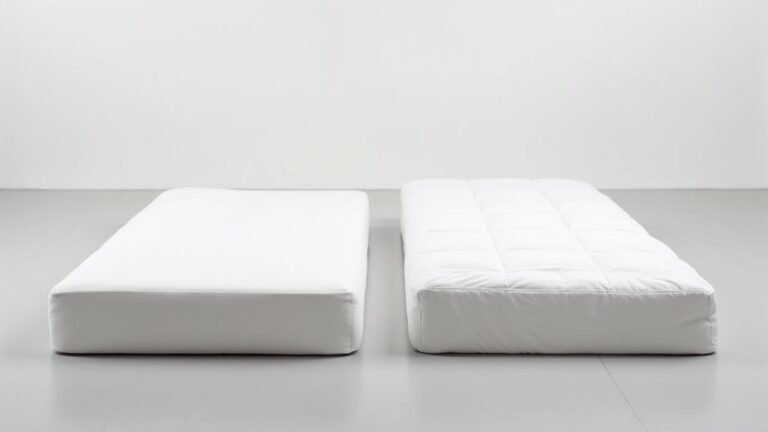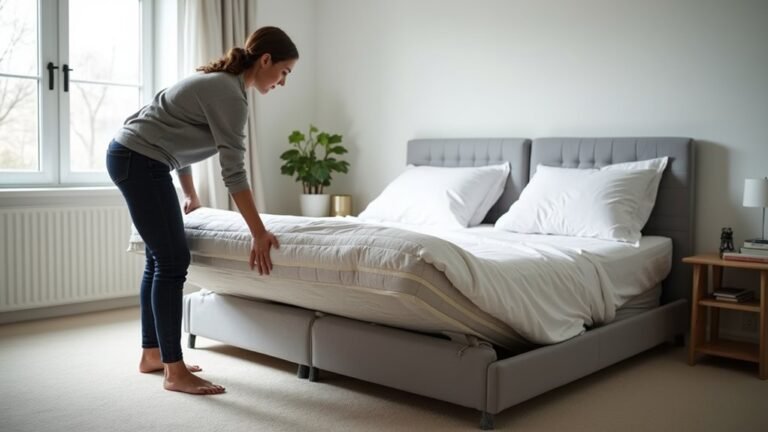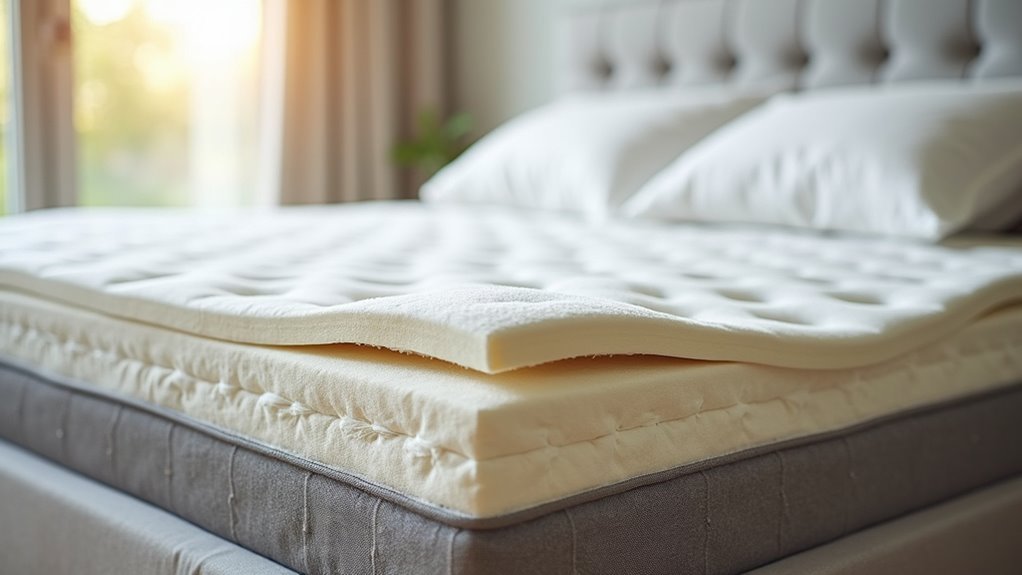

Your mattress strongly affects whether you wake up rested or stiff. Memory foam eases pressure and conforms closely to body curves. Latex feels springy, offers quick response, and usually sleeps cooler. Innersprings deliver firm lift and edge support. Hybrids combine layers to balance comfort and spinal alignment.
Which Mattress Materials Affect Sleep Quality Most?
As you pick a mattress, the material matters just as much as the size or price tag. You want one that fits your sleep chronotypes, body, and room temperature, so you feel at home in bed. Latex often gives quick bounce and breathability, while innerspring beds let air move well. Hybrid models blend coil support with foam comfort, which can help should you share a bed and hate every little shift.
Memory foam can still work, but it might hold heat were you to run warm. Were you to have material allergies, check the cover and fill carefully. Medium-firm options often support your spine best, so your nights feel steady, not fussy. Once the material matches you, sleep gets easier to trust.
Memory Foam and Pressure Relief
In case you found a mattress material that fits your body and room, memory foam deserves a closer look because it changes how pressure feels the moment you lie down. You sink in slowly, and that contour response can ease sore shoulders and hips. With pressure mapping, you can see where your body asks for more support, and memory foam answers through spreading weight more evenly.
For a clearer visual, notice:
- Your joints feel less pinched.
- Your spine stays more relaxed.
- Your sleep space feels more welcoming.
If you like a bed that hugs you, this material can help you feel settled and less alone on restless nights. It won’t suit every sleeper, but it often gives you the gentle, cared-for feeling you’ve been hoping to find.
Latex for Bounce and Breathability
Latex can give you a lively, springy feel that helps you move easily and keeps the mattress from feeling stuck.
You’ll also notice that its open structure lets air flow more freely, which can help your bed stay cooler through the night.
Should you get warm or like a mattress with a bit of pushback, latex can feel like a really smart fit.
Bounce Support
Bounce support matters because it changes how a mattress feels as you lie down, turn over, and shift through the night.
With latex, you get a lively response that helps you feel held, not stuck, so you can move with less effort and more ease.
- Edge resilience helps you use more of the bed, so you don’t feel like you’re sliding off.
- Sleep rebound gives you a quick lift after pressure, which can make changing positions feel smoother.
- That steady spring also supports shared sleep, since you can settle in without a heavy sinking feel.
If you like a mattress that keeps up with you, latex can feel like a good fit.
It gives you support that feels welcoming, balanced, and easy to trust.
Breathable Cooling
Heat can sneak up on you at night, but latex helps ease that problem with a cooler, more open feel.
You get better airflow channels through its springy structure, so heat can move away instead of building up around you. That means you can settle in without feeling stuck under a hot blanket of foam.
Latex also works well with phase change bedding, which helps steady your skin temperature as you sleep.
Because it bounces back fast, it won’t hug your body as tightly as dense foam, and that gives you a fresher feel.
Should you run warm, this can help you feel more at home in bed, night after night, with less tossing and a calmer, more comfortable rest.
Innerspring Support and Firmness
Because innerspring mattresses rely on a coil core, they often feel firmer and more supportive than many other designs, which can be a real relief should you enjoy a bed that keeps you lifted instead of sinking in.
You might notice that this steady feel helps you stay aligned and settled through the night.
- Support: The coils push back evenly, so your body doesn’t feel swallowed.
- Firmness: Many models lean medium-firm, which frequently feels balanced and familiar.
- Stability: Edge springs can strengthen the sides, while zoned firmness can give your shoulders and hips the right kind of welcome.
If you like a bed that feels clear and dependable, this style could help you feel at home.
Its open structure also lets air move through, which adds a fresh, breezy touch.
Hybrid Mattresses: Balanced Comfort
Hybrid mattresses give you a smart mix of coils and foam, so you get steady support without giving up comfort.
They can ease pressure on your shoulders and hips while still helping your spine stay aligned.
You’ll also often notice less motion transfer, which can make your bed feel calmer whenever someone else moves beside you.
Coil And Foam Balance
A good hybrid mattress brings together the sturdy feel of coils and the gentle hug of foam, and that balance can make sleep feel much more natural.
Whenever you notice the coil balance, you’ll feel steady lift under your body, whilst the foam interplay softens the top without losing shape.
That mix helps you settle in with less fuss, so your bed feels like it fits your night.
- Coils add lively pushback.
- Foam adds a calm, close feel.
- Together, they create a shared comfort that many sleepers trust.
You don’t have to choose between firm and soft.
Instead, you can enjoy a mattress that meets you halfway, which often makes bedtime feel more welcoming and a little more like home.
Support With Pressure Relief
Step into the comfort zone, and you’ll notice how a hybrid mattress can give you both steady support and real pressure relief at the same time.
You get a firm coil base that keeps your spine in a kinder line, while the top foam layers soften the spots that usually ache. That balance matters for sleep ergonomics, because your body stays aligned without feeling pinned down.
Pressure mapping often shows less stress at your shoulders, hips, and lower back whenever the comfort layers are tuned well. So you can settle in, shift with ease, and feel held instead of trapped.
Whenever support and cushioning work together, you’re more likely to wake up feeling rested, welcome, and ready for another night in your own sleep space.
Motion Isolation Benefits
Often, the best part of a hybrid mattress is how quietly it handles movement. You can turn over, and your bed buddy stays settled, which helps you feel part of the same calm sleep zone. This matters whenever partner disturbance can break deep rest, especially in shared rooms.
- The foam layer softens bounce.
- The coils add support without sending every shift across the bed.
- Together, they improve bed sharing dynamics for couples with different schedules.
Mattress Materials and Temperature
At the time you’re trying to sleep well, mattress temperature can make the difference between restless tossing and real rest. In case you run warm, look for latex, hybrid, or gel-infused foam, because they move heat away faster than dense foam. Open-cell designs and coil layers let air flow, so you stay cooler through the night.
You can also choose covers with phase change fabric or moisture wicking fibers, which help pull sweat off your skin and smooth out hot spots. Whenever your bed holds less heat, you settle in faster and wake less often. That’s helpful provided you want a mattress that feels like it’s on your side, not working against you. Small cooling details can make your whole sleep setup feel more welcoming.
How Do Mattress Materials Affect Spinal Alignment?
Once your mattress lines up with your body, your spine can rest in a more natural shape, and that can make a big difference in how you feel in the morning.
Whenever you sleep on the right material, you don’t fight your bed all night.
You stay supported, and your muscles can relax.
- Medium-firm foam can keep your hips and shoulders from sinking too far.
- Latex can hold you up while still easing pressure.
- Hybrid designs can blend coil support with comfort layers for pregnancy support and child spinal needs.
Should the mattress be too soft, your lower back could dip.
Should it be too firm, your shoulders and hips might twist.
So you want steady support that follows your curves.
That’s how you help your body stay aligned, and that’s how you sleep with your crew in better comfort.
Which Mattress Materials Reduce Motion Transfer Best?
At the time you share a bed, every little movement can ripple across the surface, so the right mattress material can make the night feel much calmer. Memory foam usually does this best because it hugs your body and softens bounce, so your partner’s turns feel smaller. Hybrid beds also help, since the foam layers and coils work together to add vibration diffusion while still giving steady support.
Latex can reduce some motion too, but it often feels livelier, which means you might notice more transfer. Traditional innerspring beds usually pass movement farther, even with decent edge damping. Should you want a quieter sleep space, choose a mattress that absorbs motion instead of pushing it across the bed. That way, you can rest close without feeling every shift.
How Long Do Different Mattress Materials Last?
Because a mattress can feel great on day one and still wear out too fast, it helps to know how long each material usually lasts. You’re joining a smart crowd whenever you check durability before you buy.
- Latex often lasts 10 to 15 years, and its strong structure resists eco degradation well.
- Memory foam usually lasts 6 to 10 years, though low-density layers soften sooner.
- Innerspring beds often last 5 to 8 years, while hybrids usually land around 7 to 10 years.
Warranty longevity can hint at quality, but it won’t guarantee real-life comfort forever. As materials age, you might notice less support, more sagging, and weaker pressure relief. So, whenever you shop, compare the build, the density, and how long the mattress can remain reliable for you.
Which Mattress Material Fits Your Sleep Style?
Your sleep style can point you toward the right mattress material, and each one feels different on your body. Memory foam hugs you for strong pressure relief, latex feels bouncier and cooler, and innerspring beds give you firmer support with more airflow.
Should you sleep hot, move a lot, or need better spinal support, the right material can make bedtime feel a lot kinder.
Memory Foam Support
Memory foam can feel like a calm landing spot whenever sleep has been rough, and that slow, body-hugging support is why so many people reach for it. You get steady pressure relief, so your shoulders and hips can sink in without feeling lost. Still, you should know a few tradeoffs before you commit.
- It might soften over time through viscoelastic aging, which can change how it supports you.
- Some beds give off chemical offgassing initially, so a new-room smell can show up.
- You’ll often feel less partner motion, which helps you rest with more ease.
If you want a cozy, sheltered feel, memory foam can help you feel understood at night. For many sleepers, that sense of being held matters just as much as firmness.
Latex Bounce And Cooling
Latex can feel like a small upgrade with a big payoff whenever you want a bed that stays lively, cool, and supportive. With natural latex, you get quick bounce that helps you move easily, so you don’t feel stuck when you change positions.
At the same time, its open feel lets heat escape better than many dense foams, which can help you stay comfortable through the night. Should you run warm, pair latex with phase change fabrics to smooth out temperature swings and keep that fresh, settled feeling.
You might also enjoy the balanced lift, since it can support your body without swallowing you. For many sleepers, that mix creates a welcome, easygoing match that feels like it fits your rhythm.
Innerspring Firmness And Airflow
Beneath a sturdy coil system, an innerspring mattress can feel like a gust of new air, especially in case you like a bed that stays firm and easy to move on.
You’ll notice strong coil ventilation and spring breathability, so heat can slip away instead of settling around you. That airy feel can help you sleep more comfortably whenever you run warm or share the bed.
- You get a lifted, springy surface that feels stable.
- You can change positions with less effort, which helps restless nights.
- You might enjoy cooler sleep because airflow moves through the core.
If you want a roomier, fresher feel, this style could fit your sleep circle well. Pair it with breathable bedding, and you’ll keep that open, welcoming comfort through the night.
How To Test Mattress Materials Before You Buy
Before you buy a mattress, take time to try how the materials feel in real life, because that’s where the best clues show up. Start with in store pressure assessment. Lie on your side and back for a few minutes, and notice whether your shoulders and hips sink just enough.
Then press the surface with your hand and check bounce, softness, and edge support. In case you shop online, use DIY firmness scales at home through rating how deeply you sink on your current bed versus the new one.
Also pay attention to heat. Memory foam should contour without trapping too much warmth, while latex and hybrids should feel cooler and quicker to respond. Trust your body, because comfort should feel like home, not a guess.
Frequently Asked Questions
How Do Mattress Materials Affect Allergies and Dust Mite Exposure?
You’ll usually get less allergy trouble from latex, tightly woven fabrics and encased designs, since they resist dust mites better. Hypoallergenic covers and antimicrobial treatments can further reduce exposure, helping you sleep easier together.
Are Eco-Friendly Mattresses as Comfortable as Conventional Ones?
Yes, you can find eco friendly mattresses that feel just as comfy as conventional ones, especially with organic latex and recycled polyester. You will often get great support, breathability, and pressure relief while feeling good about your choice.
Do Mattress Materials Change After the First Few Months of Use?
Yes, your mattress can break in after a few months, and you might notice a firmness shift. Off gassing and a chemical scent usually fade sooner, while support and comfort can settle as materials adapt.
Which Mattress Materials Work Best With Adjustable Beds?
Memory foam and innerspring hybrid mattresses usually work best with adjustable beds. You will get better contouring, easier bending, and solid support, so you can feel comfortable, included, and settled while you relax or sleep.
Can Mattress Materials Affect How Noisy a Bed Feels?
Yes, they can; your bed can sing or hush like a room at midnight. Coils might create coil clangs, while foam squeaks less but can still creak. Choose materials that feel calm, and you will feel at home.