
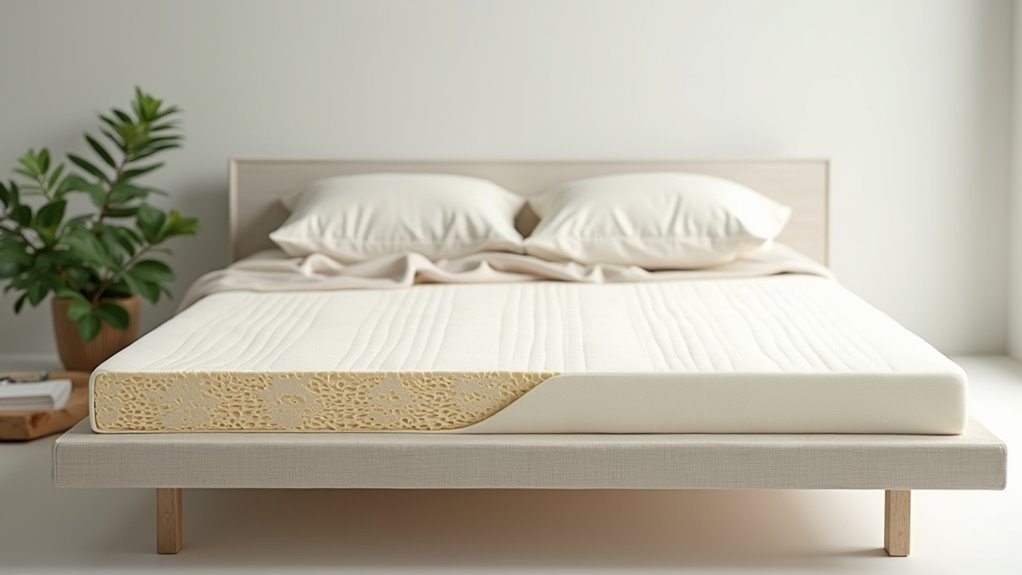

A latex mattress is a sleep surface made from foam created from rubber sap, available as natural, synthetic, or blended latex. It offers responsive support that relieves pressure points while limiting the classic springy bounce. Latex remains breathable and durable, which helps regulate temperature and extends mattress life. Different manufacturing methods and latex types change firmness, feel, and performance. Next, learn what features separate a high-quality latex mattress from an average one.
What Is a Latex Mattress?
You might notice a springy, buoyant surface that helps you feel supported instead of stuck.
Some latex mattresses use all latex, while others pair latex with coils for a hybrid build.
You can also find natural, synthetic, or blended versions, so you have choices that fit your needs and budget.
Should you want a cleaner label, look for organic certification.
Should allergies worry you, ask about allergy screening, since reactions can matter for peace of mind.
Latex often suits you when you like calm, steady support and a mattress that feels lively, not flat.
How Latex Mattresses Are Made
Latex mattresses start with liquid sap from rubber trees, and makers whip, mold, and heat it until it turns into durable foam. From there, they build the mattress layer by layer, so you get a feel that matches the support you want. That process matters because it shapes how springy, firm, or cushioned your bed feels once you lie down.
Latex Foam Production
Behind every latex mattress is a careful foam-making process that turns tree sap or synthetic ingredients into a springy sleep surface. In latex processing, you begin with sap harvesting, then the liquid gets whipped into tiny bubbles and cured so it can hold its shape. That’s how you get the lively feel people love.
- Natural latex comes from rubber tree sap and keeps a soft, resilient bounce.
- Synthetic latex uses petrochemical ingredients, which can lower cost and still feel responsive.
- Blended latex mixes both, helping you find a balanced feel that fits your room and your sleep style.
During production, makers use methods that shape firmness and texture, so you can choose what feels right for you. That helps you feel included in a crowd that values comfort, support, and a mattress that truly matches your needs.
Mattress Layer Assembly
Once the latex foam is ready, makers start building the mattress layer by layer so it can feel supportive, balanced, and comfortable from the initial night. You get a core, then comfort layers above it, and each piece works with the next.
| Layer | Job | Feel |
|---|---|---|
| Core | Holds your body | Firm and steady |
| Comfort layer | Cushions pressure points | Soft and springy |
| Cover | Protects the build | Smooth and breathable |
With zoned layering, your shoulders can sink a little while your hips stay lifted, so you feel held instead of stuck. Makers often add edge stitching to tighten the sides and help the mattress keep its shape. Should you like a bed that feels shared and dependable, this build helps you settle in with ease, night after night.
Natural vs. Synthetic vs. Blended Latex
Choosing the right kind of latex can feel tricky at the outset, but the differences are easier to see once you break them down. You’ll usually meet three options:
- Natural latex comes from rubber tree sap, so you get a more eco-minded feel with fewer chemical additives.
- Synthetic latex uses petrochemical materials, which can lower cost but could raise environmental impact.
- Blended latex mixes both, helping you balance price, comfort, and durability.
When you shop, consider what helps you feel at home in your bed. Natural latex often feels more premium, while synthetic and blended versions can fit tighter budgets. Blended latex also gives you a middle path should you want community with your mattress choice, not a compromise that feels lonely.
Dunlop vs. Talalay Latex
Dunlop and Talalay may sound like two fancy names for the same thing, but they give latex a very different feel, so it helps to sort them out beforehand.
With Dunlop, the processing methods pour and bake the foam in one step, which usually leaves you with a firmer, denser surface. Talalay adds vacuum expansion, freezing, and baking, so you get a softer, lighter touch.
In this comfort comparison, Dunlop often suits you provided you want steady support, while Talalay can feel a bit more cushioned and airy. Both still keep that latex bounce your bed crew loves, but the difference can help you feel at home.
Should you share a room, either option can support many sleepers without much fuss.
Why Latex Mattresses Feel Different
Should you’ve ever lain on a latex mattress and thought, “Why does this feel so different?” the answer starts with the foam itself.
Latex feels springy, so you don’t sink in much. Instead, you rest on top with a steady lift that many sleepers find familiar and welcoming. That feel comes from how the foam springs back fast after pressure.
- It hugs less than memory foam, so you move easily.
- It keeps airflow moving, which helps with temperature regulation.
- It can strengthen edge support, so the bed feels more usable.
Because of that mix, latex feels lively, not mushy.
In the event you want comfort that still feels clear and open, this style can make you feel right at home.
Key Benefits of Latex Mattresses
Latex’s biggest strengths show up quickly once you lie down, because the material does a lot of the work for you. You get springy support, gentle pressure relief, and a feel that keeps you lifted, not trapped. That can help you wake up less stiff and more at home in your bed.
| Benefit | Why it helps you |
|---|---|
| Responsiveness | You move easily |
| Breathability | You sleep cooler |
| Durability | It keeps its shape |
| Support | It stays steady |
| Eco credentials | Natural latex can feel greener |
Because latex bounces back fast, it also helps with temperature regulation and makes the bed feel fresh. Many sleepers like that it shares support without deep sink, so you can settle in and still feel part of the room, not buried under it.
How to Choose a Latex Mattress
As soon as you choose a latex mattress, start via matching the latex type to the feel you want. Dunlop usually feels firmer and steadier, while Talalay feels softer and more cushioned, so your comfort can change a lot from one to the next.
Then consider about your sleep position, because the right firmness can help your body stay aligned and keep you comfortable through the night.
Latex Types And Feel
Picking the right latex mattress starts with grasping how the type of latex changes the feel, because not all latex sleeps the same. Natural latex feels lively and a little plush, while synthetic blends can feel steadier and more budget friendly. Your bounce level matters, because it shapes how quickly the bed springs back whenever you move. The tactile texture also changes your comfort, from smooth and buoyant to denser and more grounded.
- Dunlop usually feels firmer and more solid.
- Talalay often feels softer and airier.
- Hybrid latex adds coil support for a familiar, easygoing feel.
As you shop, notice which feel makes you relax and belong in the bed, not fight it. That small difference can make your nights feel more like home.
Firmness And Sleep Position
Firmness matters because it decides how a latex mattress meets your body, and your sleep position should guide that choice.
Should you sleep on your side, you usually need a softer feel so your shoulders and hips can sink just enough. In case you sleep on your back, a medium firm option often keeps your spine steady without feeling harsh.
Should you sleep on your stomach, a firmer surface can stop your middle from dipping too far. That’s where sleep positioning and firmness mapping help you match support to comfort.
You don’t have to guess alone, either. Start with how you rest most nights, then notice where you feel pressure or strain. The right latex bed can feel like it was made for your crew, not just your room.
How Long Latex Mattresses Last
A latex mattress can last a long time, and that’s one of the biggest reasons people choose it with confidence. You’re not just buying comfort; you’re joining a group of sleepers who want steady support year after year. Most models have an expected lifespan of 10 to 20 years, and the warranty length often reflects that durability.
- Dense latex resists sagging well.
- Hybrid builds can stay sturdy with proper care.
- Natural latex usually keeps its shape longer than many foams.
If you rotate your mattress and use a supportive base, you help it age gracefully. That means you keep the bounce, the lift, and the “still feels new” vibe longer. So, whenever you desire a bed that sticks around, latex often delivers.
Frequently Asked Questions
Are Latex Mattresses Good for Couples With Different Firmness Preferences?
Yes, you’ll often like latex mattresses for couples with different firmness preferences, especially with adjustable firmness and zoned support. You can both sleep comfortably because latex balances bounce, pressure relief, and sturdy support.
Can You Flip or Rotate a Latex Mattress Regularly?
Yes, you can rotate regularly, and if you own a double sided latex model you can flip periodically too. Why not protect your mattress and help it wear evenly, just like the group’s best kept habit?
What Foundation Works Best Under a Latex Mattress?
You’ll get the best support from a sturdy, flat foundation: a Bunkie board or slatted platform with close spacing. If you want flexibility, an adjustable base can work too, and you’ll keep your latex feeling balanced.
Do Latex Mattresses Require Special Cleaning or Maintenance?
Nope, you don’t need fancy rituals; just keep it clean. Use spot cleaning with mild soap, avoid soaking the mattress, and rotate it regularly. For allergen control, vacuum the cover and let it breathe.
How Heavy Are Latex Mattresses Compared With Other Mattress Types?
You’ll usually find latex mattresses heavier than memory foam and many innerspring beds because of density differences. For weight comparison, expect a queen to feel substantial so you’ll want help moving it, but you’ll also gain durable support.
