
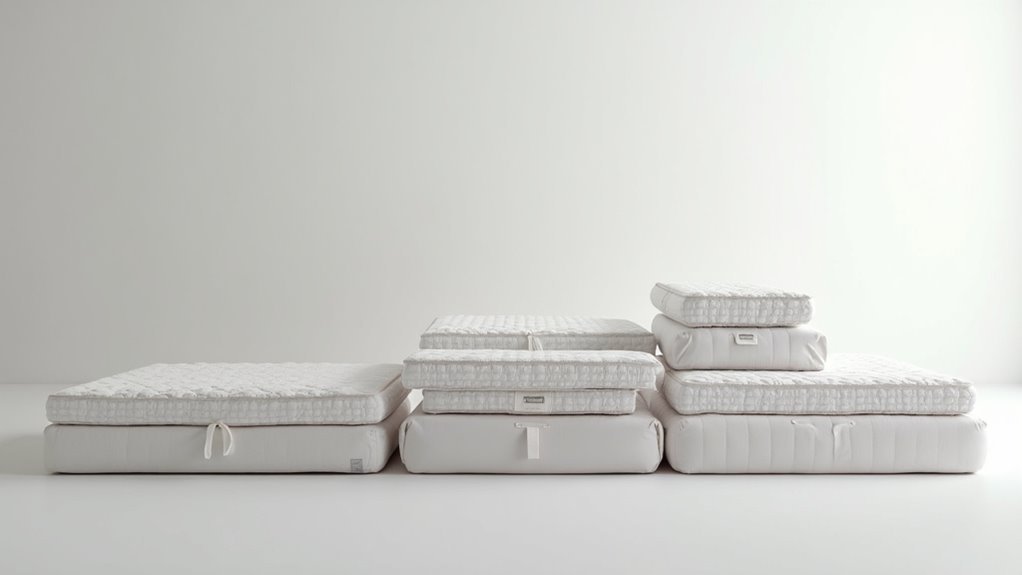

A queen mattress typically weighs between 90 and 160 pounds. Mattress weight increases noticeably from twin to king sizes. Construction—innerspring, foam, latex, or hybrid—significantly affects weight. Moving a mattress up stairs or through tight hallways requires planning and possibly extra help. This guide explains how size and materials determine mattress weight and offers practical tips for handling them safely.
What Affects Mattress Weight?
Mattress weight starts with two big things: size and construction. You’ll feel that difference fast whenever you lift one. A bigger mattress uses more material, so it naturally weighs more. But materials matter just as much. Dense foam, latex, and coil layers add pounds, while lighter builds stay easier to move.
Your material sourcing also plays a part, because some components arrive heavier than others. Then manufacturing processes change the total too. Extra stitching, thicker support cores, and added comfort layers can all raise the weight. So in case your mattress feels unexpectedly heavy, you’re not imagining it. It’s just built differently. Understanding this helps you choose a bed that fits your space, your strength, and your everyday life without stress.
Mattress Weight by Size Chart
Assuming you’re trying to compare mattress sizes, a weight chart can save you a lot of guesswork.
Twin beds usually land around 40 to 90 pounds, while Twin XL often runs 43 to 105.
Full sizes commonly sit near 50 to 140, and queens often reach 90 to 160.
Kings can climb to about 115 to 200, so you might want a helping hand before moving one.
When you check shipping weights, bear in mind that boxed delivery can feel different from the expanded bed.
Use the chart as a helpful baseline, not a strict rule.
Should you move your bed often, simple maintenance tips like lifting with care, clearing paths, and rotating your setup can make handling easier.
That way, you stay ready and confident.
Mattress Weight by Material
At the time you compare mattress materials, you’ll notice that foam, innerspring, and latex each change the weight in different ways.
Foam mattresses often feel easier to lift, innerspring beds usually stay lighter than you’d expect, and latex models can surprise you with extra heft.
Being aware of this helps you plan for setup, moving day, and those moments whenever you just need to shift the bed without a workout.
Foam Mattress Weight
Foam mattresses usually weigh more than people expect, and that extra heft can catch you off guard the initial time you try to move one.
You’ll notice the difference most when you lift a thick queen or king model, since denser foam adds serious mass. Still, that weight often works in your favor. It can improve pressure mapping, help the bed feel steadier, and make you feel more settled at night.
Should you’re shopping, check the listed weight and the off gassing duration, because both can shape your setup experience. You could love the cozy feel, but you’ll want a friend nearby while it’s time to carry it upstairs.
With foam, comfort and burden often arrive together, so plan ahead and protect your back.
Innerspring Mattress Weight
Innerspring mattresses usually feel easier to lift than foam or latex models, and that can be a relief whenever you need to move one through a hallway or up a stairway. You’ll often notice a lighter feel because the steel coils add support without packing in as much dense material.
Still, the weight changes with size, coil count, and overall build. A low-profile twin might stay easy to handle, while a thicker queen can ask for two people and a steady grip. Your firmness rating can also hint at weight, since firmer models could use more coils or stronger edging.
Latex Mattress Weight
Latex mattresses often carry a little more heft than many people expect, and that weight usually comes from the dense rubber core inside the bed. You’ll feel that extra mass whenever you move one, but you’ll also notice a sturdy, steady build that many sleepers love.
In a durability comparison, latex often outlasts softer foam, so the weight can feel like a fair trade. It can also matter for allergy considerations, since natural latex might suit your needs better than some synthetic fills.
- A queen latex bed often feels harder to lift.
- Thicker layers add more pounds.
- Zoned support can enhance weight and comfort.
- Two people make setup easier and safer.
If you share your space, this heavier feel can still fit nicely, especially whenever you want a mattress that feels reliable and welcoming.
Twin and Twin XL Mattress Weights
Twin and Twin XL mattresses are the easiest places to start as you’re trying to judge mattress weight, because both sizes stay on the lighter side compared with larger beds. You’ll usually see twin portability around 40 to 90 pounds, while twin xl sizing often lands near 43 to 105 pounds. That small jump matters whenever you’re carrying one alone or guiding it through a tight hallway.
| Size | Usual weight | Move feel |
|---|---|---|
| Twin | 40 to 90 lb | Easy |
| Twin XL | 43 to 105 lb | Still manageable |
| Foam twin | Heavier | More effort |
| Basic innerspring | Lighter | Friendlier lift |
| Dense build | Higher end | Needs care |
If you’re moving often, these sizes can help you feel capable, not stuck.
Full and Queen Mattress Weights
A full mattress usually weighs about 50 to 140 pounds, so you’ll notice a real jump from the smaller sizes you just read about.
A queen mattress often lands around 90 to 160 pounds, and that extra size can make moving it feel a lot less casual than it sounds.
Whenever you compare the two, you’ll see that materials, thickness, and support layers can matter just as much as size.
Full Mattress Weight
Full and queen mattresses sit in a very manageable middle ground, and that’s why so many people choose them. A full mattress usually weighs about 50 to 140 pounds, so you can plan ahead with confidence whenever you shop for bed frames or check room dimensions. Whenever you’re choosing one, keep in mind that weight changes with foam, coils, and thickness.
- Lighter builds are easier to lift.
- Denser foam adds more weight.
- Hybrid layers can feel noticeably heavier.
- Two people make moving safer and calmer.
You don’t need to guess your way through it. A full mattress still fits many homes well, and its weight usually stays in a range that feels practical, not overwhelming. That makes setup simpler and stress a lot lower.
Queen Mattress Weight
Queen mattresses usually weigh about 90 to 160 pounds, so you can expect a solid middleweight that still feels manageable with the right help. Should you’re moving one, queen portability matters because you’ll want a clear path, steady grip, and perhaps a friend who won’t ghost you midlift.
Many queens feel easier to handle than kings, yet they still need care during setup or room changes. You’ll also notice how the weight supports bedroom aesthetics, since a queen often fits neatly without crowding the space.
That balance can make your room feel calm and shared, not cramped. Whenever you choose a queen, you get comfort, good size, and a size that usually works well for everyday dwelling.
Weight Differences Explained
At the time you compare mattress sizes, the jump from full to queen can feel bigger than you’d expect, even though both still fit comfortably in many bedrooms.
You’ll usually notice the queen tipping the scales about 40 to 20 pounds more than a full, though exact numbers shift with thickness and build.
That difference matters whenever you and a friend lift, rotate, or unpack it.
- Full beds often weigh 50 to 140 pounds.
- Queen beds often weigh 90 to 160 pounds.
- Foam and latex can add extra heft through denser material sourcing.
- That extra mass can also shape environmental impact during shipping.
King and California King Mattress Weights
Because these beds cover so much room, king and California king mattresses usually sit near the top of the weight range. You’ll often see king models around 115 to 200 pounds, while California kings might land near 130 to 180 pounds, though some guides group both near 100 to 200 pounds.
That extra mass comes from the larger surface and the materials inside, especially dense foam, latex, or thick coils. So in case you care about your sleep posture, you could notice these beds feel steadier and less likely to shift under you.
You’ll also want sturdy bed accessories, like a strong frame and reliable foundation, so your setup feels secure and comfortable. Should you share your bed, that added weight can help the whole room feel balanced and calm.
How Mattress Weight Affects Delivery
Upon a mattress being heavy, delivery becomes harder quickly, and that extra weight can alter the entire move. You might notice tighter delivery logistics, slower stairs, and more care at each turn. A queen or king can need extra hands, which helps your crew feel prepared instead of rushed.
- Heavier beds take more space in the truck.
- Your team could need clearer access paths.
- Assembly timing can shift should unpacking take longer.
- Strong packaging helps protect the mattress and your home.
Because of that, you should confirm room details before arrival. That small step builds confidence and keeps everyone on the same page. Once you know what’s coming, the handoff feels smoother, and you can settle in with less stress and more belonging.
How to Move a Heavy Mattress
Moving a heavy mattress can feel awkward fast, but you can make it much easier with a little planning and the right grip. Clear the path initially, then slide the mattress onto a blanket or dolly.
Ask a friend to help, because two steady hands feel like a small team. Use moving straps to share the load and keep your back safer.
Should you need stair routing, move one step at a time and keep the mattress flat when you can. Turn corners slowly, and talk through each move so nobody guesses.
Wear gloves for grip, and lift with your legs, not your waist. In case the mattress bends too much, pause and reset. With calm teamwork, you’ll get it through without drama.
Frequently Asked Questions
Does Mattress Weight Indicate Better Quality?
Not necessarily. You can’t judge quality based on weight alone; higher material density might suggest durability perception, but comfort, support, and craftsmanship matter more. You’ll fit best choosing what feels right, not just heavier.
Why Do Boxed Mattresses Weigh Differently Than Expanded Ones?
They’re practically shrunk to wizard size in the box. You’ll notice packaging compression and transport logistics change the shipped weight, not the mattress itself, so once you unroll it, it will regain its full weight and feel.
How Much Does Mattress Thickness Affect Total Weight?
Thicker mattresses usually weigh more because extra foam, coils, and layers increase material. You will notice the thickness impact mostly through weight distribution which can make lifting harder, but comfort and support often improve too.
Are Latex Mattresses Usually Heavier Than Memory Foam?
Yes, usually you’ll find latex mattresses are heavier than memory foam. In this durability comparison, latex often feels sturdier and has a different environmental impact, so you’re choosing a denser build that many sleepers trust together.
When Should You Choose a Lighter Mattress for Moving?
Choose a lighter mattress whenever you will move often, need easy transport, or require a student moves small space setup in temporary housing. You will save effort, reduce injury risk, and make each relocation feel more manageable.
