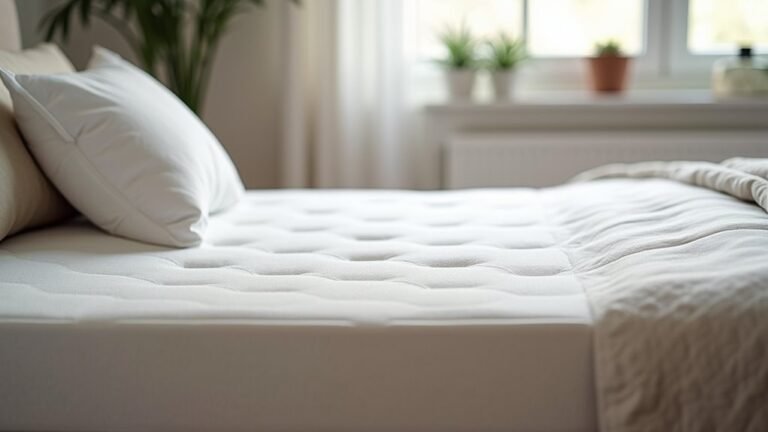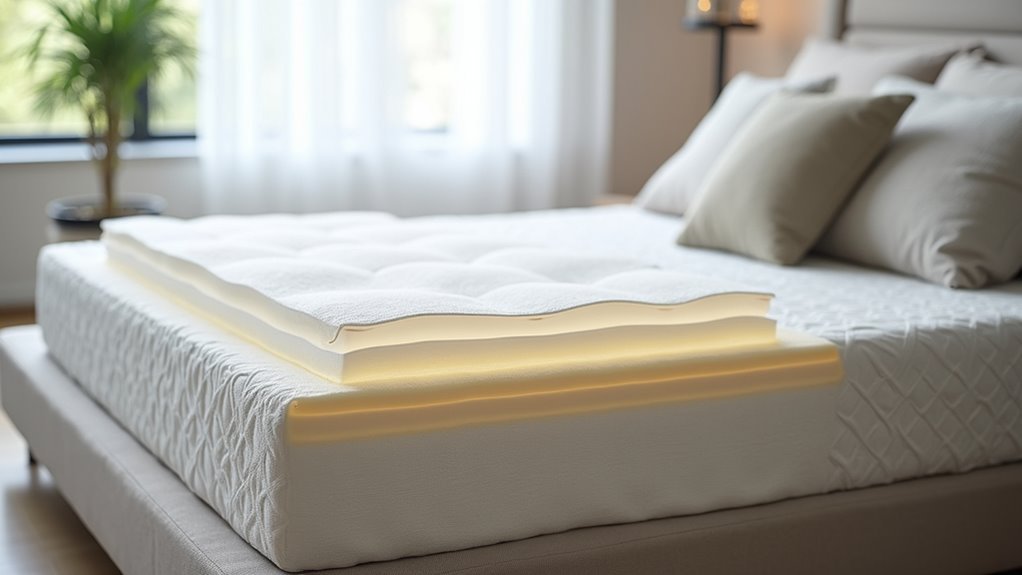

Waking stiff often means the mattress fights rather than supports spinal alignment. Proper support keeps the head, shoulders, and hips in a straight line so muscles can relax and the spine stays neutral. Firmness, pillow height, and sleeping position each alter that support and change how the spine rests. Learning the feel of healthy alignment helps spot early signs of a poor mattress. Small adjustments to surface firmness or pillow setup can relieve persistent morning discomfort.
How Mattress Support Affects Spinal Alignment
As soon as your mattress gives your spine the right support, your body can rest in a more natural line instead of fighting the bed all night.
You’ll notice this most whenever the surface matches how you sleep. A medium-firm feel often helps because it supports you without pushing too hard.
With pressure mapping, you can see where your shoulders, hips, and back need relief, and that makes regional customization easier. Then your mattress can respond to your shape instead of forcing one flat rule on everyone.
In case you sleep on your side, gentle contouring can help you feel settled and included in your own bed space.
Should you sleep on your back, balanced support can keep comfort steady and reduce strain.
What Proper Spinal Alignment Looks Like
You want your spine to rest in a neutral position, with your head, shoulders, and hips lined up in one smooth line.
Whenever that line stays steady, your body can keep its natural curves without extra strain.
That balance often feels quiet and unforced, which is exactly what good support should do.
Neutral Spine Position
A neutral spine position means your back keeps its natural curves while you sleep, instead of being pushed flat or bent too far. Whenever you choose the right sleep posture, your body can relax without fighting the mattress. That calm support helps your pelvic tilt stay balanced, so you don’t wake up feeling twisted or cramped.
| What you feel | What it means |
|---|---|
| Gentle support | Your spine rests in line |
| No sinking | Your lower back stays steady |
| Even pressure | Your body feels settled |
| Easy turning | You stay comfortable longer |
You belong on a bed that works with you, not against you. As soon as the surface matches your shape, you’ll notice less strain and more ease through the night. A little support goes a long way, and your back knows the difference.
Head, Shoulder, Hip Line
Whenever your head, shoulders, and hips line up well, your spine can rest in a more natural path instead of fighting the bed all night. You should feel your shoulder alignment stay steady, not shoved forward or dropped back. Your hips also need hip clearance, so they don’t sink or twist into the mattress.
Once these three points stay in one easy line, you usually feel less strain and more ease, especially whenever you turn or settle in.
That kind of balance helps you feel like you fit your sleep space, not like you’re wrestling it. Suppose one area dips too much, your body has to work harder to stay comfortable. But whenever the line stays even, you can relax into the bed and wake up feeling more like yourself.
Natural Curve Preservation
Once your mattress sustains your spine’s natural curve, your body can settle without fighting to stay in line. You should feel your back resting in a gentle S shape, not forced flat or bent. That’s spinal curvature preservation at work.
In the lower back, lumbar lordosis maintenance helps keep the curve that supports you through the night. Whenever your support is right, your shoulders, ribs, and hips share the load more evenly, so you don’t wake up stiff and grumpy.
Provided the bed sags too much, your curves can collapse. Should it feel too hard, your body could tense up to protect itself. You belong on a surface that respects your shape. That balance lets you sleep with less strain and more ease.
Signs Your Mattress Isn’t Supporting You
Should you wake up with morning back stiffness, your mattress couldn’t be giving your spine the support it needs.
You perhaps also notice visible sagging, which can let your body sink unevenly and throw off your alignment.
In that situation often, your bed isn’t just old, it’s quietly working against your comfort.
Morning Back Stiffness
- Your lower back feels locked.
- You need extra time to stand tall.
- The stiffness eases after walking or stretching.
If this keeps happening, pay attention to how your body rests through the night. A mattress that supports neutral alignment can help you greet the day with less strain and more ease. You deserve that kind of comfort, and your back does too.
Visible Mattress Sagging
A sagging mattress can feel like a quiet warning sign, and your body often notices it before you do.
Whenever you see a dip where you sleep, or edge wrinkles that stay after you get up, your mattress couldn’t be giving you steady support.
You might also spot uneven spots, a soft middle, or a rim that feels weak. These signs can point to spring collapse, which lets your spine sink out of line. Then your shoulders, hips, and lower back work harder all night.
How to Choose the Right Firmness
Picking the right firmness starts with how your body meets the bed, not with the label on the tag. You want support that keeps your spine calm and steady, whether you sleep on your back or side. Medium-firm often works well because it balances pressure relief and support without feeling like a plank or a sinkhole.
- Check your sleep position and body build.
- Notice whether your shoulders, hips, or lower back feel pinched.
- Try for comfort, temperature regulation, and motion isolation.
In case you share the bed, good motion isolation helps both of you rest without extra bumps. Also, pay attention to how you feel after a full night, not just the initial five minutes. The right feel should help you wake up rested, included, and ready.
Which Mattress Materials Support Alignment
While you’re looking at mattress materials, consider how each layer helps your spine stay in a calm, natural line. You’ll often do best with medium-firm foam that cushions pressure without letting your hips sink too far.
Latex can help too, because zoned latex gives your shoulders and lower back different levels of support, so you feel held instead of squeezed. In case you want more bounce and airflow, hybrid coils can steady your body while the top layers soften contact points.
That mix can keep your back from twisting whenever you change position. You don’t need a perfect bed; you need one that fits your shape and sleep style. Whenever the material matches your body, you can settle in with less strain and more ease.
How to Adjust Pillow Support
Your mattress can only do part of the job, so the pillow has to meet it halfway and keep your neck from working overtime. You can fine-tune pillow loft so your head rests in line with your shoulders and your neck alignment stays calm through the night. Try this:
- Should your head tilts up, choose a thinner pillow.
- In case your chin drops, add a bit more height.
- If you feel strain, try a softer fill that settles with you.
Then check how your neck feels after a few minutes. Small changes often make you feel more settled and supported. Once the pillow fits well, you can relax into the bed instead of fighting it, and that sense of ease can help you feel right at home.
How Sleep Position Changes Support Needs
Sleep position changes what your body needs from a mattress, because the same surface can feel supportive on your back but awkward on your side.
Whenever you lie on your back, you usually need even support that keeps your spine from sinking too far. On your side, your shoulder and hip ask for more give, so your sleep posture changes the way pressure moves across the bed.
That shift in load distribution matters, because a mattress that feels fine in one position can crowd another. Provided you often roll around, you need a surface that follows your body instead of fighting it.
As soon as support matches how you sleep, you can settle in more easily, share the bed with your own shape, and wake up feeling like you belong in your rest.
When a Mattress Topper Can Help
A mattress topper can step in while your bed is close, but not quite right. You can use one to soften a too-firm surface or add support whenever your mattress feels uneven. It also helps whenever you want quicker fixes for temperature regulation, allergen control, or motion isolation without replacing the whole bed.
- You might add a plush layer for pressure relief.
- You might choose firmer foam for steadier support.
- You might pick budget options that buy time while you plan a larger upgrade.
Should you sleep with a partner, a topper can cut down on small movements that wake you both. In case your room runs hot, a breathable cover can help you stay cooler. Whenever you need a little comfort lift, a topper can make your bed feel more like yours.
How to Tell If Your Mattress Is Helping
Now that you know a topper can fine-tune a bed that’s close but not quite right, the next question is whether the mattress underneath is actually helping your body rest and recover.
You’ll often feel it in the morning: your back feels calm, your hips don’t ache, and you don’t wake up stiff. During sleep, you stay settled instead of chasing comfort. Should you share partner sleep, you might notice fewer rollovers and less motion bounce. A helpful mattress also supports your waist and shoulders without leaving deep sink spots. Check the mattress lifespan, too. Suppose it sags, feels lumpy, or leaves you sore for days, it’s probably working against you.
Whenever your bed fits you well, you feel it in your mood, your energy, and your next day.
Frequently Asked Questions
Can Mattress Support Reduce Low Back Pain While Sleeping?
Yes, mattress support can reduce your low back pain while sleeping by improving alignment and redistributing pressure. You will sleep better on a medium firm, clean mattress, and good mattress hygiene helps keep comfort and support consistent.
Why Does Firmness Affect Cervical Loading and Lumbar Lordosis?
Firmness changes how you are supported, so your spine settles differently. A mattress that is too soft lets your neck sink, increasing neck stiffness and vertebral compression. A mattress that is too firm flattens your lower back, shifts pressure distribution, and alters how the pillow interacts with the head and neck.
Do Adjustable Mattresses Improve Alignment Better Than Fixed Ones?
Yes, provided you’ve ever felt a chair adapt to your shape, you’ll get it: adjustable mattresses often fit you better than fixed ones because adjustable contours and responsive zoning can improve alignment, especially for your body.
How Do Body Size and Shape Change Mattress Support Needs?
You need support that matches your body proportions and weight distribution, because heavier hips, broader shoulders, or a curved waist change how you sink in. You will feel better whenever the mattress fits your shape and keeps you aligned.
Are Ideal Spine Pressure Targets Established for Sleep Mattresses?
No, there are no established ideal spine pressure targets for sleep mattresses yet. Pressure thresholds and spinal metrics still vary, so choose support that keeps you comfortable, aligned, and personally well rested.