
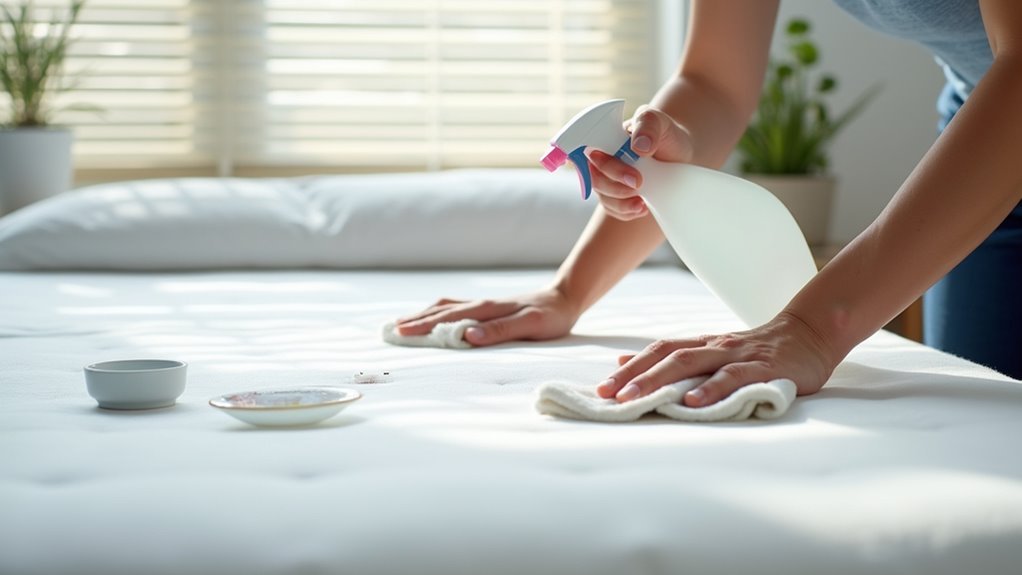

Mattress stains are removable with the right approach and quick action. Start by identifying the stain type and treating fresh spots promptly. Use suitable cleaners—cold water and mild detergent for general stains, enzyme cleaners for biological stains. Blot gently rather than scrubbing to avoid fabric damage and excess moisture. Aim to keep the mattress as dry as possible to prevent stains from setting and to reduce odor or mold risk.
Identify the Mattress Stain Type
Before you reach for any cleaner, take a moment to identify what kind of stain you’re coping with, because the right fix depends on the mess. Check the spot closely, then use fabric identification when possible. A cotton cover, a memory foam layer, or a quilted top could react differently, and that matters for your next move.
Should the mark look like urine, blood, food, or sweat, you can choose a smarter approach instead of guessing and stressing. Do a small allergen patch trial too, especially when sharing the bed with sensitive skin or breathing issues. That quick check helps you avoid surprise irritation and keeps you feeling confident.
Once you know the stain type, you’re ready to clean with less worry and more control.
Blot Fresh Mattress Stains Right Away
Should a stain be still fresh, act fast and blot it right away with a dry towel or paper towel so the liquid doesn’t sink deeper into the mattress. This immediate action gives you the best chance to save the fabric and keep the mess small.
Use the towel technique by pressing straight down, then lifting and moving to a clean spot on the cloth. Keep going from the outside in so you don’t spread the stain. You’re not alone in this step; almost everyone needs a calm reset here.
Skip rubbing, since it pushes moisture farther in. Keep blotting until the towel comes up mostly dry. Then pause, check the area, and repeat should the cloth still picks up color.
Choose a Gentle Cleaning Solution
A gentle cleaner can make the job feel a lot less stressful, so start with the mildest option that can still lift the stain. You’re not alone in wanting a fresh mattress, and a simple mix often works best.
Assess a tiny spot initially, then choose a cleaner that fits the stain and your comfort.
- Use a diluted mild detergent for common marks.
- Try a natural enzyme cleaner for organic spots.
- Pick formulas with only light essential oils, or skip scent if you’re sensitive.
Apply a little with a cloth, not a soak. Then blot gently and let the fabric stay just damp. This keeps the surface calm and helps you protect the bed you share every night.
Should the stain lingers, pause and recheck before adding more liquid.
Remove Tough Mattress Stains Safely
Tough mattress stains can feel overwhelming, but you can usually handle them with a calm, careful approach.
Start by blotting any fresh spot with dry towels, then examine your cleaner on a concealed area.
Use a light touch with deep cleaning tools like a spray bottle, sponge, or soft brush, and never soak the fabric.
For urine, use vinegar and water, then add baking soda.
For blood, use cold water and a little detergent.
For yellow marks, try a peroxide mix.
Let each treatment sit, then blot again.
Should the stain persist, repeat gently instead of scrubbing hard.
Whenever a stain is stubborn, you might require professional restoration, but many messes still lift with patience and care.
Dry the Mattress Completely
Now give the mattress plenty of time and air to dry all the way through, because even a small amount of trapped moisture can turn into a bigger headache later. You’re not alone in this step; every careful cleaner has to wait. Open windows, run fans, and use airflow techniques to move fresh air across both sides.
Assuming you can, stand the mattress on its edge so air reaches the damp core. Check moisture indicators like cool spots, a darker shade, or a faint musty smell before you remake the bed.
- Feel the surface with clean hands.
- Look for any concealed damp patches.
- Wait longer provided anything still feels off.
That extra patience protects the clean work you’ve already done, and it keeps your sleep space comfortable again.
Prevent Future Mattress Stains
Often, the easiest way to avoid a mattress stain is to stop it before it starts, and that means building a few simple habits into your daily routine. Use mattress protectors so spills, sweat, and accidents stay on the surface instead of sinking in. Then, change sheets often and keep drinks away from the bed, especially should you like late-night snacks or morning coffee in place.
In the event a spill happens, blot it right away so it doesn’t spread. You can also air out your mattress now and then, which helps it stay fresh and dry. Do routine inspections every few weeks to catch small spots, loose seams, or damp areas before they become a bigger headache. A little care goes a long way, and your bed will thank you quietly.
Frequently Asked Questions
Can I Use Bleach on Mattress Stains?
No, you should not use bleach on mattress stains unless the care label explicitly says it’s safe. Bleach can damage fibers and may not be compatible with the fabric. Try gentler cleaners first, test them on a concealed spot, and make sure the mattress dries thoroughly.
How Do I Remove Mattress Stains From Memory Foam?
You’ll blot spills right away, then dab a little mild detergent solution or vinegar and water mix, never soaking memory foam. Sprinkle baking soda for odor removal, let it dry fully, and add a fabric protector.
What if the Stain Has a Strong Odor?
If the stain has a strong odor, act quickly. Use enzymatic cleaners for organic stains, then sprinkle odor absorbers such as baking soda. Let it sit, vacuum, and repeat if needed.
Can Mattress Stains Damage My Health?
Yes, mattress stains can affect your health by encouraging allergen buildup and mold growth, which might trigger allergies or breathing issues. You can protect yourself by cleaning spills quickly and keeping your mattress completely dry.
When Should I Replace a Heavily Stained Mattress?
Replace the mattress if stains remain after cleaning, odors persist, mold develops, or it interferes with sleep. Take into account the mattress lifespan when deciding when to replace it, and choose a fresh comfortable bed that suits your home.
