
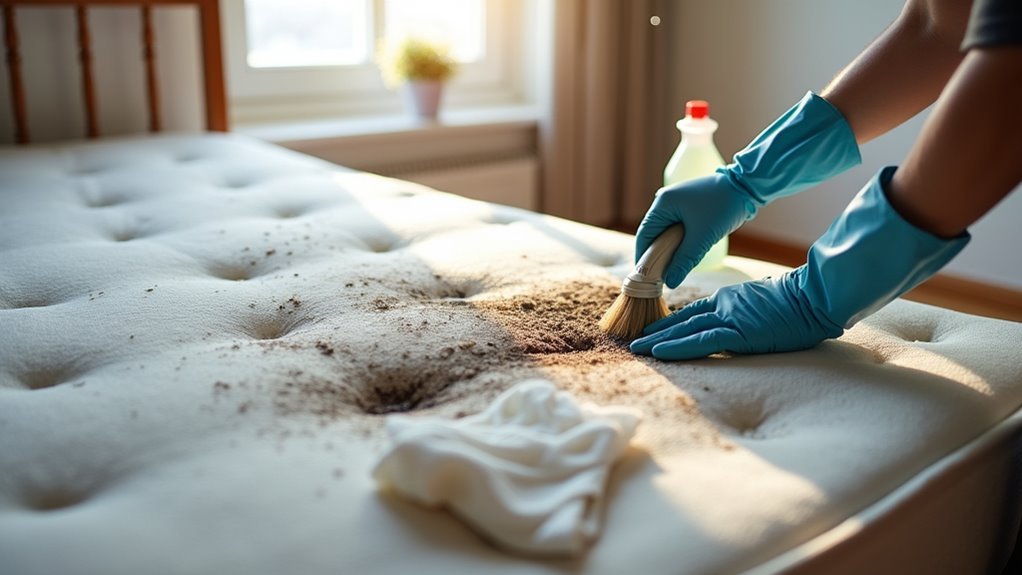

Mold on a mattress is often removable if treated promptly and gently. Start by spotting surface growth, gather cleaning supplies, and limit cleaning to the mattress exterior. Some mattresses can be saved; others require replacement if mold has penetrated deeply or left stains and odors. After cleaning, dry the mattress completely and control room humidity to prevent recurrence. This approach keeps sleep surfaces safer and extends mattress life.
How to Tell If Your Mattress Has Mold
A musty mattress usually gives you a few clear warning signs before the mold gets out of hand. You could notice mattress discoloration, like gray, green, or black specks that don’t look like normal wear.
Then check for a strong musty smell, since odor often shows up before stains do. Also, look on both sides, because mold can hide underneath and still spread.
Should you wake up with allergy symptoms such as sneezing, itchy eyes, or a stuffy nose, your bed might be part of the problem. That can feel frustrating, but you’re not stuck guessing.
Remove the bedding initially, then inspect the surface closely in good light. Were the spots to keep growing or the smell to stay, you’re likely handling mold, not simple dirt.
What You’ll Need to Clean Mattress Mold
Before you start scrubbing, pull together the right supplies so the job feels much less overwhelming. You’ll need protective gloves, a ventilation mask, a vacuum with a hose, clean cloths, a spray bottle, and a bucket. Keep rubbing alcohol or another cleaner nearby, plus white vinegar, hydrogen peroxide, or baking soda in case you want backups. A soft brush can help you lift spots without tearing fabric. You’ll also want fresh water for blotting and a fan for drying.
Before you begin, strip off bedding and wash it. Then check that the room has good airflow. Once everything sits within reach, you can move calmly and work with less stress. That little setup can make the whole process feel more manageable.
When a Moldy Mattress Needs Replacement
Provided the mold has spread deep into your mattress, cleaning mightn’t be enough to make it safe again.
You should also watch for a musty smell that won’t go away, since that often means mold is still hiding inside.
And should the mattress feel warped, soft in strange spots, or damaged in the seams, it’s usually time to replace it.
Deep Mold Penetration
Once mold has moved past the surface and settled deep inside your mattress, cleaning it usually won’t fix the problem for long.
At that point, you need a deep inspection of both sides, seams, and the underside to see how far it spread.
Should the staining reach the core, or should the mattress feel damp after drying, you’re likely contending with more than surface contamination.
In that case, professional remediation possibly still won’t save it, and replacement becomes the safer choice.
You deserve a sleep space that feels clean and calm, not one that keeps putting you on alert.
So trust what you find, not what you hope.
Once mold has rooted inside the padding, a new mattress often protects your health, your rest, and your peace of mind.
Persistent Musty Odors
A stubborn musty odor often tells you more than the stain ever could, because mold can keep hiding inside the mattress even after the surface looks better.
Should you still smell mildew after cleaning and drying, trust that signal.
You deserve a bed that feels fresh and safe, not one that greets you with that basement smell.
Try stronger airflow, air purifiers, and charcoal sachets near the bed, but keep checking the mattress itself.
Press along the top and underside, and sniff each side.
Should the odor stay after repeat cleaning, or comes back fast in a dry room, the mold might be deeper than you can reach.
At that point, replacing the mattress often protects your sleep, your peace, and your home.
Structural Damage Signs
Whenever mold starts to damage the mattress itself, cleaning could no longer be enough. You should look for signs that go beyond stains.
Should the surface feels lumpy, soft, or uneven, the foam might be breaking down. Once you notice internal sagging, the support inside has likely weakened.
Check the edges and center, because a damaged mattress can lose frame integrity and start to bend or fold in ways it never did before. You may also feel persistent dips after you get up.
Should the mattress stays warped after drying, or should mold keeps returning in the same spots, replacement is usually the safer choice. Trust your instincts here. Were the bed no longer feels solid, you deserve one that supports you well.
Remove Surface Mold From the Mattress
Start by clearing away the moldy spots so you can see what you’re really coping with.
Initially, strip off bedding and vacuum the mattress on both sides, including the underside, so loose spores don’t spread.
Then, put on gloves and check a small concealed spot with a fabric safe cleaner or rubbing alcohol mix, since some fabrics react fast.
Next, dampen a cloth, not the mattress, and work the stain with gentle surface abrasion in small circles.
Move a little past the edge of each mark so you don’t leave a ring behind.
In case the spot stays light, repeat once more with care.
You’re not fighting the whole mattress at once, just the surface mess that’s showing up today.
Deodorize and Dry the Mattress Completely
Once you’ve cleaned the mold, you need to beat the leftover smell before it settles in again.
Sprinkle baking soda over the mattress and let it sit so it can pull out moisture and odors.
Then place the mattress in sunlight with fans blowing across it, and keep going until it feels completely dry.
Baking Soda Deodorizing
Sprinkle a generous layer of baking soda over the cleaned mattress to help pull out leftover moisture and calm stubborn odors. You’re using odor absorption and alkaline neutralization to weaken the musty smell, so the bed starts feeling fresh again.
Let the powder sit on every treated spot, including seams and edges, because mold can hide there too. Then press it gently into the fabric with a clean hand or soft brush, and leave it alone while it does the quiet work for you.
Whenever the surface feels dry and the scent has eased, vacuum up every trace of powder. Should you still catch a damp, sour note, repeat the treatment on that area. Keep the room comfortable and dry so your mattress can stay ready for rest.
Air Dry Thoroughly
Letting the mattress air dry is the step that really locks in your hard work, because even a little leftover dampness can invite mold right back in. You want the room to feel open and calm, so clear space around the bed and keep the bedding off until the surface feels fully dry.
Good airflow optimization helps every layer release concealed moisture, and moisture mapping can guide you to the spots that still feel cool or damp. Press your hand into the foam or springs, then check the underside too, since trapped wetness likes to hide there.
Should you still catch a musty remark, give it more time. Patience here isn’t fancy, but it does protect your mattress and your peace of mind.
Use Fans And Sun
Set a fan near the mattress and aim the air across the surface, because steady airflow helps pull out the last bit of concealed moisture before mold can settle back in. Keep the room open too, so fresh air can move through every corner and help you feel more confident about the cleanup.
Should you can, move the mattress outside for outdoor airing on a dry day. Sunlight adds UV exposure, which can help reduce lingering spores and stale smells. Flip the mattress so both sides dry evenly, and check the seams where dampness likes to hide.
A dehumidifier nearby can support the process and keep the air from turning muggy. Don’t put bedding back on until the mattress feels fully dry, clean, and ready for your space.
Clean the Room So Mold Doesn’t Come Back
To keep mold from sneaking back into your mattress, you need to clean the room as carefully as you clean the bed. Start by removing dirty laundry, damp towels, and clutter that traps moisture. Open windows whenever you can, and use fans to improve air circulation so the room feels fresh instead of stale.
Then check humidity control by running a dehumidifier or air conditioner provided the air feels heavy. Wipe down window frames, walls, and baseboards should you spot dampness, because concealed wet spots can feed mold fast. Also, wash bedding often and let it dry fully before you remake the bed.
Whenever you keep the room dry, bright, and tidy, you give mold fewer places to settle in and fewer chances to return.
Stop Mold From Growing on Your Mattress
A clean, dry mattress is your best defense against mold, so start from cutting off the moisture it loves.
You can protect it through keeping humidity monitoring in place and watching airflow patterns in your room.
Open windows whenever weather allows, run a fan, and use a dehumidifier should the air feels sticky.
After spills or sweat, dry the mattress fast and don’t remake the bed until it’s fully dry.
A mattress protector adds another shield, and it helps you feel more at ease too.
Check the underside often, since concealed dampness can linger there.
In case you smell mustiness, act right away and clean the spot before it spreads.
Small habits like these keep mold from settling in and help your bed stay fresh, safe, and ready for rest.
Frequently Asked Questions
Can Mattress Mold Make You Sick?
Yes. Mattress mold can make you sick. About 1 in 4 people react to mold-related allergies, and you could get respiratory infections too. If you feel wheezy, sneezy, or unwell, do not ignore it.
How Long Does Mattress Mold Cleanup Take?
You’ll usually spend 1 to 3 hours on mattress mold cleanup, plus drying time overnight or longer. Cleaning timeframes vary with stain size, and airflow from fans or sunlight can speed the process.
Will a Mattress Cover Stop Mold Completely?
No, a mattress cover will not stop mold completely. You will still need waterproof barriers, breathable fabrics, and good ventilation to keep moisture down. If your room remains damp, mold can still grow underneath.
Can I Use a Steam Cleaner on Moldy Mattresses?
Usually, no. Steam cleaning can drive moisture deeper into the mattress, and that can worsen mold. You’re better off focusing on fabric damage prevention, since one damp mattress can become ten concealed problems fast if it dries poorly.
How Often Should I Inspect My Mattress for Mold?
You should inspect your mattress every month and do routine checks after spills or humidity spikes. Add seasonal inspections too so you catch musty odors promptly and protect your comfort and sleep.
