
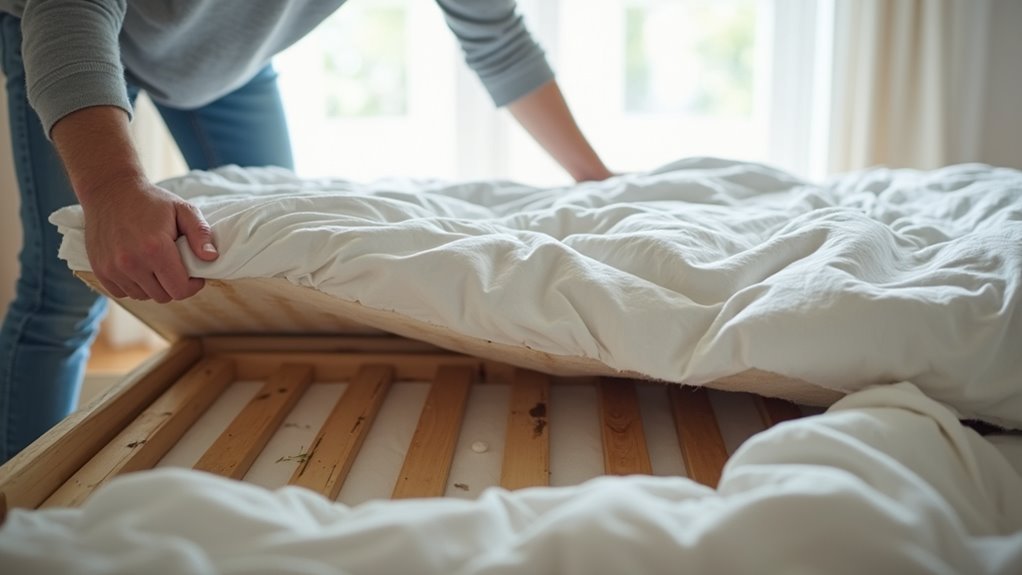

Yes — a sagging mattress can often be fixed rather than replaced. Find the low spot, add firm support beneath it with plywood, a bunkie board, or tightly folded blankets, and use a dense topper to smooth the surface. Rotate the mattress regularly and check the bed frame for broken slats or loose support to prevent recurrence. Foam and old innerspring mattresses respond differently, so match repairs to the mattress type. Proper support and maintenance extend mattress life and improve sleep comfort.
Quick Ways to Fix a Sagging Mattress
Start through figuring out where the sagging is coming from, because that tells you which quick fix will actually help. Lie across the mattress and feel for low spots in the center, at the edges, or everywhere.
Then check the frame and foundation, since a weak base can make you sink too much. Should the dip be small, try temporary padding with a firm pillow or rolled towel under the sore spot.
For edge sagging, slide a body pillow along the side to steady you. You can also add a topper for a smoother feel, and a non-slip mat helps it stay put.
In case the mattress still feels loose, inspect the edge stitching and skip sleeping in the same spot tonight.
Why Mattresses Sag Over Time
Your mattress doesn’t sag for no reason, and that can feel frustrating whenever you’re just trying to get a decent night’s sleep.
Over time, the materials inside compress, bend, and lose bounce from your body weight, heat, and nightly pressure in the same spots.
Common wear, weak support, and aging foam or coils all work together to create those low spots you keep feeling.
Common Causes Of Sagging
Over time, a mattress can lose its shape for a few clear reasons, and most of them come down to pressure, age, and weak support. You’re not imagining it, and you’re not alone.
- Daily pressure from your body slowly pushes the surface down.
- Manufacturing defects can leave weak spots that sag sooner than expected.
- Environmental humidity can soften materials and strain the inner layers.
- A bowed frame or tired foundation can let the whole bed dip.
When these issues stack up, you feel uneven spots under your hips, shoulders, or back. That can make sleep feel less cozy and more frustrating.
Should you catch the cause at an early stage, you can protect your comfort and keep your bed feeling like home.
Material Wear And Compression
As a mattress ages, its comfort layers take a daily beating, and that steady pressure slowly changes how the bed feels under you.
You can feel the shift when fiber degradation starts breaking down the soft fill inside the cover. Then foam densification makes the cushion pack tighter, so the surface loses bounce and hugs your body less evenly.
Over time, the same spots carry your weight again and again, and those layers stop springing back the way they did on night one.
Should you share the bed, this wear can show up faster, because more pressure lands in the same zones. That’s why the middle or edge could dip while the rest still looks fine.
You’re not imagining it. The materials are simply wearing down, one sleepy night at a time.
Add Support Under the Mattress
Should a sagging mattress still feels uneven after you’ve checked the frame and rotated it, adding support under the mattress can bring real relief fast. You can rebuild comfort with simple, shared fixes that help your bed feel like home again.
Try these options:
- Slide a bunkie board beneath the mattress for a flatter base.
- Add plywood over the foundation for steadier weight support.
- Use foam inserts or folded blankets to lift a dip.
- Keep under bed storage clear so support pieces sit level, and add foundation insulation should cold air weakens the base.
A firmer layer can ease pressure and help you sleep closer to your people, not apart from them.
Rotate or Flip the Mattress Safely
Turn your mattress with care, because a small change here can save you a lot of backache later. Initially, check the tag so you know whether manual rotation or flipping is allowed. Then, ask a friend to help with safe handling, because mattresses can feel awkward and heavy. Move slowly, keep your back straight, and turn the mattress head-to-foot provided it’s one-sided. In case it’s double-sided, flip it only as directed.
| Step | Feeling |
|---|---|
| Lift together | Less strain |
| Turn gently | More control |
| Set it down flat | Quiet relief |
When you rotate on a steady schedule, you share wear more evenly and help your bed feel more like home again.
Use a Mattress Topper for Temporary Relief
A mattress topper can take the edge off a sagging bed by smoothing out small dips and making the surface feel more even.
In case the sag is more noticeable, choose a topper that’s at least 3 inches thick so it can better cover body impressions and give you more support where you sink in.
As you try it, pay attention to pressure relief too, because the right topper should ease sore spots without making you feel stuck.
Choose Supportive Thickness
More often than not, the right mattress topper can take the edge off a sagging bed without making you spend a fortune. You’ll want supportive thickness, usually 3 inches or more, so you can feel steadier right away.
Then, consider layer selection: a denser top layer can soften pressure, while a firmer base helps keep you lifted.
- Check edge reinforcement so you don’t slide toward the side.
- Match the topper to your mattress’s coil count should you desire better balance.
- Use a non-slip pad to keep the topper from drifting overnight.
- Pick deep-pocket sheets so everything stays snug and calm.
When you choose well, you give your bed a better chance to feel like it belongs under you again.
Cover Body Impressions
Provided your mattress has body impressions, a topper can help smooth out the dip and make sleep feel more even again. You can use it to cover impressions, soften rough spots, and create a steadier surface that feels less worn out.
Should you’re unsure where the low areas sit, try visual mapping by feeling across the bed and marking the deepest spots with your hand. Then choose a topper thick enough to bridge the uneven area without sinking in too fast.
Deep-pocket sheets can help keep everything in place, so you don’t wake up chasing corners. This simple layer won’t fix the mattress itself, but it can give you a more comfortable night whilst you figure out your next move.
Check Pressure Relief
Provided that your mattress still feels lumpy after you’ve checked the support beneath it, a topper can give your body some quick relief.
You can use it to soften pressure points and help you feel like you belong in your own bed again.
- Choose a topper that’s at least 3 inches thick for deeper dips.
- Look for pressure mapping remarks so you can match the topper to your shoulders and hips.
- Pick designs with relief zones to ease strain where you need it most.
- Add a non-slip mat or deep-pocket sheets so it stays in place.
If your sag is mild, this step can calm the uneven feel right away.
It won’t fix the mattress forever, but it can make bedtime kinder while you plan your next move.
When It’s Time to Replace Your Mattress
Whenever your mattress still sinks after you’ve tried rotation, support fixes, and a topper, it’s often a sign that the bed is past its repair stage. At that point, you should check your warranty inspection details and compare them with the replacement timing your maker lists. Should the dip be wide, deep, or keep returning, a new mattress will usually serve you better than another patch.
You don’t have to guess alone. Look for body marks, broken support, or edge collapse, and trust what you feel each morning. In case your sleep feels uneven, sore, or restless, your bed isn’t doing its job. Replacing it can bring back comfort and help you feel at home in your own space again. Choose a model with strong sag coverage, and permit yourself to move on without guilt.
Frequently Asked Questions
How Can I Tell if Sagging Is Covered Under Warranty?
Check your warranty’s manufacturer policy initially, and keep your proof of purchase handy. You will usually qualify provided sagging exceeds the stated depth, is not from abuse, and the mattress is still within coverage.
What’s the Difference Between Softening and True Structural Sagging?
Softening changes how you feel the bed; true structural sagging means the mattress’s material breakdown creates visible dips or body impressions that do not rebound. You will notice lasting uneven support, not just a cozier comfort perception.
Should I Inspect the Bed Frame Before Fixing the Mattress?
Yes, you should inspect the bed frame initially; it can be the quiet foundation behind the dip. Check supports, measure clearance, and make sure your bed is holding you like family before you fix the mattress.
How Do I Fix Sagging if the Edges Are the Problem?
When your edges sag, add edge support with a firm body pillow or rolled towels along the perimeter, then reinforce the perimeter with a thick topper and a sturdy, flat foundation underneath.
Can Cardboard Safely Help With a Deep Mattress Depression?
No, you shouldn’t rely on cardboard support for a deep mattress depression, except as a temporary shim. For example, if you’re moving tomorrow, it could help overnight, but you will still need real support soon.
