
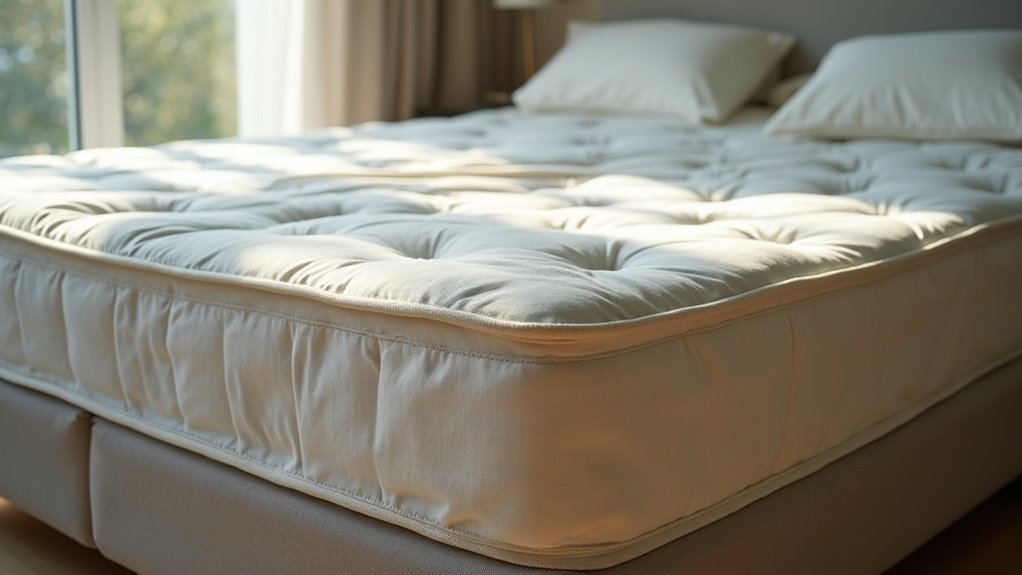

Most mattresses last about seven to ten years. Lifespan varies by type: memory foam and latex often outlive inexpensive innersprings. Construction quality, weight of sleepers, and maintenance influence durability. Common signs of wear include sagging, persistent aches, and increased motion transfer. Spotting these signs early preserves sleep quality and helps decide between repair and replacement.
How Long Does a Mattress Last?
Most mattresses last about 7 to 10 years, and that range gives you a helpful starting point without making it sound set in stone. You can consider it as a shared benchmark, not a hard deadline, because your mattress could age faster or slower than your neighbor’s.
Your sleep hygiene matters here, since steady use, sweat, and nightly pressure slowly wear it down. Material quality, body weight, and care also change how long it feels supportive. Should you keep noticing sagging, aches, or less comfort, the bed might be telling you it’s done.
Warranty coverage can help you understand what the maker expects, but age alone doesn’t decide everything. Pay attention to how you sleep, because you deserve a bed that still feels like home.
Mattress Lifespan by Type
While you compare mattress types, you’ll notice that innerspring beds usually wear out faster than memory foam beds.
An innerspring mattress often lasts about 5 to 8 years, while a memory foam mattress usually gives you about 7 to 10 years of use.
Understanding this difference can help you judge at what point your bed’s support might start fading and at what point it’s time to consider a replacement.
Innerspring Mattress Lifespan
Innerspring mattresses tend to wear out faster than many other types, and that’s because their coil systems and comfort layers take on daily stress night after night.
You’ll usually get about 5 to 8 years from one, though good coil quality can stretch that window a bit. Strong edge support also helps you keep using the full surface without feeling like you’re sliding off the side.
Still, once the coils start to lose bounce or the surface feels uneven, your body notices fast. You might wake up sore, and that’s a clear sign the bed isn’t backing you up like it should.
With regular rotation, a sturdy base, and a mattress protector, you could help your innerspring bed stay comfortable and supportive a little longer.
Memory Foam Lifespan
Memory foam mattresses usually give you a bit more staying power than many basic beds, so they often last about 7 to 10 years with regular use.
You’ll usually get the best results whenever you choose a dense foam core and pair it with solid support. Because memory foam reacts to body heat, temperature sensitivity can change how it feels over time, but it doesn’t always mean it’s wearing out.
Should you notice sagging, less pressure relief, or deeper body impressions, it could be nearing the end of its life. You might also notice off gassing concerns when the mattress is new, yet that smell usually fades fast.
With a protector, rotation whenever permitted, and gentle care, you can help your mattress stay comfortable and feel like it belongs in your room longer.
Memory Foam Mattress Lifespan
Your memory foam mattress can last a long time, but foam density plays a big role in how well it holds up.
Higher-density foam usually resists sagging better, while lower-density foam might soften and wear out sooner.
In case you notice body impressions, loss of support, or new aches, your mattress could be telling you it’s time for a change.
Foam Density Factors
Foam density plays a big role in how long a memory foam mattress can stay comfortable and supportive. Whenever you shop, check the foam firmness because it often matches how dense the layers feel under you. Higher density usually means better support and a longer life, especially if manufacturers follow strong manufacturing standards. You’re not just buying a bed, you’re joining a sleep setup that should fit your body for years.
| Density | Feel | Lifespan |
|---|---|---|
| Low | Softer | Shorter |
| Medium | Balanced | Solid |
| High | Firm | Longer |
| Very High | Dense | Best |
| Mixed Layers | Custom | Varies |
If you sleep on your side or back, denser foam can help you feel cradled without sinking too far. That balance keeps your room for rest steady and familiar.
Signs of Wear
Once a memory foam mattress starts to wear out, the signs usually show up in small but steady ways, and they can make your bed feel less like a safe place to rest and more like a nightly compromise.
You might notice deeper sagging where you sleep, along with edge collapsing when you sit down or get up. Your body could feel less supported, so you wake with stiffness in your back or hips.
Next, look for fabric pilling, soft lumps, or spots that stay warm and feel thin. If you share the bed, you might feel more movement too.
These changes can sneak up on you, so trust what your body tells you. As soon as sleep stops feeling comforting, your mattress could be asking for a replacement.
Innerspring and Hybrid Lifespans
Whenever it comes to innerspring and hybrid mattresses, lifespan often depends on how each bed is built and how much pressure it takes over time. Should you sleep on one every night, you can usually expect about 5 to 8 years from an innerspring and 6 to 10 years from a hybrid.
A higher coil count can help the bed feel steadier, while strong edge support can slow down initial sagging and give you more usable space. Still, daily use, body weight, and the quality of the layers matter a lot.
Were your mattress to start to dip, creak, or feel uneven, it could be losing the support your body needs. With good care and a solid frame, you can stretch its comfort a little longer.
Latex Mattress Lifespan
After you’ve looked at innerspring and hybrid beds, latex stands out because it often lasts much longer and holds its shape with less fuss.
You can expect about 10 to 20 years from a good latex mattress, and that range depends on the build and how you care for it.
Natural latex usually gives you the best durability, while synthetic latex can still serve you well at a lower cost.
- You get steady support for years.
- You keep bounce and comfort longer.
- You help the bed last through using a solid base.
- You protect the surface with a cover.
If you want a mattress that feels like it belongs in your room for the long haul, latex can be a strong, reassuring choice for your sleep space.
Signs Your Mattress Is Wearing Out
In case your mattress has started to feel more like a dip than a bed, it’s probably trying to tell you something.
You might notice sagging in the middle, a sore back in the morning, or a lumpy spot that won’t smooth out.
Whenever edge cushioning feels weak, you could slide off the side instead of resting easy.
Should fabric breathability seem off and the surface feel warm, sticky, or stale, the materials might be aging too.
You could also sleep better in guest rooms or on the couch, which is a pretty clear clue.
Small stains, squeaks, or shifting comfort each night can add to the scene.
Trust what your body says.
Should bed time start feeling less cozy and more like a compromise, your mattress might be wearing out.
Why Mattresses Lose Support
Mattresses lose support as their materials start to deteriorate from everyday use. You feel it initially in softer spots, then in less steady rest. The comfort you loved can start to feel uneven, and that’s frustrating when you just want a good night with your bed buddies nearby.
- Foam cells decompose and stop bouncing back.
- Coils weaken, so your body sinks more deeply.
- Edge support fades, which makes sitting or sleeping near the side feel shaky.
- Humidity effects can soften layers and speed up material fatigue.
As these changes build, your mattress can’t hold you in a healthy position. So your back, hips, and shoulders take on more strain. Should you notice this shift, you’re not alone, and it’s a common sign that support is fading.
What Shortens Mattress Lifespan
Several everyday habits can wear a mattress down much faster than you’d expect, even although it still looks fine on the surface. You can hasten damage with heavy use, jumping on the bed, or leaving it in a damp room. Pressure spots, sweat, and spills degrade comfort layers over time. Humidity control matters because trapped moisture can weaken foam and invite odor. Pest prevention also helps, since bugs and dust mites can make the bed less clean and less restful.
| What Shortens It | Why It Matters |
|---|---|
| High body pressure | Creates sagging and deep impressions |
| Moisture buildup | Softens materials and harms comfort |
| Poor pest prevention | Can lead to stains, allergens, and wear |
When these issues pile up, your mattress can age fast, and you might feel it in your sleep.
How to Make It Last Longer
You can help your mattress stay supportive longer through treating it well from the outset. A few steady habits can keep it feeling like home for years, and you won’t need much effort.
- Use a sturdy frame so the layers stay even.
- Follow a rotating schedule provided your model allows it; this helps share wear.
- Add a protector to block spills, sweat, and dust.
- Keep humidity control in mind, since damp air can speed damage.
Also, avoid jumping on the bed or piling weight in one spot. In case you flip the mattress, check the maker’s guide beforehand. Simple care like this protects comfort, support, and that cozy place you count on each night.
When to Replace Your Mattress
Even a good mattress can wear out sooner than you expect, and that can leave your mornings feeling rough. Should you’re waking up sore, sinking into dips, or feeling more motion from your partner, it might be time to replace it. Most beds last 7 to 10 years, but condition matters more than age.
| Sign | What it means |
|---|---|
| Sagging | Support is fading |
| Lumps | Materials are breaking down |
| Stiffness | Your body isn’t getting relief |
| Allergy flare-ups | Dust and wear might be building up |
You don’t need to wait for a dramatic collapse. A seasonal replacement check can help you stay ahead of trouble, and keeping sleep hygiene strong makes it easier to notice changes. Should your mattress no longer feel like part of your safe, cozy space, trust that feeling.
Choosing a Mattress That Lasts Longer
A mattress can hold up for years, but the one that lasts longest usually starts with smart choices at the store. You’ll feel better whenever you pick a bed that fits your body and budget.
- Choose natural latex provided you want strong bounce and long wear.
- Check foam density and coil quality, since sturdy parts resist sagging.
- Read the warranty length carefully, but don’t let it replace real quality checks.
- Match the mattress to your frame, because good support helps it stay firm.
Whenever you shop this way, you join the group of sleepers who get more comfort for more years. A protector and proper rotation can help too, so your bed keeps feeling like home, not a worn-out guest.
Frequently Asked Questions
Can a Mattress Last Longer With a Good Bed Frame?
Yes, a good bed frame can help your mattress last longer, and that is no coincidence: it enhances edge support, improves frame ventilation, and helps you feel supported, comfortable, and part of a well kept sleep space.
Does Sleeping Position Affect Mattress Wear?
Yes, your sleeping position can affect wear. Side sleeper sagging often appears faster, while firm sleeper durability usually holds up better. You’ll belong on any mattress longer through rotating it, supporting it, and using a protector.
Are Mattress Warranties Related to Actual Lifespan?
No, not really. Warranties don’t measure actual lifespan; they mostly cover defects, not normal wear. You’ll want to read coverage subtleties and ignore warranty myths, because your mattress can fail long before coverage ends.
Should You Replace a Mattress After Moving?
Yes, you should replace it if moving damaged it, if it sagged, or if it feels unsupportive. Otherwise, keep it, since mattress transportability varies. After a move, a hygiene reset with a protector and airing out helps you feel settled.
Do Mattress Protectors Really Extend Mattress Life?
Yes, they can help you extend your mattress’s life by blocking spills, reducing stains, and keeping dust mites away. Choose waterproof covers with stain protection, allergen barrier, and thermal regulation so you will feel cared for and included.
