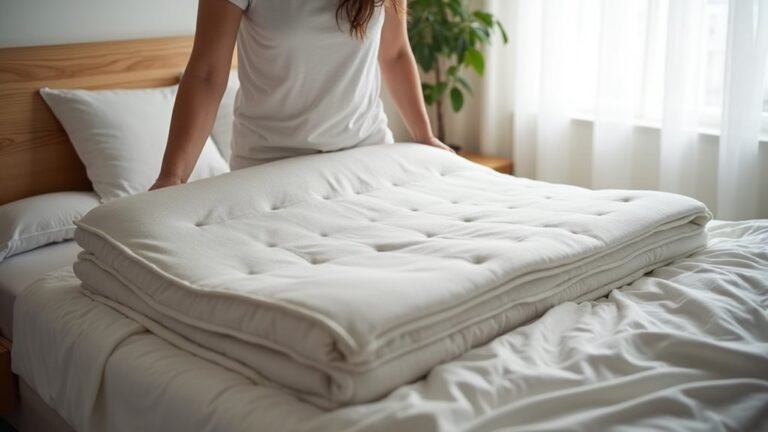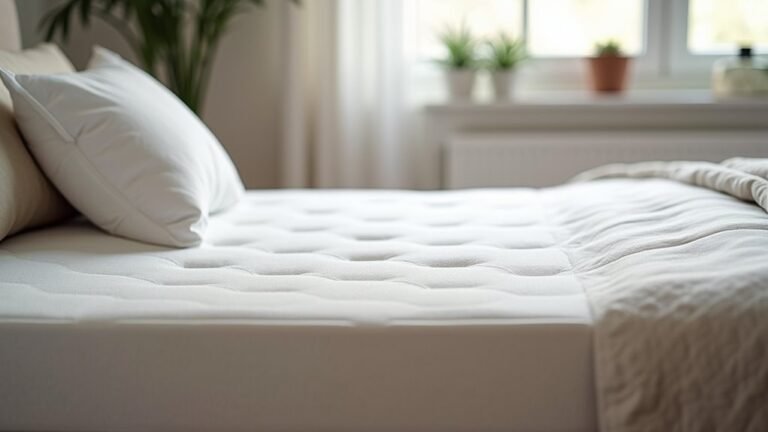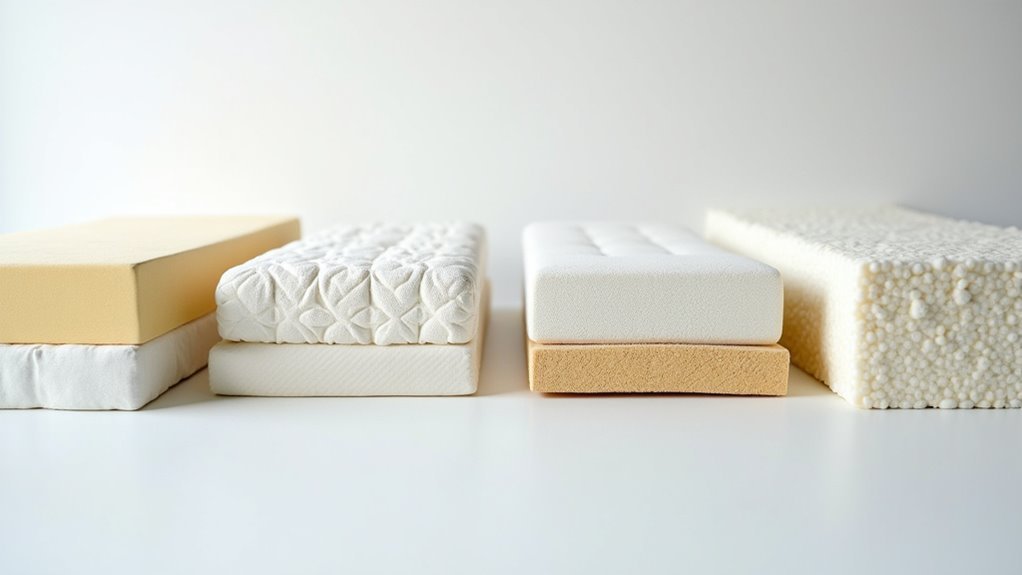

Mattress lifespan varies by material: memory foam lasts about 6–8 years, innersprings 5–7 years, latex up to 10–12 years, hybrids around 6–8 years, and airbeds depend on chamber quality and maintenance. Daily use, humidity, and construction influence durability. Look for sagging, loss of support, and increased aches as clear signs of wear. Proper care like rotating and keeping humidity low slows degradation. Knowing typical lifespans helps pick a mattress that fits budget and sleep needs.
What Shortens or Extends Mattress Life?
Several things can shorten or stretch your mattress life, and most of them come down to daily stress and steady care. You help your bed last longer whenever you rotate it, support it with a solid base, and keep it clean.
Good humidity control matters too, because damp air can weaken materials and invite mildew. Should you sleep hot, air out the room often so the surface stays fresh.
You also protect the bed from spills, rough jumping, and pet damage, since claws and accidents can wear it down fast. Your body weight, how often you use the mattress, and the quality of the build all change how long it stays comfy.
How Long Do Memory Foam Mattresses Last?
Memory foam mattresses usually last about 5 to 10 years, and many people start to notice soft spots or less support somewhere in that range. Assuming yours still hugs your body well, you might be sleeping on a keeper. Most budget beds lean closer to 5 to 7 years, while denser foam can stay comfortable for 8 to 12 years.
Your sleep chemistry matters, too, because heat, sweat, and nightly pressure can change how fast the foam breaks down. That’s why cooling technology can help you stay more comfortable and could protect the surface a bit longer. Still, you’ll want to watch for deep impressions, slower bounce-back, or aches in the morning. Once those signs show up, your mattress might be ready for a new home.
How Long Do Innerspring Mattresses Last?
Innerspring mattresses usually last about 5 to 8 years, though a good one can stretch a bit longer with careful use.
You might notice coil fatigue, sagging, or weak edge support before that point, and those changes can make sleep feel less steady.
Should your bed starts to squeak, dip, or lose support, it’s probably telling you it’s time to pay attention.
Typical Innerspring Lifespan
Usually, an innerspring mattress lasts about 5.5 to 6.5 years, though many people see a broader range of about 5 to 8 years. You can usually count on that provided you sleep on it nightly and care for it well.
Over time, coil fatigue can weaken the support you feel, and spring tension can fade little by little. That means the bed mightn’t feel as lively or steady as it once did.
Your mattress’s life also depends on how much weight it carries, how often you rotate it, and how warm or damp your room stays. Should you treat it kindly, you could enjoy more comfort and a stronger sense of home before replacement becomes necessary.
Signs of Wear
As soon as your bed starts to wear out, the signs often show up before the years do.
You might feel dips under your hips, a shaky edge, or springs that poke back when you settle in.
Should you wake up sore, your innerspring is probably losing support.
Also, look for age spots on the fabric, loose stitching, or squeaks that grow louder each week.
These clues matter because coil fatigue can sneak in fast, especially after about five to eight years.
Then dust mites can move in more easily once the cover traps more moisture and debris.
Whenever your mattress stops feeling steady and clean, you deserve a better sleep space.
How Long Do Latex Mattresses Last?
Latex mattresses often last much longer than most people expect, and that’s one of the main reasons they’re such a smart buy. You can usually count on 10 to 15 years, and sometimes longer, provided the bed has strong natural durability and careful construction. Still, manufacturing variability can change that a lot, so your exact lifespan might differ.
- Dense latex holds shape well.
- Better cover stitching adds support.
- Good care slows wear.
- Daily use affects timing.
Should you share the bed with a partner, you might notice small changes sooner, but latex still tends to stay comfortable and supportive. That makes it a solid choice whenever you want a mattress that feels reliable and helps you belong in a home that truly fits you.
How Long Do Hybrid Mattresses Last?
Hybrid mattresses usually last about 6.5 to 7.5 years, but you can often stretch that with solid build quality and steady care.
The foam layers usually wear out initially, while the coils can keep going longer provided you rotate the bed and protect it from moisture and sagging.
In case you treat it well, you’ll give your hybrid a much better shot at staying comfy instead of turning into a lumpy surprise.
Hybrid Lifespan Factors
Whenever you shop for a hybrid mattress, its lifespan depends on more than the label on the box. You can stretch comfort by choosing smart material selection and checking cover thickness, because both help protect the comfort layers people sleep on every night.
- Pick denser foams, so they hold shape longer.
- Choose a stronger cover, so friction stays lower.
- Match the bed to your body and sleep style.
- Keep it in a room with steady temperature and dry air.
You also help as you rotate the mattress on a simple schedule and use a solid base. These choices won’t make every hybrid last forever, but they can keep your bed feeling like part of your home for more years.
Coil And Foam Wear
Even a good hybrid mattress doesn’t stay the same forever, because both the coils and the foam slowly wear down with use. You might initially notice the comfort layer softening, then the coil support starts to feel less steady.
Foam can lose bounce and form dips, especially if it began with lower density. At the same time, coil corrosion can weaken the spring system in damp rooms, and that can make the bed feel noisy or uneven.
Some hybrids also show early foam off gassing when new, but aging brings a different change: less fresh support and more sag. Should you share the bed every night, those changes can show up sooner. Still, a well-built hybrid often gives you several good years before you feel the need to replace it.
Care To Extend Life
To help your hybrid mattress last as long as possible, you’ll want to treat it like a daily tool that needs a little care, not a piece of furniture you can forget about.
That small shift matters because your coils and foam both age with use. Try these habits:
- Follow rotate schedules every 3 to 6 months.
- Use a supportive base so the frame doesn’t stress the springs.
- Keep humidity control in your room to fight moisture and mold.
- Vacuum the surface and use a protector to block sweat and spills.
These steps help you stay in the comfort club longer, because your mattress gets less strain and keeps its shape better.
Should you sleep on the same spot every night, those foam layers can tire out sooner than the coils underneath.
Why Mattress Construction Matters
Mattress construction shapes how long your bed stays comfortable, and it matters more than many people realize.
Once you know a bed’s material science, you can see why some models hold up and others soften fast. Strong foams, sturdy coils, and well-placed comfort layers work together to support you night after night.
Good manufacturing standards also matter, because tight stitching, even glue use, and careful layer bonding help prevent premature wear.
You deserve a mattress that feels like part of your home, not a temporary fix. So, whenever you compare options, look beyond the label and notice how each layer shares the load. That’s where real durability starts, and that’s what helps you stay comfortable longer.
Signs Your Mattress Needs Replacing
Should you can see your mattress sag in the middle or along the edges, it’s usually telling you it’s past its best days.
You may also wake up with stubborn aches, even after a full night’s sleep, because the support just isn’t there anymore.
Whenever these signs show up together, your bed’s trying to send you a pretty clear message.
Visible Sagging
Visible sagging is one of the clearest signs that your mattress has started to wear out, and it often shows up before the comfort feels completely gone.
You could notice:
- A dip where you sleep most.
- edge bulging along the sides.
- surface rippling that won’t smooth out.
- A lopsided feel when you lie down.
Whenever you see these changes, your bed isn’t just aging, it’s losing support.
That can make your sleep space feel less cozy and less like yours. Suppose you share the bed, the sag can spread into the middle, too.
You don’t have to guess here. Run your hand across the top, sit near the center, and look for a slump that stays put.
Should the dip keep returning, your mattress is telling you it’s time.
Persistent Aches
A sore back in the morning can feel like your body is sending you a message you didn’t ask for, and that’s often where mattress trouble shows up next.
When your mattress starts to lose support, you might wake up with tight shoulders, a stiff lower back, or sore hips. Those aches often come from pressure points that no longer get even relief.
Should you notice pain that fades after you get moving, your mattress could be forcing your sleep posture into a bad shape night after night. You shouldn’t have to fight your bed just to rest.
Pay attention should the discomfort keep coming back in the same spots. That pattern usually means the surface no longer fits your body well, and your mattress might be ready for replacement.
How to Make Your Mattress Last Longer
With a few smart habits, you can stretch your mattress life and keep it feeling supportive for much longer. Treat it like part of your room, not just a thing you sleep on.
- Use a sturdy protector to block sweat and spills.
- Rotate it on a seasonal rotation so wear stays even.
- Keep your bedroom dry and cool for better temperature regulation.
- Support it with a strong base so it won’t sag prematurely.
Also, vacuum the surface now and then, and don’t bounce on it like a kid at a trampoline park.
Should you share the bed, small habits matter even more because pressure builds fast. Whenever you care for your mattress this way, you help it stay comfy, clean, and familiar.
When to Replace Each Mattress Type
Even in case you care for your bed well, it won’t stay supportive forever.
Should your innerspring starts squeaking, sagging, or letting you feel the coils, it’s time to shop.
Foam and memory foam should go once you wake up sore, notice deep body marks, or fail a sleep trial.
Hybrids usually need replacing once the foam softens before the springs do, so check for uneven support across the middle.
Latex lasts longer, but you should still replace it whenever it stops bouncing back or feels tired.
For airbeds, watch for slow leaks, weak pumps, or uneven firmness.
A seasonal rotation can help you spot changes promptly, and in the event your bed no longer feels like home, trust that signal.
What Warranty Clues Reveal
Warranty language can feel dry, but it often gives you a quiet peek at how long a mattress is meant to hold up. You can read the fine print like a friendly clue, not a trap.
- Longer terms often signal stronger build quality.
- Short terms can hint at faster wear.
- Warranty transparency shows how honest the maker is about limits.
- Clear claim timing rules help you act before coverage slips away.
When you compare options, look for simple words, not fuzzy promises. Should a brand explain sag depth, stains, and support rules in plain language, you’re more likely to feel welcome in the purchase. That clarity helps you protect your sleep and your money. The best warranties don’t just sound big; they make it easy for you to know where you stand.
Which Mattress Type Lasts Longest?
Latex usually wins the long-haul race whenever you ask which mattress type lasts longest. You can expect it to hold up better than most because it resists sagging and body impressions.
Should you sleep in one spot, alter your sleeping posture, or share the bed nightly, latex still keeps its shape well. It also handles temperature control nicely, so heat won’t break it down as fast as weaker foams.
After latex, hybrids often come next, then high-density foam, memory foam, and innerspring models. Airbeds can last a long time too, but their pumps and seams need extra care.
Frequently Asked Questions
Can Mattress Protectors Actually Extend Mattress Lifespan?
Yes, mattress protectors can extend your mattress’s life by blocking spills, sweat, and dust. You get stain protection and an allergen barrier, so you keep your bed cleaner, fresher, and feeling supported longer.
Does Rotating a Mattress Prevent Sagging Over Time?
Yes, rotating your mattress can help prevent sagging by spreading wear. If you follow rotation schedules and vary sleeping positions, you will keep pressure more even, and your bed may stay supportive and comfortable longer.
How Does Bedroom Humidity Affect Mattress Durability?
High bedroom humidity can shorten your mattress’s life because it encourages moisture migration into materials and supports microbial growth. You can keep yours drier, fresher, and more durable by ventilating well, using a protector, and controlling humidity.
Do Heavier Sleepers Need to Replace Mattresses Sooner?
Yes, heavier sleepers often replace mattresses sooner. Seven to ten years is typical, but extra weight can shorten that timeframe. Better pressure mapping and firmness preference help you feel supported, so you will be on a mattress that lasts.
Are Adjustable Bases Better for Mattress Longevity?
Yes, adjustable bases can help your mattress last longer provided you choose adjustable compatibility and strong frame stability. You will reduce stress, improve support, and keep comfort more consistent, so you feel confident and cared for.