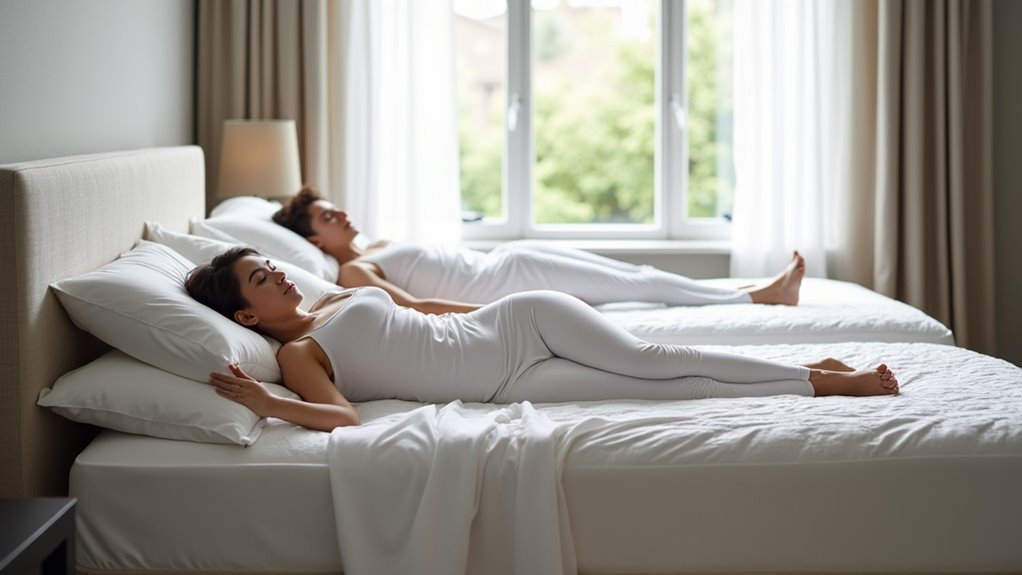

Your preferred sleep position determines the feel a mattress should provide. Side sleepers need softer cushioning for shoulders and hips. Back sleepers require steady support to keep the spine aligned. Stomach sleepers benefit from a firmer surface to prevent hips from sinking. With these basics, choosing the right mattress feel becomes much clearer.
How Sleep Position Affects Mattress Choice
How you sleep changes what your body needs from a mattress, and that’s why one bed can feel perfect for one person and awful for another.
Should you’re a side sleeper, you usually want more cushioning around your shoulders and hips.
In case you sleep on your back, you often need steadier support so your body feels balanced.
Stomach sleepers tend to need a flatter, firmer feel to keep things comfortable.
Your sleep positionchronotypes can also shape what feels right, since some people stay still while others shift all night.
Even your bedtime environment matters, because a cool, quiet room can make a mattress feel different.
Once you try a bed, lie in your real position and notice where your body relaxes, because comfort should feel personal, not forced.
How Firmness Affects Spinal Alignment
Because firmness shapes the way your body settles into the bed, it plays a huge role in keeping your spine lined up while you sleep. Should a mattress feel too soft, your hips might sink and create spinal tilt, which can leave you twisted come morning. Should it feel too firm, it can push back too hard and add lumbar compression, especially around your lower back.
You want a feel that matches your shape, so your shoulders, hips, and middle stay in a straight line. Upon lying down, notice whether your body feels cradled, not swallowed. A balanced firmness helps you relax, breathe easier, and wake up with less stiffness. That’s how you join the group of sleepers who actually feel supported.
Best Mattress for Side Sleepers
The right mattress can take a lot of the strain out of side sleeping, and that relief matters as your shoulders and hips carry more of your body weight. You need a medium-soft to medium feel so your joints sink just enough without throwing your spine off track.
Look for shoulder cushioning that eases pressure points, plus a surface that stays supportive under your waist. Should you be a lightweight sleeper, a slightly softer bed often helps you feel that hug without fighting the mattress. Zoned foam or a gentle hybrid can also help you stay comfy all night.
Whenever you trial one, lie on your side for 10 to 15 minutes and notice whether your body feels cradled, steady, and welcome.
Best Mattress for Back Sleepers
Whenever you sleep on your back, your mattress needs to keep your spine in a neutral line, not let your hips sink or push your lower back up.
You’ll usually feel best on a medium-firm to firm surface that gives you steady support with a little cushion at the shoulders and hips.
Should your back feel tight in the morning, the right pressure relief zones can make a big difference without making the bed feel too soft.
Spinal Alignment Needs
A back sleeper needs a mattress that keeps the spine in a natural, relaxed line, and that usually means medium-firm to firm support.
Whenever you lie on your back, your pelvic tilt should stay steady, not drop low or lift high. That balance helps your lower back feel calm.
Good support also protects your neck posture, so your head rests without strain or awkward bend.
Should the bed feel too soft, your body can sink and lose that clean line. Should it feel too hard, your back could brace instead of rest.
You belong on a mattress that fits your shape, supports your curves, and lets your muscles let go. Put it through a trial in your normal back position, then notice whether your spine stays level and easy.
Pressure Relief Zones
Look for targeted zoning that firms up the lumbar area while softening other areas, and you’ll feel steadier from top to bottom. Localized cushioning helps your upper back and joints relax, which can make bedtime feel less like a trial and more like a reset.
In case a mattress spreads pressure well, you’ll wake up with less tightness and a calmer, more supported feel that fits you.
Ideal Firmness Range
For back sleepers, the sweet spot usually lands in the medium-firm range, because that level of support helps your spine stay in a natural line without letting your hips sink too far.
You’ll usually feel the most ease when your lower back gets gentle lift and your shoulders can rest without strain.
Should you weigh less, a slightly softer feel might suit you; should you carry more weight, a firmer bed often works better. That weight based match can make a big difference.
Still, personal preference matters too, because comfort isn’t universal.
Try your mattress in your normal back-sleeping pose for at least 10 minutes. In case you wake up stiff or feel a dip at your waist, it’s probably not your fit.
Best Mattress for Stomach Sleepers
Stomach sleeping asks a lot from your mattress, so the best choice is usually a firm to extra-firm surface that keeps your hips from sinking too far.
You need steady support that keeps your spine close to neutral and helps your neck feel calm in the morning.
Whenever you shop, look for cooling features should you sleep warm, because a hot bed can make you toss and sigh.
Then check pillow pairing, since a thin pillow often works best and helps keep your head from tilting up.
Should you be lighter, you might want firm support with a little give.
Should you be heavier, go firmer for stronger hold.
You deserve a setup that feels steady, comfortable, and right for you.
Best Mattress for Combination Sleepers
Should you change positions during the night, you need a mattress that cushions your shoulders and hips without trapping you.
A medium-firm feel often works well because it gives you pressure relief on your side and steady support whenever you roll onto your back or stomach.
Responsive materials can also help you shift more easily, so you don’t feel stuck whenever your body wants to move.
Pressure Relief Needs
Because combination sleepers change positions through the night, pressure relief has to work in more than one posture at once. You need a mattress that listens to your shoulders, hips, and lower back without trapping you.
Pressure mapping can show where your body loads the bed most, and targeted cushioning can soften those hot spots before they turn into morning aches. As you roll from side to back, you want enough give to ease joint stress, but not so much that you feel swallowed.
That balance helps you stay comfortable and welcomed by your bed, not fought by it. Look for comfort layers that adapt quickly, since your body won’t stay still for long. Then your mattress can keep pace with you, night after night.
Responsive Surface Support
- Look for a medium-firm feel that stays buoyant.
- Choose hybrid designs provided you want more pushback.
- Assess how fast it rebounds whenever you change positions.
Whenever the bed responds well, your shoulders, hips, and back can all get support without that trapped feeling.
In case you share the bed, this also keeps movement smoother, so you and your partner can rest easier.
A lively surface can make changing positions feel natural, almost like the mattress is keeping up with you.
Frequently Asked Questions
How Do I Know if My Mattress Is Too Soft for Me?
You’ll know it’s too soft if you sink, wake sore, or feel misaligned. Do a sagging assessment, check edge support, and see whether your spine stays level as you lie down.
Does Body Weight Change the Ideal Mattress Firmness?
Yes, your body weight changes ideal firmness. Should you ever have felt a mattress swallow you like quicksand, you know why: lighter bodies need softer pressure relief, while heavier bodies need firmer support for spinal alignment.
Can a Mattress Affect How Hot I Sleep?
Yes, your mattress can affect how hot you sleep. Temperature regulation matters, and cooling fabrics can help you stay comfortable. You will likely feel more comfortable in a bed that breathes, wicks heat, and reduces sweating.
How Long Should I Test a Mattress Before Deciding?
Try it out for at least 10 to 15 minutes in your natural sleeping position, then sleep on it during the trial duration and keep the return period in mind so you can decide confidently.
What Signs Show My Mattress Is Causing Poor Sleep?
You’ll notice poor sleep when you wake sore, toss a lot, feel pressure points, or your spine feels off. Sagging spots and allergy triggers can also leave you tired, congested, and frustrated.