
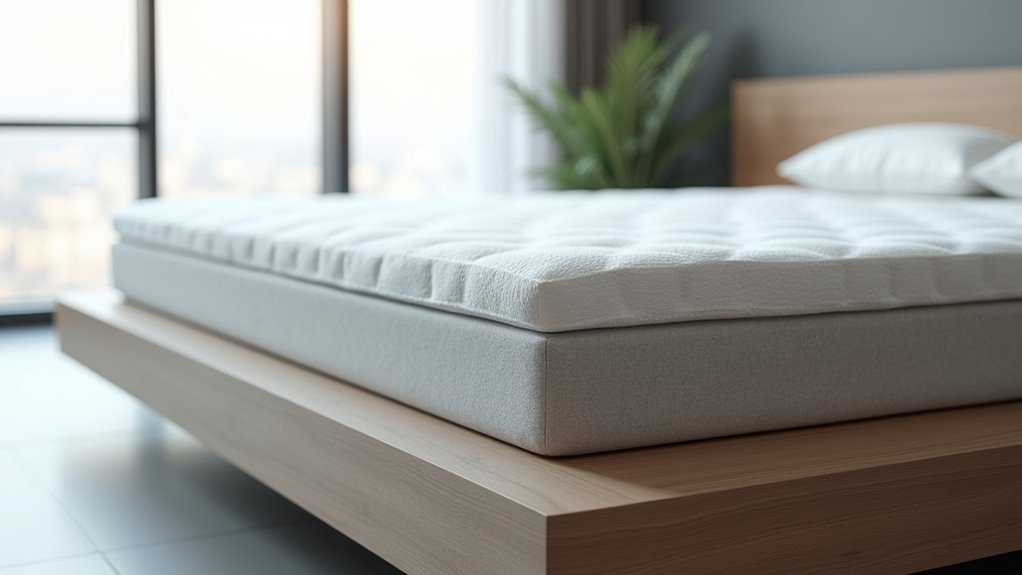

Modern mattresses are one-sided because their supportive layers sit deep in the core while soft comfort layers remain only on top. That construction makes flipping unnecessary and keeps the sleeping surface consistent. Manufacturers design them this way to control firmness, motion isolation, and edge support. Placing comfort materials on one side simplifies production and reduces shifting or uneven wear. Knowing this helps shoppers focus on cover, comfort layers, and warranty rather than flipability.
Why Modern Mattresses Are One-Sided
Modern mattresses are one-sided because they’re built to give you a better sleep surface without the old flip-and-turn hassle. You get a smooth, planned feel on top, while the bottom stays flat or non-skid for support.
That design lets makers stack comfort layers from the ground up, so you enjoy more cushioning and pressure relief where it matters. It also helps with sleep hygiene, since you can keep the bed easier to care for instead of flipping it.
For you, that means less heavy lifting and fewer disruptions to your routine. Plus, warranty considerations often favor using the mattress the right way, so staying on the marked side can protect your coverage and keep your bed performing the way you expect.
How One-Sided Mattresses Became the Standard
You can trace the rise of one-sided mattresses to initial industry changes that made beds easier to build, ship, and sell.
As manufacturers cut costs and focused on comfort layers on top, you got a design that fit modern buyers who didn’t want the hassle of flipping a heavy mattress.
That shift turned convenience and savings into the new standard, and retailers quickly followed with “No Flip” models.
Early Industry Shifts
As mattress makers looked for ways to cut cost and improve comfort, the industry slowly moved away from old two-sided beds and toward one-sided designs. You can see this shift in industrial consolidation, where fewer big brands shaped what stores offered.
At the same time, trade policies pushed factories to standardize parts and keep shipping easier. That meant you got beds built with one sleeping surface instead of two padded faces. Makers also began to design mattresses from the ground up, so the top could feel softer and more welcoming.
Should you shop today, you’ll often see labels like No Flip. They’re there to guide you and help you feel confident choosing what fits your home.
Convenience And Cost Savings
Once mattress makers figured out how to build a bed with just one sleep side, convenience and lower costs helped that idea spread fast.
You save time because you don’t flip a heavy mattress anymore, and you only need to rotate it now and then.
That easier upkeep fits busy homes where you want less hassle and more rest.
Manufacturers also use fewer layers and less fabric, which cuts production costs and keeps prices friendlier for you.
The lighter build adds space efficiency, too, since moving and setting up the bed feels simpler.
Why Mattress Makers Stopped Making Flip Models
You can see why flip models faded as makers changed the foam stacks inside mattresses. They started building one sleep surface with comfort layers on top, which let them make the bed softer where you need it and simpler underneath.
That shift also cut production costs, so you ended up with a mattress that’s easier to build, easier to sell, and easier to live with.
Changing Foam Layers
Mattress makers didn’t stop making flip models through accident, and the biggest reason starts with changing foam layers. You sleep on a mattress built from the top down now, so each foam layer can do one job well. That means your bed can feel softer, cooler, and more tuned to you. Modern stacks often support temperature regulation and allergen resistance, which helps you rest easier and feel at home in your own space.
- A soft top layer cushions your shoulders.
- A firmer base holds your body steady.
- Special foams can reduce motion and keep the surface fresh.
Because the sleep side stays on top, makers can shape comfort more precisely. You still get a familiar, cozy feel, but without the old flip-and-flop routine.
Lower Production Costs
Because one-sided mattresses use less material and fewer steps, they’re usually cheaper to make than flip models. That savings comes from simpler material sourcing, fewer quilted layers, and easier assembly automation, so you’re not paying for a second finished sleep surface.
| Cost Driver | Why It Helps |
|---|---|
| Less fabric | Cuts raw material use |
| Fewer layers | Speeds production |
| Machine setup | Fits assembly automation |
| Lower labor | Reduces build time |
For you, that means brands can price beds more fairly while still offering comfort. Makers also spend less on heavy padding, extra stitching, and duplicate finishes. Since the build is simpler, factories can keep quality steady and move mattresses out faster. So whenever you see a “No Flip” label, you’re often seeing a smarter cost choice that helps your wallet and keeps the bed easy to own.
What One-Sided Mattresses Change in Comfort
At the point a mattress goes one-sided, the feel of the bed changes in a pretty big way. You lie on a top built for comfort only, so the surface feels more focused and less mixed. That can help you feel held without sinking too far, and it often supports better temperature regulation too.
With zoned cushioning, your shoulders, hips, and back can get different levels of give, which makes the bed feel more personal and welcoming.
- You notice softer pressure relief where you need it.
- You get steadier support under your body.
- You enjoy easier movement on the surface.
Because the comfort layers sit on one face, you also feel a cleaner sleep setup. It’s a simple change, but it can make your bed feel like it fits you better every night.
Why One-Sided Mattresses Cost Less to Make
At any time a mattress only needs one sleeping side, manufacturers can keep the build simpler from the start. You’re seeing fewer parts, fewer sewn layers, and less handling at every step. That cuts labor savings because workers spend less time flipping, stitching, and finishing both faces. It also lowers manufacturing waste, since makers use less fabric, foam, and padding in general.
Because the design stays focused on one top comfort surface, factories can standardize the process and move beds through production faster. You benefit from that efficiency in a lower price, without giving up the cozy feel you want. In other words, the simpler build helps companies control costs while still making a mattress that feels welcoming, familiar, and ready for your room.
Why Edge Support Works Better on One Side
Whenever/ should you’ve ever sat on the edge of a mattress and felt it hold up instead of sink fast, that steady feel usually comes from a one-sided design. With the sleep side built on top, you get stronger edge reinforcement where you need it most. Makers can lock the perimeter into a firm frame, so perimeter stability stays consistent whenever you sit, tie shoes, or scoot close to your partner.
- You feel less roll-off at the edge.
- You use the full surface with more confidence.
- You share the bed without that sloppy, sliding feeling.
Because the underside doesn’t need to work as a second sleep face, the structure can focus on support from the outside in. That means you get a calmer, sturdier edge that helps the whole bed feel welcoming.
How Mattress Materials Shape One-Sided Designs
Whenever you look inside a modern mattress, you’ll see foam layers stacked with a clear job for each one.
The softer comfort foams sit on top, while a reinforced support core holds your body steady underneath.
That build lets you get pressure relief up top without making the whole bed feel soft and saggy.
Foam Layer Construction
That layered setup can also help with temperature regulation, since breathable foams and open spaces can move heat away from you. It also makes manufacturing standards easier to meet, because each layer can be evaluated and built the same way.
- You feel the cushioned side right away.
- You avoid a second sleep surface you’d never use.
- You still keep the bed easy to rotate.
Reinforced Support Cores
A strong support core is the next reason these mattresses work so well as one-sided beds, because it gives the whole design a firm backbone under the softer top layers.
You get steady comfort because coil cores hold your weight while foam above them shapes a cozy feel. Makers can also add zoned reinforcement, so your hips sink less and your shoulders get a gentler welcome.
That lets the mattress stay supportive without needing a second sleep side. Since the core handles most of the strain, the top layers can focus on pressure relief and a softer touch.
You end up with a bed that feels stable, lasts longer, and stays easy to trust night after night.
What One-Sided Mattresses Mean for Lifespan
Because one-sided mattresses put all the sleep layers on the top, they can age differently than older flip-style beds. You’ll often notice that lifespan depends on how well the comfort layers stay supported, especially in seasonal humidity and daily use. Since the underside stays flat, you get a cleaner build, but you also need to protect the top from heavy wear.
- Rotate it on schedule to spread pressure.
- Keep the room dry and well aired.
- Check warranty implications before you change care routines.
When you treat your bed with steady care, it can stay comfy for years, and you’ll feel like you belong with the folks who know how to look after their sleep space. Modern one-sided designs give you a simple path, not a hard one.
Do One-Sided Mattresses Need Rotating?
Yes, one-sided mattresses still need regular rotating, even though you never flip them over. Rotate yours every three to six months so the same spots don’t wear out too fast.
This simple habit spreads pressure across the bed and helps keep your sleep surface care on track. During seasonal rotation, turn the mattress from head to foot, and check that it sits straight on the base.
Should you sleep in one area most nights, rotation matters even more, because your body leaves a stronger impression there. You don’t need to wrestle with a heavy flip, and that’s a relief.
Instead, give your mattress a quick turn, smooth the top, and let it stay supportive for the whole crew in your home.
One-Sided Mattresses vs. Two-Sided Mattresses
Whenever you compare one-sided mattresses with two-sided mattresses, the biggest difference is how each one handles wear, comfort, and upkeep.
You get a single sleep surface on a one-sided bed, so the comfort layers stay on top and the base stays below. That design cuts down on flip myths and keeps setup simple.
- You rotate it, not turn it.
- You keep the feel more consistent.
- You lift less weight when moving it.
Two-sided mattresses spread wear across both faces, but they ask for more work and often feel old-fashioned.
One-sided models fit your routine with less fuss, while still giving you the cozy support you want. Should you prefer easy care and a familiar feel, you’ll probably feel right at home with the modern style.
How to Choose the Right One-Sided Mattress
Now that you know how one-sided mattresses differ from two-sided ones, the next step is picking the right fit for your body, your room, and your sleep style.
Start with feel: side sleepers often like softer foam, while back and stomach sleepers might want firmer support. Next, check the material warranty, because it shows how well the bed should hold up over time. Then use the sleep trial to evaluate comfort at home, where real nights tell the truth.
You should also look for a strong base, good edge support, and easy rotation care, since you’ll rotate, not flip. Should you share the bed, choose one that cuts motion and feels steady. With the right pick, you can relax and feel at home.
Frequently Asked Questions
Are One-Sided Mattresses Harder to Move Than Flip Models?
No, you’ll usually find one sided mattresses easier to move than flip models. You’ll avoid weight distribution challenges, and their lighter build helps with easier maneuvering, so you can feel confident handling yours with less strain.
Do One-Sided Mattresses Reduce Motion Transfer for Couples?
Yes, one sided mattresses can reduce motion transfer, so you and your partner feel fewer bumps at night. Their high density bases and comfort layers improve partner isolation and edge damping, helping both of you sleep more peacefully.
Why Do One-Sided Mattresses Use Softer Top Comfort Layers?
You get softer top comfort layers because they cushion pressure points, improve pressure relief, and create a more welcoming feel. The firmer base underneath keeps edge support strong, so you will sleep comfortably and feel supported.
Can One-Sided Mattresses Have Pillow Tops or Euro Tops?
Yes, you can choose one sided mattresses with pillow top integration or euro top options, and you’ll still get that plush, welcoming feel. You’ll usually rotate it, not flip it, to keep comfort even.
Are One-Sided Mattresses Better for Flammability Compliance?
Yes, you’ll often find one sided mattresses easier for fire safety compliance because you’re working with one sleep surface, a simpler path through evaluation standards, and a steadier shield that helps your bed fit in.
