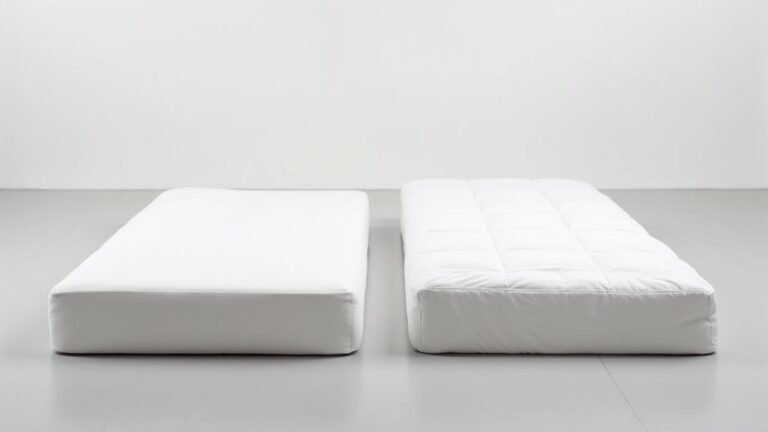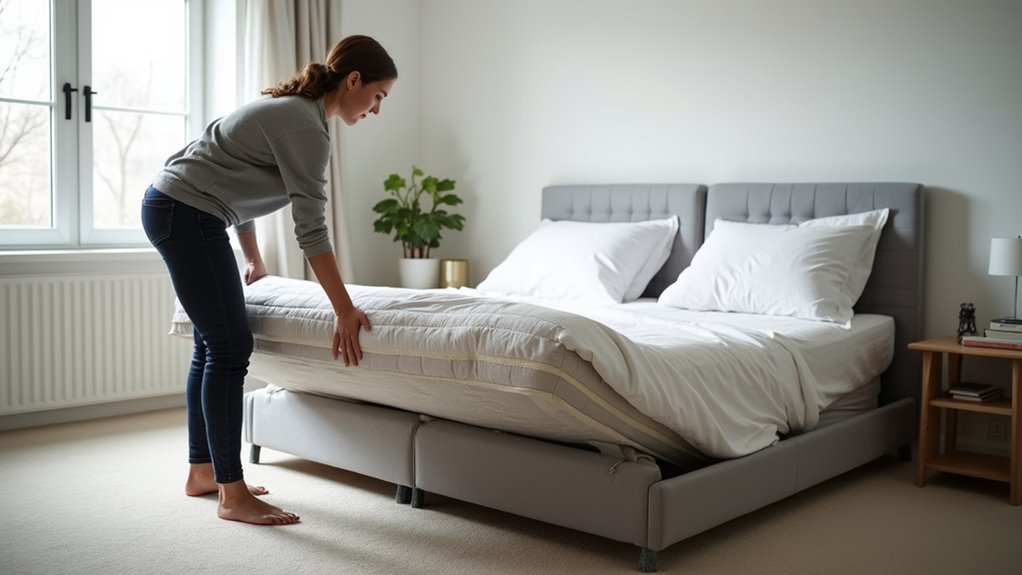

Rotate a mattress regularly to prevent uneven wear and extend its lifespan. Check the care tag for manufacturer instructions before handling. Clear space around the bed and enlist help for heavier models. Lift and turn the mattress 180 degrees from head to foot using steady, even movements. Watch for persistent sagging, deep dips, or compressed edges that signal additional care or replacement is needed.
How to Rotate a Mattress
Rotating your mattress is a simple way to help it wear more evenly, and it can make a big difference in how comfortable your bed feels over time.
You can protect your mattress lifespan through making seasonal rotation part of your routine. Start by stripping off bedding and clearing the area around the bed.
Then turn the mattress 180 degrees, so the head end moves to the foot. Should your mattress has handles, use them. Were it queen or king size, ask someone to help so you stay safe and keep it flat.
After that, center it on the frame again. This easy habit helps you keep your sleep space feeling cared for, cozy, and ready for the season ahead.
Why Rotate a Mattress Regularly
Keeping your mattress in good shape isn’t just about comfort, because it also helps you sleep better night after night. Whenever you rotate it regularly, you share the wear across the surface and keep your bed feeling more like your own. That steady care can support sleep chemistry, since you’re less likely to wake up sore or uneven. It can also help with allergen reduction through disturbing dust and buildup before they settle in.
- Reduces body impressions
- Spreads pressure more evenly
- Helps your mattress last longer
- Supports cleaner sleep space
- Keeps your bed feeling familiar
For many people, that simple habit builds a stronger sense of comfort and belonging at home. You don’t need a big effort either, just a regular routine that fits your life and keeps your sleep zone ready for rest.
Check Your Mattress Type First
Before you rotate anything, take a close look at your mattress type, because that one step can save you a lot of trouble. Check the care tag, then do quick material identification so you know whether you’re coping with memory foam, latex, hybrid, or innerspring. Each one reacts differently, and your mattress team wants you to protect it.
| Type | Rotate? | Notice |
|---|---|---|
| Memory foam | Yes | Keep it flat |
| Latex | Yes | Watch the edges |
| Hybrid | Yes | Follow the label |
| Dual-sided | Perhaps | Flip only when permitted |
This quick check also helps with warranty implications, since some brands expect head-to-foot rotation only. Should you see arrows, warnings, or a “Do Not Flip” notice, follow that guidance. You’ll feel more confident, and your bed will thank you with steadier support.
Gather Tools and Clear Space
Once you’re ready to move, gather a few simple tools and clear the area around the bed so the job feels calm instead of clumsy.
- Wear protective footwear for steady footing.
- Keep a tape for measuring space near the frame.
- Pull off pillows, sheets, and toppers.
- Move lamps, plants, and small tables away.
- Place a friend nearby should you want backup.
Then check the path from wall to wall. You’ll want enough room to turn without bumping corners or dragging fabric.
A clean floor gives you better grip and less stress, and that helps you feel like you’ve got this. In case the bed sits tight in a corner, slide nearby pieces back a little more.
With clear space and a few basics ready, you can rotate with confidence and keep your room feeling like your own.
How to Rotate Your Mattress Safely
As you rotate your mattress, move slowly and keep the bed fully supported so the job feels safe and controlled.
Start commencing lifting with bent knees and a straight back, or ask a partner to help with queen and king sizes. Then turn it head-to-foot, not side-to-side, so posture alignment stays steady and the frame stays calm.
Keep your grip firm on the edges, and use the handles should your mattress have them. In case the room feels tight, slide nearby items away initially so you don’t bump a lamp or nightstand.
After the turn, center the mattress on the base and check that it sits flat. These small seasonal adjustments help your sleep setup feel cared for, familiar, and ready for another comfortable night.
Rotate a Memory Foam Mattress
You should rotate your memory foam mattress every 3 to 6 months so it wears evenly and keeps body impressions from settling in.
Start by clearing the bed, then turn it head-to-foot in a smooth 180-degree move and keep it flat as you go.
After that, check the surface for soft spots or uneven wear so you can stay ahead of comfort problems.
Rotation Schedule
For most memory foam mattresses, a steady rotation schedule helps the bed wear more evenly and keeps those stubborn body impressions from settling in too fast.
You’ll usually do best rotating every 3 to 6 months, and seasonal timing makes it easy to recall. Should your sleep position stays in one spot, or you sleep with a partner, you might need to rotate a little sooner.
- Mark your calendar at each season change
- Check for dips when you change sheets
- Rotate sooner after long illness or travel
- Use the same day every few months
- Follow any care tag on your mattress
That simple rhythm helps you feel cared for, because your bed keeps feeling more balanced.
Whenever you stay consistent, you protect comfort, support, and that cozy belonging at night.
Easy Turning Steps
Before commencing turning a memory foam mattress, take a minute to clear the bed and the space around it so the job feels easier and less awkward. Check bedframe compatibility initially, then ask a friend to help should the mattress feel bulky.
| Step | What you do |
|---|---|
| 1 | Remove bedding and toppers |
| 2 | Stand on both sides |
| 3 | Lift with steady hands |
| 4 | Turn 180 degrees |
| 5 | Center it on the frame |
Keep the mattress flat as you guide it head to foot. Should your bed have corners or rails, pause and adjust so it sits squarely. During seasonal rotation, this simple move helps you stay on track without stress. In case the foam grips the base, slide slowly and keep breathing. Once it’s settled, smooth the edges and remake the bed.
Wear Pattern Checks
Now and then, a quick wear check can save your memory foam mattress from getting lumpy too soon. As you rotate it, look for spots that sag, shine, or feel softer than the rest. That’s your cue to slow down and check the whole surface together.
- Run your hand across the top.
- Notice dips near your shoulders and hips.
- Use surface mapping to spot uneven zones.
- Compare both sides with pressure mapping.
- Check edges for premature breakdown.
When you see a repeat pattern, rotate sooner, not later. You’re not being picky; you’re protecting the sleep spot your body trusts. A few minutes now can keep your bed feeling balanced, cozy, and ready for another good night.
Rotate a Hybrid Mattress
A hybrid mattress usually needs a careful 180-degree rotation, since its foam layers and coil support can wear unevenly in the same sleep spots over time.
Before you move it, strip off bedding and clear the path so you can work without bumps. Then, with a partner provided you have one, lift from the edges, keep the mattress flat, and turn it head to foot.
This helps protect temperature regulation and edge durability while you keep the surface feeling familiar and supportive.
Should your mattress have handles or marked ends, follow them closely. You don’t need to rush. A slow, steady turn keeps the frame and your back happier.
Afterward, center it on the base and check that it sits evenly before you remake the bed.
Rotate an Innerspring Mattress
An innerspring mattress is usually easier to rotate than a foam-heavy bed, but it still needs a careful hand so the coils stay supported and the surface wears evenly. You’re helping your bed stay in the family, so move it with calm control. Before you turn it, clear the frame area and check for loose fabric. Then grip the edges and turn the mattress head to foot, keeping it flat.
- Use two people for better balance.
- Keep the mattress centered on the frame.
- Watch for sagging corners.
- Do a quick spring inspection.
- Support coil maintenance with gentle handling.
After you set it back, smooth the cover and make sure it sits square. That simple rhythm helps you protect comfort and keep your sleep space feeling cared for.
How Often to Rotate a Mattress
A good rule is to rotate your mattress every 3 to 6 months so it wears evenly and doesn’t sink in the same spots.
In case you’re not sure, every six months works well for most beds, and you can also check for body impressions or uneven support as a sign it’s time.
Some mattresses need more frequent care initially, so watch how yours feels and adjust the routine should it start to show wear sooner.
Rotation Frequency Guide
Most mattresses do best whether you rotate them every 3 to 6 months, because that steady habit helps spread out wear and keeps one sleep spot from sinking too soon.
A seasonal rotation rhythm works well, and it can also help you watch warranty implications without stress.
- Pick spring and fall as easy prompts
- Use the same day each time
- Rotate one-sided beds, not flip them
- Check care tags before you start
- Ask a helper for queen or king sizes
When you share a bed, this routine keeps both sides feeling fair and familiar.
You’ll fit right in with a healthier sleep setup, and your mattress won’t have to carry the same load every night.
Signs It’s Time
You’ve got the rotation habit down, so now it helps to know while your mattress is asking for attention. Should you notice a dip where you sleep most, that’s a clear clue.
You might also feel less support at the shoulders or hips, and that sag can make your body work harder at night. Pay attention to allergy indicators too, like more sneezing or dust buildup after a fresh sheet day.
Temperature changes matter as well; should one side feels warmer or stuffier than before, your mattress could be holding on to wear. Whenever sleep starts feeling uneven, don’t wait for a full breakdown. A simple turn can bring back balance, help you feel part of a well-kept bed setup, and keep your sleep space feeling steady and welcoming.
Signs Your Mattress Needs Rotating
Usually, your mattress starts giving little clues long before it feels truly worn out, and noticing them promptly can save you from a bad night’s sleep. Should you wake sore or sink into one spot, your bed might need a turn.
You can also look for:
- a dip where you sleep most
- pressure points that feel sharper
- uneven support from head to foot
- noisier movement as you shift
- changed pressure mapping or weaker nocturnal alignment
These signs often show up slowly, so trust your body. You belong in a bed that feels even and steady, not lopsided.
Upon spotting these shifts, rotate your mattress to help it share wear more fairly. That small move can bring back comfort and keep your sleep space feeling like yours.
Common Mattress-Rotation Mistakes
One small mistake can undo a careful rotation, so it helps to slow down before you start. You may rush, then miss the care label and mix up flip and rotate. That’s one of the biggest rotation pitfalls.
Before you move the bed, clear the area and check your alignment indicators, like arrows, tags, or seam marks. Then turn the mattress head-to-foot, not side-to-side. Keep it flat, because bending it can strain foam and throw off fit.
Suppose you have a queen or king, ask someone to help you hold each end. Afterward, center it on the frame and look again for even edges. Small fixes now help you stay in the groove with your sleep setup.
When Rotation Isn’t Enough
Should your mattress still feel lumpy after you rotate it, you might be seeing uneven wear patterns that rotation can’t fix.
Sagging support zones can also mean the foam or springs have worn down, so the bed no longer holds you evenly.
In that case, watch for clear replacement time signs, because a tired mattress can’t always be saved with a simple turn.
Uneven Wear Patterns
Sometimes rotation helps, but deep body dips and uneven sagging can stay put even after you turn the mattress. That’s frustrating, but you’re not alone, and it doesn’t mean you failed. Uneven wear often comes from material durability and pressure mapping, which show where your body lands night after night.
- Check for a dip at your hips or shoulders.
- Compare both sleep sides with your hand.
- Notice whether you roll toward one spot.
- Look for soft areas near the center.
- Track changes after each rotation.
Should the pattern persist, you might need to adjust how you sleep or how you spread weight across the bed. Small steps can still help you protect comfort and feel at home in your own space.
Sagging Support Zones
At times a mattress keeps sinking in the same spots, you could need more than a simple turn to get it back on track. As you rotate it, check whether the dip stays in one zone, especially near your hips or shoulders. That usually means the support core has worn down, so pressure redistribution can’t happen well anymore.
You can still place the mattress on a solid, level base to slow more sagging and keep the feel as even as possible. Also watch the edges. Should you feel edge collapse when you sit or lie near the side, the mattress might no longer hold shape across the whole surface. In that case, rotation can only do so much, and you’ll want to track comfort closely with your sleep partner.
Replacement Time Signs
That same worn spot you noticed near your hips or shoulders can also tell you once a mattress is past the point where rotation helps.
Whenever you feel new aches, hear squeaks, or notice you sink faster each night, that’s a strong sign of material degradation.
Rotation can’t fix broken foam, weak coils, or a lumpy surface that keeps coming back.
Keep an eye on:
- deep body impressions
- edges that collapse
- springs you can feel
- fresh pain after sleep
- warranty considerations that point to failure
If your bed looks tired even after care, trust that feeling.
You deserve rest that feels steady, not a nightly fight with your own mattress.
At that point, replacing it could protect your comfort, your support, and your peace of mind.
Keep Your Mattress Wearing Evenly
To keep your mattress wearing evenly, rotate it on a steady schedule so the same spots don’t take all the pressure night after night. This simple habit helps you avoid deep body dips and keeps your bed feeling fair to every sleeper.
As you plan, consider temperature effects too, since warm rooms can soften some foams and make impressions form faster. Rotation also supports bed aesthetics, because a smooth surface looks cared for and welcoming.
To do it well, turn the mattress head to foot every 3 to 6 months, or sooner should you notice sagging. In case you share the bed, make it a small team task. Together, you’ll protect comfort, support, and that cozy feeling of belonging.
Frequently Asked Questions
Can I Rotate a Mattress by Myself Safely?
Yes, you can, provided it is light and stable, but you will be safer with help. Use a single person lifting technique, avoid forcing it, and practice coordination drills if another person joins you.
Should I Use Handles When Rotating a Mattress?
Yes, use handles if your mattress has them; they can be a lifeline. Take care of the handles and use good grip technique, especially with heavy mattresses. If there are no handles, you can still rotate the mattress together safely and confidently.
Do I Need to Rotate a Mattress With Orientation Arrows?
Yes, if your mattress has orientation arrows you should follow them and rotate it as directed per manufacturer guidance. Ignoring them could affect warranty implications, so check the label before moving it.
Can I Rotate a Mattress Without Removing the Bed Frame?
Yes, you can usually rotate it without removing the frame. You will need to clear space, use lift straps or frame adapters if needed, and keep the mattress flat so you stay safe and supported.
How Do I Mark the Original Head End for Future Rotations?
Mark the original head end with fabric marker tags or permanent stickers on the underside edge. Place them where you can spot them later but that will not show, so you can rotate confidently together.