
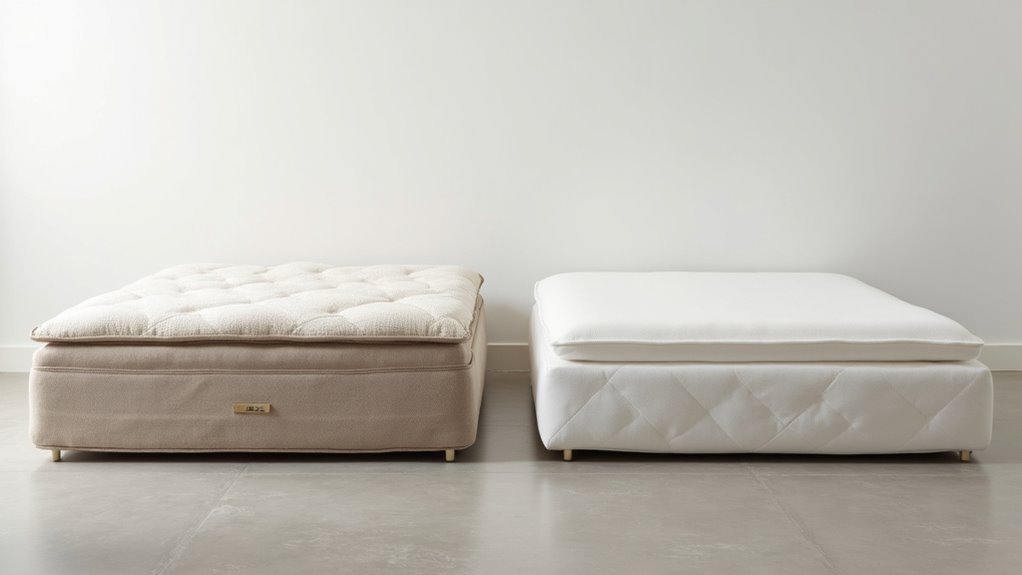

Organic mattresses use natural materials like wool, cotton, and latex and typically release fewer volatile chemicals. Non-organic mattresses rely on synthetic foams that often cost less and can feel softer while sometimes trapping more heat. Sleep quality can change based on breathability, firmness, and off-gassing from materials. Durability differs too: natural latex and dense fibers often last longer than many polyurethane foams. Allergic reactions and indoor air quality are affected by mattress composition, so material choices shape comfort, longevity, and bedroom environment.
What Makes a Mattress Organic?
A truly organic mattress is more than a nice-sounding label. You deserve proof, not guesswork. Look for third-party certification, especially GOTS for fabric and GOLS for latex, on the finished mattress itself. That tells you the whole bed met strict rules, not just one part.
Organic usually means the cotton, wool, or latex came from supply chains that avoided synthetic fertilizers and harsh pesticides. That matters because it cuts through health myths and greenwashing.
Whenever you check production transparency, you can see how the mattress was made and who verified it. In case a company only says natural, stay curious. Natural has no legal meaning, so it can hide mixed materials. With clear certification, you can choose a bed that fits your values and your shared idea of healthy rest.
What Materials Go Into Non-Organic Mattresses?
Non-organic mattresses often use synthetic foam layers like polyurethane or memory foam, and these can give you that familiar cushy feel fast.
You’ll also find chemical flame barriers inside many models, plus polyester fabric covers that help keep costs down.
Whenever you know these materials are there, you can read labels with more confidence and spot what’s really touching your sleep space.
Synthetic Foam Layers
Peek inside most non-organic mattresses, and you’ll usually find synthetic foam doing a lot of the heavy lifting. This foam, often polyurethane or memory foam, gives you a cushy feel that hugs your body and eases pressure points. Should you like a bed that softens movement, you’ll appreciate its noise reduction, since it helps cut down on squeaks and partner motion. It can also keep costs lower, so you might get comfort without stretching your budget.
Still, these layers can trap heat, and that heat retention could leave you feeling warm at night. Because the foam comes from petroleum-based materials, it’s a very different fit from organic latex or cotton. Whenever you shop, you’re choosing between that familiar sink-in comfort and a cleaner, more natural feel.
Chemical Flame Barriers
Whenever you look past the soft top layers, chemical flame barriers are often one of the biggest differences in non-organic mattresses. You mightn’t see them, but they can affect sleep safety and how your bed feels over time.
Many brands use chemical barriers to meet fire rules, and those layers can release odors or VOCs whenever the mattress is new. Should you be sensitive, that can matter a lot. You can also notice barrier longevity in the way the mattress holds up after years of use.
Simple maintenance tips help too: air out the bed, use a breathable protector, and follow care directions. Whenever you compare options, you’re really choosing between lower cost and fewer chemical barriers.
Polyester Fabric Covers
Polyester covers often show up as the outer shell on many budget-friendly mattresses, and they can shape how the bed looks, feels, and wears over time. While you shop, could notice that fabric sourcing matters because cheaper polyester can come from large supply chains with mixed quality control.
These covers often use synthetic blends, which help the mattress resist wrinkles and dry faster after cleaning. Still, they can trap heat more than cotton or wool, so you may sleep warmer at night. They can also feel smooth initially, but that slick touch might fade with use.
Should you want a lower-cost mattress, polyester can fit your budget, yet you should check the full cover label so you know what’s touching your skin and supporting your rest.
Organic vs. Non-Organic Mattress Differences
Although both options can help you sleep better, organic and non-organic mattresses differ in ways that really matter for your health, comfort, and peace of mind.
You’ll usually find organic models built with certified latex, wool, and cotton, while non-organic beds often use foam, adhesives, and synthetic fabrics. That means your bed can feel different, smell different, and fit your allergy considerations differently too.
Organic choices also follow stricter evaluation, which helps whenever you’re comparing labels and urban regulations in strict markets.
Non-organic mattresses often cost less, so they can fit tighter budgets and still offer decent comfort. Still, should you want a bed that feels more natural and easier to trust, organic materials can make you feel more at home in your own space.
Are Organic Mattresses Safer for Sleep?
At the point you start asking whether organic mattresses are safer for sleep, the answer usually comes down to what’s inside the bed and what can come out of it overnight. Whenever you rest near fewer synthetic foams and harsh adhesives, you might lower your contact with irritating chemicals. Sleep toxin research keeps pointing to VOCs and other emissions as a concern, especially for infant exposure, where tiny bodies react faster.
- Certified organic materials can reduce off-gassing.
- Fewer chemical treatments could mean cleaner air around you.
- Clear labels help you avoid guesswork and feel at home in your choice.
That said, safety depends on real certification, not just a “natural” tag. Should you want peace of mind, check for GOTS or GOLS before you invite a mattress into your room.
How Do Organic Mattresses Affect the Environment?
Whenever you choose an organic mattress, you can lower the chemical load that enters your home and, in turn, the wider environment.
You also support cleaner farming and sourcing methods that rely less on pesticides and harsh synthetic inputs. That means your choice can feel good for you and still be gentler on the planet.
Lower Chemical Emissions
Because your mattress sits close to you for many hours each night, its chemical emissions can shape the air you breathe at home. Whenever you choose an organic mattress, you cut down on VOCs, formaldehyde, and harsh flame retardants that can drift into your room. That means you might breathe easier and feel more at ease in your own space.
- You support cleaner indoor air with fewer off-gassing materials.
- You create a calmer sleep area for you and your family.
- You pair that comfort with simple helpers like indoor plants and air purifiers.
This matters because your bedroom should feel like a safe place, not a chemical cloud. With organic materials, you get a fresher setup that fits your health goals and your sense of belonging at home.
Sustainable Material Sourcing
From the ground up, organic mattresses can ease the strain on the environment through relying on materials that often come from cleaner growing and farming methods. You help support farms that skip harsh pesticides and synthetic fertilizers, which can protect soil, water, and the people who work the land.
With wool, cotton, and latex from certified organic sources, your bed choice can feel like part of a bigger community effort. Supply transparency matters too, because you deserve to know where each material starts and how it moves through the chain. If brands use local sourcing, they can also cut transport miles and shrink pollution. That means your sleep setup can reflect your values without asking you to give up comfort, trust, or a sense of belonging.
Why Do Non-Organic Mattresses Cost Less?
Non-organic mattresses usually cost less for a few simple reasons, and the biggest one is that they use cheaper materials and faster factory methods. You’re also paying less because makers can buy parts at manufacturing scale, so each mattress takes less labor and fewer rare inputs.
- They often use foam, polyester, and basic adhesives instead of certified organic fibers.
- Factories can produce them quickly, which cuts overhead and keeps prices friendly for your budget.
- Import tariffs can be lower whenever companies source mass-market materials from many suppliers.
That means you can join the crowd of shoppers who want a decent bed without stretching every dollar. Should you be trying to save money now, these lower costs can make your choice feel easier and less stressful.
Which Mattress Type Offers Better Comfort and Support?
Comfort and support often come down to what the mattress is made of and how it responds as you lie down.
Should you like a buoyant feel, organic latex can hug your body while still keeping you lifted. That mix helps reduce pressure and gives you steady support through the night. You might also notice better temperature regulation, since natural fibers breathe well and help you stay cooler.
Non-organic mattresses can feel plush at outset, especially with memory foam, but they could sink more and trap heat. For some sleepers, that cozy sink feels great; for others, it feels less stable.
Organic models also often offer stronger edge support, which helps you use the whole bed with confidence.
In the end, your comfort depends on how your body likes to rest.
Which Mattress Lasts Longer?
Whenever you compare how long organic and non-organic mattresses last, you’ll want to look at the materials initially, since that’s where durability starts.
Organic latex, wool, and cotton can resist wear well, while lower-cost foam and synthetic parts might deteriorate faster with regular use.
You can also extend the life of either mattress with good care, like using a sturdy support base, rotating it as necessary, and keeping it clean and dry.
Material Durability
Because a mattress is something you use every night, durability matters just as much as comfort, and organic models often have an edge here. Whenever you choose certified organic latex, wool, and cotton, you’re picking materials that can stay supportive for years without feeling flimsy. That can matter provided you want a bed that feels like part of your home, not a quick fix.
- Organic latex often resists sagging better than many foam blends.
- Natural fibers can help with allergen resistance and slow microbial growth.
- Stronger certified materials can keep their feel longer, so you don’t replace them as soon.
Non organic mattresses might still work well, but synthetic foams can lose support faster. Should you value comfort, safety, and a sense of belonging in your sleep space, organic options can feel like the sturdier choice.
Wear And Tear
In case you want a mattress that keeps its shape over time, wear and tear matters just as much as what’s inside it. You’ll usually see organic latex hold up better, because it fights deep body impressions and seasonal sagging. Non organic foam can soften faster, so you might feel dips sooner. That matters whenever you want to feel at home in your bed, not stuck sinking into it.
| Mattress type | Wear pattern |
|---|---|
| Organic | Slower sagging |
| Non organic | Faster softening |
You’ll also notice the cover and seams. On many organic beds, sturdy stitching can reduce zipper repairs later, which helps the whole mattress stay intact. Still, both types need enough support from your frame, or wear shows up sooner than you’d like.
Care And Maintenance
A little care can help your mattress stay comfy longer, and that really matters after you’ve spent good money on it. You and your bed are a team, so treat it with steady habits. Organic mattresses often need gentler care, while non organic ones might hide tougher stains and odors.
- Use seasonal rotation to spread out body impressions and keep support even.
- For spills, do spot cleaning right away with mild soap and a damp cloth.
- Keep a breathable protector on top, and let fresh air move through the room.
Because organic latex and wool can be sensitive to moisture, you should avoid harsh cleaners. Non organic foam can trap smells, so quick care helps there too. If you remain consistent, your mattress stays fresher, and you keep that cozy, welcome feeling night after night.
Which Organic Mattress Certifications Matter?
At the time you’re trying to find a truly organic mattress, the label alone won’t tell you enough, so the certifications matter most. Look for GOTS on the fabric and GOLS on the latex, because they give you third party verification that the mattress really meets organic rules. That matters whenever you want to feel safe in your own space.
| Certification | What it checks |
|---|---|
| GOTS | Organic textile content |
| GOLS | Organic latex content |
| Finished product seal | Whole mattress, not just parts |
| No seal | Ask hard questions |
Yes, certification costs can raise the price, but they also help you avoid glossy claims that don’t match reality. Whenever you choose a certified mattress, you join a crowd that values honesty, comfort, and peace of mind.
Which Mattress Type Fits Your Sleep Style?
Now that you know which certifications matter, the next question is how a mattress actually feels as you sleep on it.
Your sleep positions should guide you initially. Side sleepers often need softer cushioning for shoulders and hips, while back and stomach sleepers usually do better with steadier support.
Then consider your temperature preferences. Should you run hot, organic latex and wool can help you stay cooler, while some non-organic foams might trap heat.
- In case you want gentle pressure relief, choose a mattress that hugs you.
- In case you need more lift, look for firmer support.
- In case you care about a cleaner feel, organic materials can make your bed feel calmer.
When you match comfort to your body, you join a crowd that sleeps better and feels more at home.
How Do You Choose Between Organic and Non-Organic Mattresses?
Sorting out organic vs non-organic mattresses starts with what’s really inside the bed, not just what the tag says. You should check certification initially, because GOTS and GOLS give you real proof, while “natural” can mean almost anything.
Then match the mattress to your needs. Should you want fewer chemicals and better peace of mind, organic can help you rest easier. If budget considerations matter more, a non-organic or natural blend could fit better without breaking the bank.
You should also consider about comfort, since latex feels different from foam, and about bed frame compatibility, because heavier organic models need solid support.
Finally, compare materials, off-gassing, and price together so you can choose a mattress that feels safe, fits your room, and helps you sleep with confidence.
Frequently Asked Questions
How Can I Verify a Mattress’s Organic Certification?
Like finding a trusted friend, you can verify certification by checking the finished mattress label and then matching GOTS or GOLS numbers on the certifier’s website. Ask for documents and confirm the certification process meets organic standards.
Do Organic Mattresses Contain Latex Allergies Concerns?
Yes, you can still have latex allergy concerns. If you have latex sensitivity, avoid latex mattresses and ask your doctor about allergy screening first. You will sleep easier knowing you chose a safer fit.
Are Natural Mattresses Always Chemical-Free?
No, you can’t assume natural mattresses are chemical free. You could still find natural dyes, plant based foams, or adhesives hiding in the mix, so check labels and certifications to feel right at home.
What Is the Average Lifespan of a Certified Organic Mattress?
You can expect a certified organic mattress to last about 8 to 15 years, depending on care and materials. Typical longevity often matches premium beds, and warranty expectations usually run 10 to 25 years.
Can Organic Mattresses Off-Gas When First Unpacked?
Yes, you can notice slight off gassing initially, like a new rainstorm passing through. Don’t let off gassing myths scare you; give it initial airing, and you’ll usually breathe easier quickly, together.
