
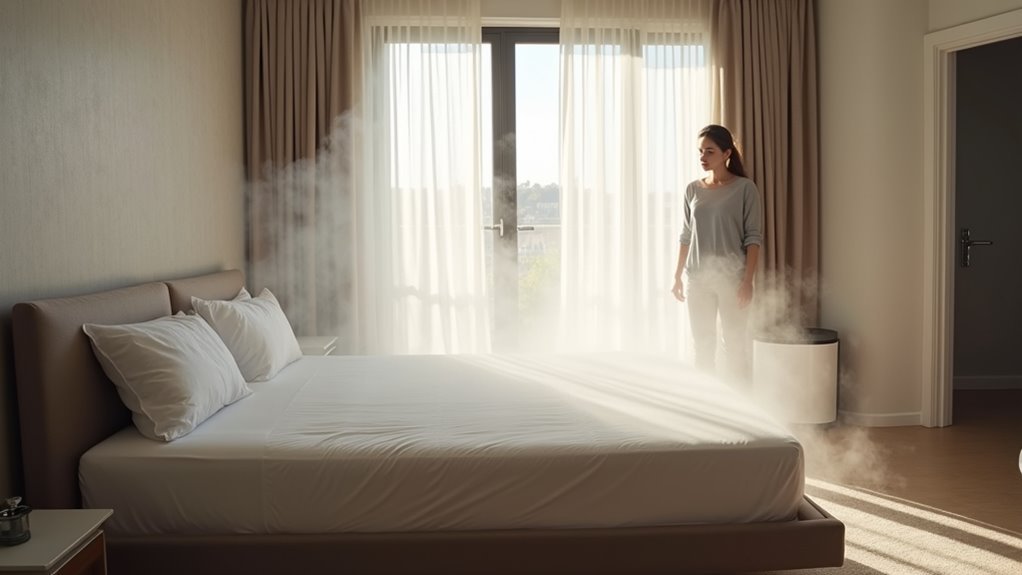

New mattresses often release a fresh smell that comes from volatile organic compounds (VOCs) and residual manufacturing chemicals. Foam, adhesives, and synthetic mattress covers commonly emit these compounds during unboxing and early use. Off-gassing can raise indoor VOC levels and sometimes cause irritation for sensitive sleepers. Proper ventilation, airing the mattress outdoors or in a well-ventilated room, and choosing low-VOC or certifiably tested products reduce exposure. Small steps protect air quality without turning bedtime into a complex project.
What Causes Mattress Off-Gassing?
Whenever a mattress gives off that “new” smell, it’s usually because fresh materials are releasing volatile organic compounds, or VOCs, into the air. You’re smelling tiny traces of manufacturing chemicals left from making, cutting, and bonding the mattress.
During packaging offgassing, those compounds can build up inside the wrap, so the odor feels stronger when you initially unbox it. Heat and poor airflow can make the scent linger longer, which is why your room could notice it most on day one.
Should you be sensitive, that smell can feel annoying or worrying, but it usually fades as the mattress airs out. Open windows, let air move, and give your space time to settle so you can feel more at ease.
Which Mattress Materials Release the Most VOCs?
Memory foam often releases the most VOCs because it uses more synthetic chemicals that can give off a strong new-mattress smell.
You might also notice extra odors from synthetic latex and the adhesives used to hold mattress layers together.
Should you’re sensitive to smells, these materials can make the initial few nights feel a lot rougher than you expected.
Memory Foam VOC Release
Most mattress VOCs come from the materials inside the bed, and memory foam often sits near the top of that list because it uses more synthetic chemicals than simpler designs.
Whenever you unbox it, you might notice a strong new smell, and that’s normal. Your room matters too, because sleep temperature and foam density can shape how fast VOCs drift into the air.
- Higher foam density can trap more odor initially.
- Warm rooms can speed release.
- Fresh air helps the smell fade.
- Low-VOC foam can ease your worry.
If you share your bedroom with a child, partner, or pet, you’re not alone in wanting cleaner air.
Give the mattress time, open a window, and let your space feel like home again.
Synthetic Latex And Adhesives
Synthetic latex can surprise you with a stronger smell than you’d expect, and adhesives can add to that mix whenever a mattress uses glue layers to hold materials together.
When you unbox one, you might notice synthetic latex releasing VOCs more quickly than natural latex, especially in warm rooms.
At the same time, adhesive emissions can rise from seams, foams, and layered builds, so the whole mattress could feel “fresh” in a way that’s not so fresh.
You don’t need to panic, but you do deserve clean sleep air.
Open windows, let a fan push air out, and give the bed time to breathe.
Should you be sensitive, choose low-VOC models with simpler construction and strong third-party certification.
How Long Does Mattress Off-Gassing Last?
Upon unboxing a new mattress, the strongest off-gassing usually shows up immediately and then starts to fade as the days pass. You’ll often notice the heaviest smell in the initial 11 to 14 hours, then weaker odor for a few days more.
For many sleepers, 24 to 48 hours of airflow feels enough, but some beds keep low VOCs for weeks. Should you want to feel at home faster, try:
- open windows
- run a fan outward
- keep bedding off the surface
- wait longer with sleeping precautions in case you have pet sensitivity
Warm rooms can slow the fade, so cooler air helps. You’re not overreacting provided the scent bugs you, because comfort matters in your own space.
How Mattress Off-Gassing Affects Indoor Air
Whenever you unbox a new mattress, it can release VOCs, which are airborne chemicals that enter your bedroom air.
These fumes can make the room smell strong initially, and they might affect indoor air quality until they start to decompose and spread out.
With good ventilation, you help those compounds dissipate faster, so the air feels cleaner sooner.
Volatile Organic Compounds
- Open windows for fresh airflow.
- Use a fan to push air out.
- Choose low-VOC materials whenever possible.
- Skip scent masking sprays; they only hide odor.
Indoor plants can add a calm touch, but they won’t remove VOCs fast.
Should you be sensitive, give the mattress extra time to air out.
With steady ventilation, the smell usually fades and your space starts feeling like yours again.
Airborne Chemical Release
Even after you’ve aired out a new mattress, it can still release tiny airborne chemicals into your bedroom air. You mightn’t see them, but your nose and body can still notice the change.
These gases drift from foam, glues, and fabric finishes, then mix with the air you breathe each night. That’s why odor mapping can help you spot where the smell feels strongest, and sensor placement matters when you want a clearer image.
In case you share your room with a partner, kids, or pets, you’ll want to pay attention together. Some people feel fine, while others get throat or eye irritation faster.
Ventilation and Dissipation
Once you open a new mattress to the air, the smell starts to break apart and move out of the room, and that process matters for your indoor air quality.
You help it fade faster whenever you keep the space moving.
Cross ventilation timing matters because fresh air needs time to push VOCs out, not just swirl them around.
- Open windows on opposite sides.
- Run a fan toward the outdoors.
- Leave the mattress unsealed during the initial 24 to 48 hours.
- Avoid sealed storage risks, since trapped air can hold odors longer.
If you can, sleep elsewhere for a night or two.
Then you give your room a calmer start, and you make the space feel more like home for everyone who shares it.
Signs Your Mattress Is Harming Air Quality
Should your mattress be harming indoor air quality, you’ll usually notice it in a few clear ways.
Should you catch lingering odors that feel sharp, sweet, or chemical-like, your room could be holding onto mattress VOCs. You might also wake with sleep disturbances, such as a stuffy nose, throat irritation, or a headache that eases after you leave the bed. These signs matter more whenever the smell gets stronger when the room is warm or closed up.
You could also notice your bedding carrying the scent, which can make your whole sleep space feel off. In case you or someone you love has asthma or sensitivity to scents, trust that discomfort. Your bedroom should feel safe, calm, and easy to breathe in.
How to Reduce Mattress Off-Gassing
To cut mattress off-gassing, start with giving the mattress plenty of fresh air prior to you sleep on it. You’ll help the smell fade faster, and you’ll make bedtime feel more comfortable for everyone in the room.
- Open windows and keep air moving with a fan.
- Let the mattress sit unpacked for 24 to 48 hours.
- Use temperature control, since warmer rooms can enhance odor release.
- Do mattress rotation after the initial day so air reaches every side.
Then keep bedding off the mattress during the initial stretch, and wash sheets before use.
In case you can, sleep with the door open and use a carbon filter nearby. These small steps help you breathe easier and feel more at home while the new-mattress smell passes.
What to Look for in a Low-VOC Mattress
Look for a low-VOC mattress through checking what it’s made of, how it’s certified, and how strong the smell is upon initial arrival.
You’ll feel more at ease whenever you choose simpler builds, like natural latex, innerspring, or hybrids with fewer synthetic foams.
Ask for labels such as CertiPUR-US, GREENGUARD, or Green Seal, since they signal lower emissions.
Natural fillings can also help you avoid that harsh factory scent many people dislike.
In case you share a room with someone sensitive, look for allergen barriers too, because they can support a cleaner sleep space.
Then, trust your nose, but don’t let it decide alone. A mild odor can fade, yet stronger smells often point to more off-gassing.
Choose the mattress that helps your bedroom feel safer and more like home.
Best Ways to Ventilate a New Mattress
Fresh out of the box, a new mattress often needs room to breathe, and that simple step can make a big difference in how your bedroom smells and feels.
You’re not stuck with the odor; you can guide it out with a few smart moves.
- Open windows and the bedroom door for steady room airing.
- Place a fan near a window so it pushes air outside, not just around the bed.
- Leave the mattress uncovered for 24 to 48 hours.
- Should you can, keep air moving with a second fan or a whole-room vent.
When you set up fan placement well, you help fresh air replace trapped VOCs faster.
That makes your space feel calmer, cleaner, and more like home.
When to Replace a Mattress for Cleaner Air
Should your mattress still smell strong after a few weeks, or should you notice headaches, throat irritation, or stuffy air in the bedroom, it could be time to replace it for cleaner air. You deserve a room that feels calm and safe.
In the event that ventilation, open windows, and a fan don’t help, the odor could have more airborne longevity than usual. That can happen with older foam, damaged covers, or a mattress that keeps releasing VOCs.
Check your replacement frequency too. In case yours is past its useful life, or in the event that it has deep wear, stains, or a lingering chemical scent, replacing it can help your sleep space feel fresh again. Choose a lower-VOC model, and you’ll give yourself a better start.
Frequently Asked Questions
Can Mattress Odor Fade While VOCS Still Remain in the Room?
Yes, you can lose the smell while VOCs still linger. Your scent perception adapts fast, but chemical persistence can continue at low levels for weeks, so keep ventilating and trust airflow over odor alone.
Does Sleeping in a Warm Room Increase Mattress Emissions?
Yes, sleeping in a warmer room can increase the release of chemicals from your mattress like a thermostat on high. Higher room temperatures raise the emission rate, so reduce heat exposure, ventilate well, and you and others will breathe easier together.
Are People With Asthma More Sensitive to New Mattress Fumes?
Yes, you might be more sensitive to new mattress fumes if you have asthma. Those smells can act as respiratory triggers, so you will likely want extra ventilation, and you do not need to handle it alone.
Does Activated Carbon Help More Than a HEPA Filter for VOCS?
Yes. Activated carbon helps more than HEPA for VOCs because it adsorbs gases while HEPA mainly catches particles. You’ll usually want both, but carbon is the better choice when you are focused on removing VOCs for fresher air.
Should Bedding Be Washed Before Using a New Mattress?
Yes, you should wash bedding before using it, and you’ll feel better knowing it’s fresh. Remove tags, prewash covers, avoid fabric softener, and use hypoallergenic detergents on new sheets for comfort and wellbeing.
