
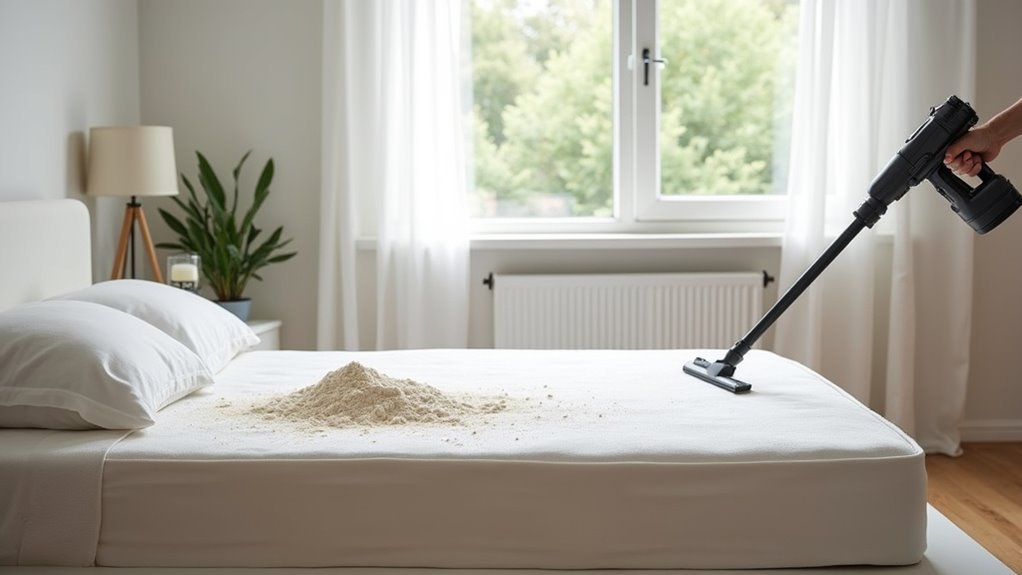

Mattress odors often come from sweat, spills, and trapped dust, and they can be fixed with straightforward steps. Start by locating the source, then vacuum thoroughly, paying attention to seams and corners. Sprinkle baking soda to absorb lingering smells and treat stains or urine with an appropriate cleaner so odors do not return. Allow the mattress to dry completely and protect it with a washable cover to prevent future issues. These steps restore freshness and help maintain mattress hygiene for better sleep.
What’s Causing Mattress Odors?
Mattress odors usually build up slowly, and that can make them hard to pin down initially. You might blame sweat, spills, or a pet accident, but the smell can also come from deeper issues.
Moisture can feed mildew, while body oils and skin cells sink into the fibers and linger. Over time, that trapped buildup can lead to fabric deterioration, which makes odors stick even more.
In some mattresses, you could also notice chemical offgassing from new foam or adhesives, especially after unpacking. Should your room stays warm or humid, those smells can get stronger and feel like they belong there.
Don’t worry, though. Once you know the source, you can choose a cleaner path that fits your mattress and helps you breathe easier again.
Vacuum the Mattress First
Start alongside vacuuming the mattress with an upholstery attachment to lift away dust, skin cells, and loose debris.
This initial pass helps you remove the mess you can see, but it also clears the concealed buildup that often hangs onto odors.
Be sure to work along seams, crevices, and stitched edges, because those spots love to trap the stuff that makes a mattress smell stale.
Remove Surface Debris
Lift off every sheet, pillowcase, and cover before you do anything else, then vacuum the bare mattress with an upholstery attachment.
This surface prep gives your bed a clean start and helps with real debris removal. Move slowly across the top, and let the nozzle pull away dust, skin flakes, hair, and crumbs that can trap odor.
Work in overlapping passes so you don’t miss a spot, and keep the attachment close to the fabric. Should you share your bed with pets or kids, check for extra bits that like to hide near the center and edges.
A clean surface also makes the next step work better, so you’re not just chasing smells around. Once the top feels fresh, you’re ready to keep going with confidence.
Reach Seams And Crevices
Along the seams and tucked into the crevices, odor can hide where a quick pass misses it, so this is the time to slow down and be thorough. Use your upholstery tool to begin, then switch to a crevice brush for stitched edges. Should you spot tight folds, guide a needle probe gently along them to lift trapped lint and old residue.
| Area | What to do |
|---|---|
| Seams | Trace each line slowly |
| Tufts | Circle each dimple |
| Corners | Angle the nozzle in |
| Edges | Repeat short passes |
You’re not just cleaning; you’re making room for fresh air to reach every spot. Keep the vacuum moving, and don’t rush the same area. Once you finish, your mattress feels more like yours again, and that small win matters.
Deodorize With Baking Soda
Baking soda is often the easiest initial fix whenever your mattress smells stale, sweaty, or just a little off. You can trust it because it works with odor chemistry instead of scent masking, so it helps neutralize what you actually smell.
First, strip the bed and vacuum the surface. Then sprinkle a light, even layer over the mattress, especially along seams and stitched edges. Let it sit for at least 30 minutes, or longer provided the odor feels stubborn. After that, vacuum it up carefully.
Should you want a fresher feel, repeat the process once more. You’re not just covering a problem; you’re giving your bed a cleaner, calmer start that feels more like home.
Remove Sweat, Urine, and Spill Stains
Once sweat or urine contacts your mattress, you want to act fast so the stain and smell don’t settle in deeper. Blot the spot gently, then use a safe cleaner made for body fluids or a light vinegar mix for small spills.
For drink or food messes, lift the liquid initially and treat the stain right away so your mattress stays fresher and feels easier to sleep on.
Sweat And Urine Cleanup
Sweat and urine stains need quick, careful cleanup, because they can sink deep into the mattress and leave behind a stubborn smell that keeps coming back. To start, strip the bed and blot the spot gently with a clean cloth. Then mix a little enzyme cleaner with water and treat only the damp area. This helps with odor absorption without soaking the foam. Should you want extra peace of mind, use a mattress cover for fabric protection after it dries.
| Feeling | What you do | Why it helps |
|---|---|---|
| Embarrassed | Clean fast | Stops smell from spreading |
| Frustrated | Blot, don’t rub | Protects the fibers |
| Relieved | Air it out | Lets freshness return |
Next, let fresh air move through the room so the mattress dries fully and your bed feels like yours again.
Spill Stain Removal
Spills can feel like a small disaster, but you can usually fix them before they leave a lasting mark or smell.
To begin, blot the spot with a clean cloth, and don’t rub, or you’ll push the mess deeper.
In case you’ve dealt with sweat, urine, or a collected beverage, treat the stain right away.
Mix a little warm water with mild soap, then dab the area lightly.
For tougher spots, use an enzyme cleaner on organic stains and let it sit as directed.
Skip harsh chemical solvents unless the label says they’re safe for mattresses.
After that, press with dry towels until the surface feels barely damp.
Then air the mattress with a fan and open window so the stain doesn’t come back.
Use Vinegar for Stubborn Mattress Smells
For stubborn mattress smells, vinegar can give you a simple reset without a lot of fuss.
Its vinegar chemistry helps neutralize acidic odors instead of just covering them up with odor masking. Mix equal parts white vinegar and water in a spray bottle, then mist the mattress lightly so you don’t soak the fabric.
Before you spray, strip the bed and let the surface dry fully. Focus on the smelly spots, especially seams and stitched edges where odors hide.
Afterward, leave the mattress uncovered and let fresh air do its job. Open a window or run a fan should you be able to.
The vinegar scent fades as it dries, and you’re left with a cleaner, more comfortable bed that feels like it belongs in your space.
Treat Pet Odors With Enzyme Cleaner
Enzyme cleaner can help you handle pet odors because it breaks down the organic mess that causes the smell, instead of just covering it up.
You should spray it only on the affected spot, let it sit for the time listed on the label, and blot it with a clean cloth so you don’t spread the stain.
After that, let the mattress dry fully with good airflow, because any leftover moisture can bring the odor right back.
Enzyme Cleaner Benefits
Pet odors can cling to a mattress in a way that feels stubborn and frustrating, but an enzyme cleaner gives you a smarter way to deal with the problem.
You get enzymatic breakdown that targets the organic leftovers pets leave behind, so the smell doesn’t just hide, it gets dismantled.
That matters whenever you want your room to feel fresh and like yours again.
Many eco formulations also help you clean with less worry about harsh fumes, which can make the whole process feel easier on you and your home.
Whenever you choose the right cleaner, you’re not guessing at the odor source.
You’re using a focused tool that works with the mess, not against it, and that can bring real relief.
Spot Treatment Steps
When a pet accident lands on your mattress, quick spot treatment can save you a lot of stress later, because the longer odor sits, the deeper it sinks in.
Initially, lift away solids and blot the spot with a clean cloth, so you don’t spread the mess. Then apply an enzyme cleaner solely to the stained area, following the label for dwell time. This helps decompose urine and other organic odor, not just cover it up.
After that, blot again with a dry cloth and check the smell. Should the spot still lingers, repeat once rather than scrubbing hard.
Gentle care matters here, because rough rubbing can hurt fabric repair and make the surface look worn. Skip odor masking sprays; they might smell nice, but they won’t solve the problem for your mattress and your peace of mind.
Drying After Cleaning
After you’ve cleaned the spot with an enzyme cleaner, drying the mattress well is just as essential as the cleaning itself, because a damp mattress can hold onto smells and invite new ones.
Open the windows, point a fan at the bed, and let rapid moisture escape from the fabric. Should the room feel humid, use a dehumidifier nearby and consider dehumidifier placement so air can move across the mattress, not just around it. Leave the bed uncovered until it feels fully dry to your hand. Check seams and stitched edges, since they hide dampness. Were it possible, let sunlight help for a few hours. This steady drying gives you a fresher bed and helps your home feel like the clean, cared-for space you want.
Air Out the Mattress
A fresh breeze can do a lot of quiet work for a mattress that smells stale or damp. Put it near an open window and let open airing start.
Then, provided you can, move it into gentle sun exposure for a few hours. That light and airflow help freshen fibers and reduce that trapped, lived-in smell that makes sleep feel less cozy.
Keep the room open, and let air move around both sides of the mattress. Should you be able to lean it safely, give the edges a chance to breathe too.
You don’t need fancy tools here, just patience and a good spot. While it sits, stay nearby so you can adjust its position and keep the space calm, bright, and welcoming.
Dry the Mattress Completely
Give the mattress plenty of time to dry all the way through, because even a little trapped dampness can bring the odor right back.
Keep it uncovered in a bright room with moving air, and turn on a fan so every layer dries evenly. Should you can, place it near a window, but avoid closing the room too soon.
Check moisture indicators, like a cool feel or a darkened spot, before you remake the bed.
For fabric safe drying, don’t rush with heat, since strong heat can harm the materials. Instead, let air do the work, and flip or shift the mattress as necessary so concealed damp areas can’t hide out.
Once the surface feels fully dry and light again, you’re ready for fresh bedding and a cleaner, comfier sleep space.
Prevent Mattress Odors From Coming Back
To keep mattress odors from creeping back, start with the simple habits that stop moisture, dirt, and body oils from building up again. Change sheets every week, and wash pillowcases and blankets often so smells don’t settle back in.
Use a mattress protector, because it gives you a clean shield against sweat and spills. Also, do routine inspections for damp spots, stains, or new musty patches, especially after illness or a humid week.
Good humidity control matters too, so run a fan, open windows, or use a dehumidifier whenever the room feels sticky. In the event you spill something, blot it fast and let the area dry fully.
Finally, vacuum the mattress now and then, and keep airflow steady so your bed stays fresh and welcoming.
When to Replace a Smelly Mattress
In case your mattress still smells after deep cleaning, that lingering odor can be a sign that the problem has gone too far for home treatment.
Should you notice comfort degradation, like sagging, damp spots, or repeated musty smells, your bed might no longer feel fresh or supportive.
You should also watch for mold, urine that keeps returning, or stains that soak deep into the layers.
Once the smell reaches the core, cleaning won’t fix the damage.
At that point, you could be contending with broken foam, weak springs, or lost structural integrity.
Replacing the mattress can protect your sleep and help you feel at ease in your room again.
A new mattress often brings back comfort, cleaner air, and the peaceful rest you deserve.
Frequently Asked Questions
Can I Use Essential Oils to Make My Mattress Smell Better?
Yes, you can, but you should use essential oils sparingly and watch aromatherapy safety. Try diffuser alternatives like lightly scented baking soda or a fabric safe spray, so you keep your mattress fresh without feeling left out.
Is It Safe to Sprinkle Baking Soda on Memory Foam?
Yes, you can sprinkle baking soda on memory foam, for example when you are freshening a musty bed, but keep it light. Vacuum it off well; excess surface residue can linger, and moisture might risk foam breakdown.
How Often Should I Clean My Mattress to Prevent Odors?
You should clean your mattress lightly every month, vacuum weekly, and rotate it weekly if needed. Add seasonal airing, wash bedding often, and act fast after spills so you will keep it fresh and inviting.
Will a Mattress Protector Stop All Odors Completely?
No, a mattress protector won’t stop all odors completely; it is like a shield, not a fortress. You’ll get partial protection and stronger odor barriers, but you still need regular cleaning and quick spill response.
Can Sunlight Damage My Mattress Fabric or Foam?
Yes, sunlight can damage your mattress if you leave it out too long. UV exposure causes color fading, foam degradation, and heat warping. You can air it briefly, but keep it shaded and monitored.
