
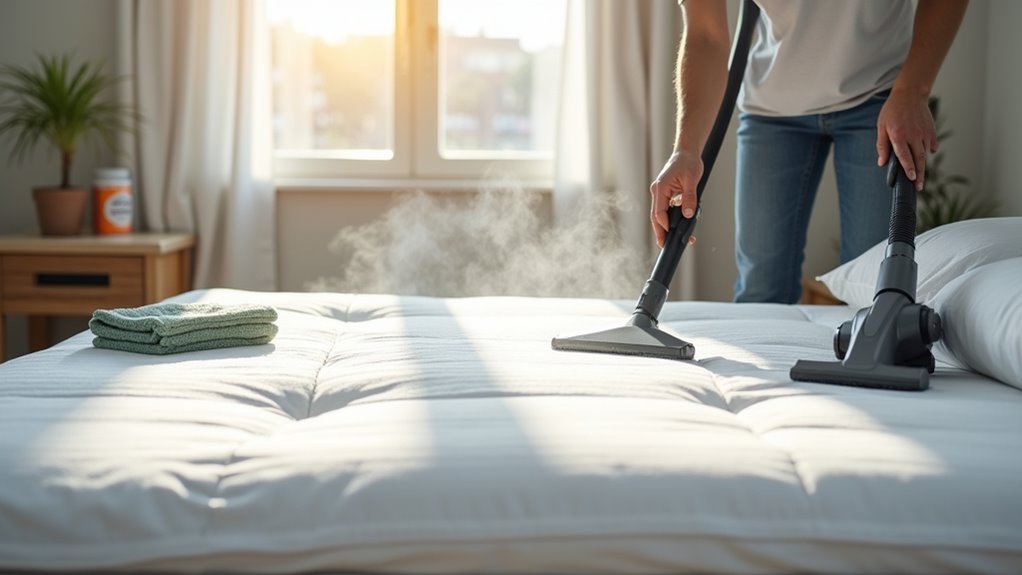

A dirty mattress can feel like a small disaster, but it is fixable with a few steady steps. Strip the bedding, check the care label, and vacuum every seam and edge to remove dust and debris. Spot-treat stains with a gentle cleaning solution and neutralize odors with baking soda. Use steam only if the mattress care instructions permit it, and allow the mattress to dry completely afterward. Finish by applying a mattress protector to keep it fresh longer.
What You’ll Need to Deep Clean a Mattress
Before you start scrubbing, it helps to gather everything you’ll need so the job feels calm instead of chaotic. You’ll want a vacuum with an upholstery attachment, clean white cloths, cold water, baking soda, and a gentle stain cleaner. Keep your mattress care label nearby, because it tells you what your bed can handle.
Should you be able, open a window or turn on a fan so the room stays fresh and dry. A pair of microfiber gloves can help you stay comfortable while you work, and odor neutralizers can help in case the mattress has a stubborn smell. Once you set these items within reach, you save time and cut stress.
Then you can move with confidence, appreciating your space is ready for a careful deep clean.
Strip the Bed and Vacuum the Mattress
Now that you’ve gathered your supplies, strip the bed all the way down and give the mattress a fresh start. Remove sheets, pillowcases, blankets, and the topper so you’re working with a blank slate. Wash the bedding separately, then move to vacuuming.
| Task | Why it helps |
|---|---|
| Bed stripping | Clears dust and skin flakes |
| Topper removal | Exposes concealed dirt |
| Upholstery attachment | Lifts loose debris |
| Seam vacuuming | Reaches stitched edges |
| Slow passes | Picks up more dust |
Use the upholstery tool over the whole surface, then slow down for seam vacuuming along edges and corners. Keep your suction low enough to protect the fabric. This step helps you and your bed feel like you’re starting clean together, which makes the rest of the process easier and a little less grimy.
Treat Mattress Stains First
Initially, look at the stain so you can tell what caused it, because sweat, blood, and spills each need a different touch.
Then blot the spot with a clean cloth instead of rubbing, since rubbing can push the mess deeper into the fabric.
Use a gentle cleaner on the cloth, and let it lift the stain without soaking the mattress.
Identify Stain Type
A careful stain check can save you a lot of stress later. You’re not alone here, and you can handle this with a calm eye. To start, look for sweat, blood, urine, or food, because each one needs a different cleaner.
- Fresh sweat often leaves yellow rings.
- Blood usually looks dark and set in.
- Urine could carry a sharp smell that needs odor masking help.
- Drink spills can cause sticky spots and fabric pilling when you scrub too hard.
Next, keep in mind the stain’s age and size, since old marks need more care. Then choose the right product before you touch the mattress again. That simple check helps you protect the fabric, avoid spread, and feel confident with the next step.
Blot, Don’t Rub
Once you spot the stain, resist the urge to scrub hard, because that can push the mess deeper into the fibers and make the mark spread. Instead, use pressure with a clean white cloth and let it lift the spill in small steps. You’re not battling the mattress; you’re guiding it back to clean.
Work from the outside in, and keep each blot short and steady. That patience technique helps protect the fabric and keeps the stain from growing. Should you’re unsure about the material, do fabric checking on a concealed spot initially so you don’t make a tiny problem bigger.
Then switch to a fresh cloth as soon as it picks up color. With calm hands, you can treat the stain without turning one rough patch into a whole bad day.
Use Gentle Cleaners
Treat the stain before you reach for baking soda, because gentle cleaners work best once they hit the spot promptly. You want to protect the fabric and keep the room feeling calm, like you’re caring for a shared space that matters. Use mild surfactants in a small amount of cool water, then trial the mix on a concealed corner.
- Dab the cleaner on a cloth, not the bed.
- Blot from the outside in so the mark stays small.
- Pick formulas with a balanced pH, since harsh mixes can wear down fibers.
- Lift the residue with a clean damp cloth, then dry the area well.
When you work this way, you help the stain fade without making the mattress feel tired or sticky.
Remove Common Mattress Odors
Odors in your mattress usually come from sweat, body oils, spills, or trapped moisture, so start locating the source before you treat it.
Then sprinkle a thin layer of baking soda across the surface and let it sit long enough to absorb the smell.
After that, open windows or run a fan so fresh air can help the mattress dry fully and smell clean again.
Identifying Odor Sources
Before you start cleaning, it helps to figure out where that stubborn mattress smell is coming from, because not every odor needs the same fix. You’re not alone in case the bed feels off; many people deal with it. Check these clues:
- Pet odors near the middle or corners
- Sweat or body oils in slept-on spots
- Spills that left a sour edge
- Chemical offgassing from a new mattress
Next, sniff the seams, look for stains, and notice whether the smell grows after the room warms up. That can tell you a lot fast.
In case you spot a pet area, you might require extra care there. Should the odor seem new and sharp, chemical offgassing is likely the cause. Once you know the source, you can clean with more confidence and less guesswork.
Baking Soda Treatment
Baking soda can do a lot of quiet work for a mattress that smells stale, musty, or just a little too lived-in. You sprinkle a thin, even layer over the surface, then let it sit so it can support odor neutralization and pull in lingering dampness.
In case you already handled spots, this step helps finish the job and adds a little stain prevention by keeping fresh marks from settling in. Give the powder a few hours, or longer should the smell feel stubborn.
Then vacuum slowly with your upholstery attachment, especially along seams and edges where dust likes to hide. That simple routine can make your bed feel cleaner, fresher, and easier to share with confidence.
Fresh Air Drying
Fresh air can do more than just help a mattress dry. It can also help you shake off stale smells and make your room feel cared for.
After you finish baking soda treatment, move the mattress where airflow can reach it. Open windows and let the breeze move through the space, then give the mattress a little sunlight exposure provided the material allows it.
- Keep the room bright and airy.
- Stand the mattress up so both sides breathe.
- Let fans push out trapped damp air.
- Wait until the surface feels fully dry.
When you give your mattress time outdoors or near a sunny window, you help odor fade and moisture leave. That makes your bed feel fresher, and honestly, your whole room could thank you too.
How to Remove Mattress Stains by Type
Stains don’t all play according to the same rules, so it helps to tackle them according to type instead of guessing and hoping for the best.
For sweat, blood, or other body marks, blot initially with a cloth dampened in cold water, then use an enzyme cleaner or a gentle hydrogen peroxide mix on the cloth.
For urine, move fast, blot well, and repeat until the color fades.
For food or drink spills, lift crumbs or residue, then dab a mild cleaner around the edge and work inward.
Always check care labels beforehand, since some mattresses need extra caution.
Should the stain won’t budge, don’t panic. That’s whenever odor resistant fabrics and professional restoration can help you protect your bed and feel at home again.
Use Baking Soda to Freshen the Mattress
A thin layer of baking soda can do a lot of quiet work for your mattress, especially assuming it’s been holding onto stale smells, sweat, or last night’s snack crumbs. You’re not just masking odors; you’re using odor neutralizing chemistry that helps lift them away. Sprinkle it evenly, then let it sit so it can mingle with trapped moisture and refresh the fabric.
- Cover the surface lightly, not thickly.
- Wait at least a few hours.
- Vacuum slowly with an upholstery tool.
- Repeat on the other side assuming your mattress allows it.
Provided you want a softer scent, skip scented alternatives and keep things simple. That way, your bed feels clean, calm, and ready for the rest you deserve.
Deep Clean a Mattress With Steam
Set up your steam cleaner with a clean attachment and check your mattress care label initially, since too much heat or moisture can damage some materials.
Then work in short, light passes so you loosen grime without soaking the fabric.
Keep the room airy and blot any damp spots right away so the mattress dries fast and stays fresh.
Steam Cleaner Setup
Next, get your steam cleaner ready with care so you clean the mattress without soaking it. You’re setting yourself up for a calm, steady clean, and that makes the job feel easier. Check the tank, fill it with fresh water, and let it heat fully. Then review the pressure settings so the steam stays gentle on fabric.
- Read the manual and observe the nozzle type.
- Wipe the head clean for good steam maintenance.
- Trial the spray on a cloth initially.
- Keep a dry towel close for quick touch-ups.
When you prep this way, you protect the mattress and keep moisture low. You’ll also move with more confidence, because each step helps you stay in control and part of the process, not fighting it.
Safe Steam Techniques
Now that your steam cleaner is ready, you can use it with a light touch so the mattress gets clean without getting soggy. Check fabric compatibility initially, because some foams and delicate covers don’t handle steam well.
Then move the nozzle slowly in short passes, and never park it in one spot. Keep the head a few inches above the surface, and let the heat do the work.
For steam safety, wear gloves, keep kids and pets away, and unplug the machine before refilling. After each pass, blot any dampness with a clean towel.
Open a window or turn on a fan so moisture leaves fast. In case the mattress feels more than slightly damp, stop and let it air dry before you continue.
Remove Dust Mites and Allergens
Should allergies are making your bed feel like the enemy, you can take back control with a few careful steps.
You share your bed with tiny mites, but you don’t have to host them forever. Start with:
- Vacuum the mattress slowly with an upholstery tool, especially seams.
- Use air filtration while you clean to catch floating dust.
- Wash bedding in hot water, then dry it well.
- Add allergen proofing pillows and a mattress cover to block new buildup.
For extra relief, sprinkle baking soda, wait, then vacuum again.
That simple routine helps lift dander, pollen, and old skin flakes from the fabric.
Should you stay steady, your bed can feel calmer, cleaner, and more like yours again.
Let the Mattress Dry Completely
Letting the mattress dry fully is the part that protects all your hard work, because even a little trapped moisture can turn into a stale smell fast. You can open windows, turn on a fan, and keep the room moving with steady airflow.
Check the surface with your hand, then press a clean towel into any cool spots. Should you possess moisture meters, use them to spot concealed dampness near seams and edges.
Keep watching airflow monitoring through the day, especially whether the room feels humid or still. Give the mattress extra time in case it still feels heavy or cool.
Don’t remake the bed until every layer feels dry and fresh. That patience helps you join the clean, cozy side of sleep without any furtive dampness.
Protect Your Mattress After Cleaning
A clean mattress stays fresh longer whenever you give it a little daily protection, and that starts with a good mattress protector. It acts like a soft shield, so your hard work doesn’t slip away after one sleepy night. Use it to support your nighttime habits and keep spills, sweat, and dust from settling in.
- Choose a protector that fits snugly and feels breathable.
- Put it on right after the mattress is fully dry.
- Keep sheets clean, because they add another layer of defense.
- Check care labels so you keep your warranty protection intact.
Then make your bed each morning. That simple step helps the cover stay smooth and the room feel cared for. With a few steady habits, you’ll protect the mattress and keep your sleep space feeling like it truly belongs to you.
How Often to Deep Clean a Mattress?
Most people do best with a deep clean every 3 to 6 months, but your mattress could need it sooner in case you sweat a lot, deal with allergies, or share the bed with kids or pets.
In case that sounds like your home, you’re not behind. You’re just keeping up with real life.
A seasonal schedule can help you stay on track, like cleaning in spring, summer, fall, and winter. That rhythm makes allergy prevention easier because dust, skin flakes, and odors don’t get time to build up.
In between, give your mattress a quick vacuum and use a protector, since those small steps stretch the time between deep cleans.
Should you notice stains, smells, or damp spots, don’t wait. Clean it sooner, and your bed will stay fresher.
Frequently Asked Questions
Can I Deep Clean a Memory Foam Mattress?
Yes, you can deep clean a memory foam mattress, but you must use gentle methods. Vacuum it, spot clean lightly, and focus on odor removal; avoid soaking it so its pressure mapping stays intact and comfy.
How Do I Clean a Mattress Protector?
You can clean a mattress protector by checking its label, then washing zipped protectors in cold or warm water with mild detergent. Air dry breathable fabrics or tumble dry low so you keep your bed fresh together.
Should I Rotate My Mattress Before Cleaning?
Yes, rotate it initially in case your mattress has a flip schedule; it will expose every side to cleaning, like turning a canvas for fresh paint. Then clean both faces, and you will keep your bed feeling cared for together.
Can I Use Vinegar on Mattress Stains?
You can use vinegar cautiously on mattress stains, but it might leave odor or moisture. Try vinegar alternatives like enzyme cleaners and focus on stain prevention with a protector so you will feel confident and comfortable.
What if My Mattress Still Smells After Cleaning?
If your mattress still smells, use stronger measures because apparently odors did not get the memo. Try odor neutralizers, bioenzyme sprays, charcoal sachets and, if necessary, professional ozone treatment for stubborn lingering funk.
