
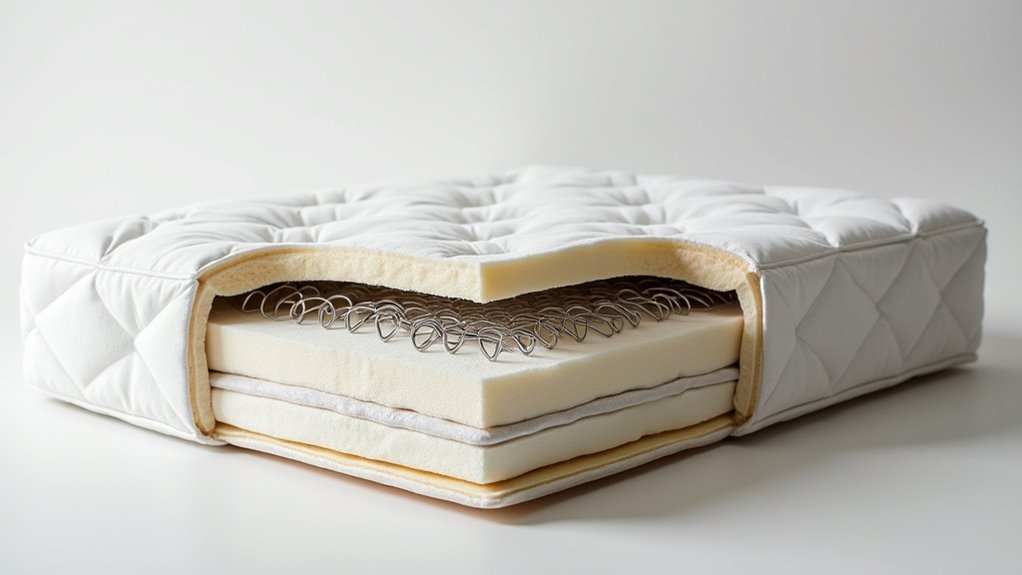

An innerspring mattress uses a network of steel coils as its core support. That coil system delivers a lively, springy feel and generally firmer support. Layers of foam, fiber, or cotton sit on top to soften the sleeping surface. Different coil types and constructions change how much the bed hugs or pushes back. Picking the right coil design helps match the mattress to personal comfort and support needs.
What Is an Innerspring Mattress?
An innerspring mattress is the classic coil bed many people envision initially while they contemplate about a mattress. You’ll usually find a steel coil core inside, and that core gives the bed its familiar, lively feel. Many people like it because it feels steady, familiar, and easy to share with a partner or family guest. Its manufacturing origins go back to older bedding styles, so it often feels like part of the sleep tradition you already know.
During durability evaluation, makers check how well the coils keep their shape and support over time. You’ll also see comfort layers of foam, fiber, or cotton on top, which soften the surface without hiding the springy base. That balance helps you feel supported and welcome on a bed that’s long trusted.
How an Innerspring Mattress Works
Inside an innerspring mattress, the steel coils do the real work, and they do it in a very familiar way.
Whenever you lie down, the coils compress under your weight, then push back as you shift. That coil recoil gives you a lively, supportive feel that many sleepers trust right away.
At the same time, the coil system spreads your weight across the bed. This pressure redistribution helps keep one spot from sinking too deeply, so you feel steadier from head to toe.
Comfort layers on top soften the contact, while the springs keep the base firm underneath.
Because the mattress responds quickly, you can turn over without feeling stuck. That easy movement can make your bed feel welcoming and right for you.
Common Innerspring Coil Types
Not all innerspring mattresses feel the same, and the coil type plays a big part in that difference. You’ll usually see Bonnell, offset, continuous wire, and pocket coils.
Bonnell coils use hourglass shapes and connect across the bed, so they often feel sturdy and familiar. Offset coils add a hinge-like bend, which can improve contouring and coil durability.
Continuous wire coils link one wire into several springs, giving you a firm, steady feel with fewer parts to fail. Pocket coils wrap each spring in fabric, so they move more on their own and often cut noise potential.
As you shop, consider how each coil system matches your comfort needs, support goals, and the kind of sleep space you want to share.
Why Innerspring Mattresses Feel Bouncy
What gives an innerspring mattress that lively, up-and-down feel? You feel it because steel coils compress under your weight and then spring back fast. That quick recoil creates the bounce mechanisms that make the bed feel alert and easy to move on.
Whenever coils work together, they share pressure and keep the surface lively instead of sinky. In case your mattress uses pocket coils or offset coils, each spring can respond on its own, so you get a more controlled bounce.
The edges can also stay firmer because the coil system supports the sides, which improves edge resiliency. So whenever you sit, turn, or stand, the mattress answers right away. That responsive feel helps you feel at home on a classic innerspring.
Innerspring Mattress Benefits and Drawbacks
Innerspring mattresses often strike a nice balance between comfort and practicality, but they’re not perfect for everyone. You get a lively feel, solid support, and better airflow, which can help you sleep cooler and move around with less effort. That’s why many people feel right at home on them.
Still, you might notice less pressure relief than with deeper cushioning, so your shoulders or hips could want more help. You should also watch for durability concerns, because lower-quality coils and thin padding can wear down faster. Should you deal with allergies, allergen considerations matter too, since the materials inside can collect dust over time.
Even so, a well-made innerspring can feel dependable, familiar, and easy to live with every night.
Innerspring vs. Memory Foam vs. Hybrid
Provided that you’ve liked the lively feel of an innerspring bed, it helps to see how it stacks up against memory foam and hybrid models.
Memory foam hugs your body, so you get deep contouring and strong motion isolation, which can feel soothing should you share the bed. Still, it might trap more heat and feel slower when you move.
Hybrids blend coils with thicker foam or latex, so you keep bounce while gaining more pressure relief. You’ll also notice better edge support than many all-foam beds.
Innersprings stay the most springy and airy, and they often feel lighter under you. So, were you looking for a classic, responsive bed that still feels easy to live with, this comparison helps you see where each one fits.
Who Should Buy an Innerspring Mattress?
In case you sleep hot, an innerspring mattress can help you stay cooler because its open coil design lets air move more freely.
You may also like it provided you’re shopping on a budget, since these beds often give you solid support without a high price tag.
Hot Sleepers
Hot sleepers usually appreciate an innerspring mattress because its coil system lets air move more freely than many dense foam beds. That airflow can help you stay drier, calmer, and less stuck in a sweaty patch at 2 a.m.
In case you want even more comfort, look for breathable covers and light cooling toppers that add softness without trapping heat. You can also choose a model with a thinner comfort layer, since it often feels less stuffy than thick foam.
This kind of bed gives you a lively, supportive feel while still helping your body release warmth. So assuming you tend to run warm, an innerspring can help you sleep closer to the rest of your room, and that can make bedtime feel a little more welcoming.
Budget Shoppers
Budget shoppers often gravitate toward an innerspring mattress because it can give you solid support without pushing your price range too far. You can feel like you’re making a smart, practical choice, and that matters whenever every dollar counts.
- You can compare prices fast.
- You might find sales at local stores.
- You get a classic feel for less.
- You should check warranty concerns before you buy.
- You can save room in your budget for sheets.
Because the design uses coils and fewer thick comfort layers, you often pay less than you’d for many foam models. Still, look at coil count, edge support, and return policies, so you don’t trade savings for discomfort. If you want value and a familiar feel, this type can fit your home and your wallet.
How to Choose the Right Innerspring Mattress
Choosing the right innerspring mattress starts with how you sleep and what your body needs each night. Should you sleep on your back or stomach, look for a firmer feel that keeps your spine steady. In case you need more cushion, choose thicker comfort layers and wrapped coils for better pressure relief.
Next, check coil count, coil gauge, and edge support so you can sit and sleep with confidence. Strong edges help you use the whole bed, which feels great whenever you share your space.
Then review warranty considerations, because a solid warranty can protect your purchase and ease your mind. Finally, evaluate how the mattress moves with you. You want bounce, support, and a cozy fit that helps you feel at home.
Frequently Asked Questions
How Long Do Innerspring Mattresses Usually Last?
You’ll usually get 7 to 10 years from an innerspring mattress, though the average lifespan varies. Check warranty considerations, because they hint at durability. With proper care, you can keep yours comfortable longer.
Do Innerspring Mattresses Need a Box Spring?
No, you do not always need a box spring. Your foundation choice depends on your bed frame and your mattress warranty. Many sleepers use slats, platforms, or a traditional box spring for support.
How Often Should I Rotate an Innerspring Mattress?
You should rotate your innerspring mattress every 3 to 6 months. Seasonal rotation helps keep wear even, and flip frequency depends on whether it is double sided. If it is double sided, flip it seasonally too.
Can Innerspring Mattresses Be Used on Adjustable Bases?
Yes, you can, but not all. You will need compatible models because many innerspring mattresses have base limitations. Check the maker’s specs initially, and you will sleep easier, joined with others who have made the right choice.
How Do You Clean an Innerspring Mattress?
You can clean it via vacuuming, spot treating stains with mild soap, then using stain removal and odor neutralization methods like baking soda. Let it dry fully, and you will keep your bed fresh and welcoming.
