
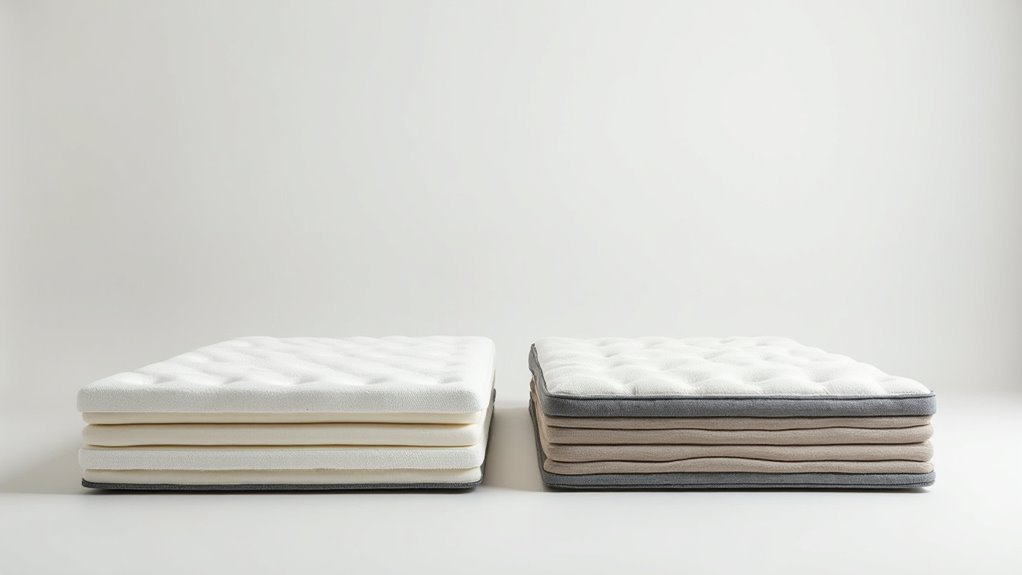

A hybrid mattress combines coils with a thicker foam or latex top for pressure relief at shoulders and hips while keeping steady support. An innerspring mattress sticks to coils with thinner comfort layers, offering firmer, airier feel that suits hot sleepers and stomach sleepers. Hybrids reduce pressure points and limit motion transfer more than traditional innersprings. Innersprings provide strong edge support and faster cooling due to greater airflow. Choosing between them depends on preferred cushioning, sleeping position, and temperature needs.
What Is a Hybrid Mattress?
A hybrid mattress brings together two comfort systems, and that mix is what makes it stand out. You get a coil support core below, then thicker foam or latex above it for a softer feel.
This materials evolution lets you enjoy both lift and cushioning, so your bed feels more balanced and welcoming. Many hybrids also include a buffer layer that helps you move from plush comfort to steady support without a harsh break.
Because of stronger manufacturing standards, good hybrids aim for better motion control, edge support, and long-lasting comfort. Should you want a bed that feels like it fits you, a hybrid can help you settle in and feel at home.
What Is an Innerspring Mattress?
Innerspring comfort starts with the coil unit, and that’s the heart of this mattress style. You get a familiar, supportive feel that has changed through history evolution, yet still feels easy to trust. The coil materials inside do most of the work, while thinner comfort layers sit above them.
- You’ll notice the spring base initially.
- You’ll feel firmer support under your body.
- You’ll often get more airflow through the build.
- You’ll usually pay less than for a hybrid.
Because the design stays simpler, you can count on a traditional sleep setup that many people know and like. Should you desire a mattress that feels classic, sturdy, and welcoming, this style could suit your space and your routine well.
Hybrid vs. Innerspring Mattress Feel
Often, the biggest difference between hybrid and innerspring mattresses is how they feel once you lie down. A hybrid usually feels plusher at the outset, then springs back with a balanced, cradling touch. You get that cozy, “this bed gets me” feeling without sinking too far.
An innerspring mattress feels firmer and more open, so you notice the coils right away and keep a lively bounce under you. Should you enjoy a bed with more surface resiliency, an innerspring often gives you that quick return.
Hybrids usually feel softer along the edges, while innersprings often offer stronger edge responsiveness. So, should you want comfort that hugs a little, choose hybrid. Should you prefer a crisp, traditional feel, an innerspring could suit you better.
Support, Cooling, and Motion Isolation Compared
Whenever you compare support, hybrids usually give you more contouring because their thicker comfort layers work with the coils.
Should you sleep hot or share your bed, you’ll also notice that innersprings often feel breezier, while hybrids do a better job of limiting motion.
That means you’re balancing pressure relief, cooling, and how much your partner’s tossing and turning reaches you.
Support and Pressure Relief
Although both mattress types use coils for support, the comfort layers change how that support feels on your body. With a hybrid, you get more cushioning, so pressure mapping often shows less stress at your shoulders and hips. That helps you stay in spinal alignment without feeling stuck. An innerspring feels firmer, so you might notice more pushback and less contouring.
- Should you sleep on your side, a hybrid can ease sore spots.
- In case you want a flatter feel, an innerspring could suit you better.
- Thicker top layers in a hybrid spread your weight more evenly.
- Thinner padding in an innerspring keeps the bed responsive.
Cooling and Motion Control
That extra cushioning you felt in a hybrid doesn’t just help with pressure relief. It also helps your bed mute movement, so you’re less likely to feel your partner turn over. Pocketed coils support you one by one, while thicker foam layers absorb extra shake. Many hybrids add phase change materials to manage heat, and that can keep the surface feeling steady instead of sticky.
In contrast, an innerspring often feels breezier because its coil system leaves more open space for airflow. Yet it usually passes more motion across the bed, especially when the coils are tied together. Should you want cooler sleep with calmer nights, look for strong edge reinforcement and a balanced coil design. That way, you can stretch out, relax, and feel like the bed’s got your back.
Durability, Price, and Value Compared
Whenever you compare durability, you’ll usually see innersprings win on price, whilst hybrids ask for more upfront because of their thicker comfort layers. You’ll also want to look at what you get for that extra cost, since a well-made hybrid can feel more supportive and comfortable for longer. Still, cheaper doesn’t always mean better value, so it helps to match the mattress to how you sleep and how long you want it to last.
Durability Differences
Assuming you’re comparing durability, price, and value, the biggest difference usually comes down to what’s inside the mattress.
- Innersprings lean on a simple coil core, so you might see coil fatigue sooner unless the wires are thin or the unit feels loose.
- Hybrids add thicker comfort layers, which can postpone spring wear, but you should watch for material degradation in low-grade foam.
- Should you sleep on the edge or move a lot, a well-made innerspring can hold shape longer and feel steadier.
- A quality hybrid can last well too, especially whenever the foam stays resilient and the coils are pocketed.
Price and Value
Even provided you’re watching your budget closely, the price gap between hybrid and innerspring mattresses usually makes sense once you look at the build. In this cost comparison, you pay more for a hybrid because it adds thicker foam or latex above the coils, and that extra comfort can support your body better at night. Should you sleep on your side or share a bed, you might feel the long term value right away through less pressure and less motion.
Innersprings cost less and still give you strong bounce, airy sleep, and sturdy support. So, were you to want a firmer feel and a lower upfront price, you could feel good there. Were you to want more comfort, the hybrid can earn its place.
Which Mattress Fits Your Sleep Style?
Your sleep style can narrow the choice fast, and that can take a lot of stress off your shoulders. Should your sleep position change at night, a hybrid usually gives you the balance you need. Its thicker comfort layers and pocketed coils help your body feel cradled without sinking too far.
- Side sleepers often like hybrid beds because mattress firmness feels softer on joints.
- Stomach sleepers usually prefer innersprings, since the firmer surface keeps hips lifted.
- Back sleepers might enjoy either one, but hybrids add more contouring.
- When you sleep hot or share a bed, innersprings bring extra airflow and bounce.
Frequently Asked Questions
How Long Does It Take to Break in a Hybrid Mattress?
Usually, you’ll observe a hybrid mattress break in within 2 to 8 weeks; most of that comes from softening timeline and layer compression. You aren’t the only one when it feels firmer initially—your body and bed adjust together.
Are Hybrid Mattresses More Likely to Off-Gas Than Innersprings?
Yes, you are more likely to notice chemical odors from hybrids because they use more foam, which can raise VOC exposure. Innerspring mattresses usually off gas less, so you will often breathe easier and feel more comfortable right away.
Do Hybrid Mattresses Work Well With Adjustable Bases?
Yes. Most hybrid mattresses work well on adjustable bases, so you are often in good hands. Their pocketed coils and foam layers flex nicely, while adjustable compatibility and motion isolation help you and your partner stay comfortable.
Can Innerspring Mattresses Be Flipped Regularly?
Yes, you can flip some innerspring mattresses, but only if the design allows it. Check for coil rotation and spring zoning first. If it is one sided, rotate it regularly instead.
Which Mattress Type Is Easier to Move and Set Up?
Innerspring is your easier lift; it is usually lighter weight and ships in compressed packaging, so you can move and set it up with less struggle. Like a breeze opening a door, it welcomes you home faster.
