
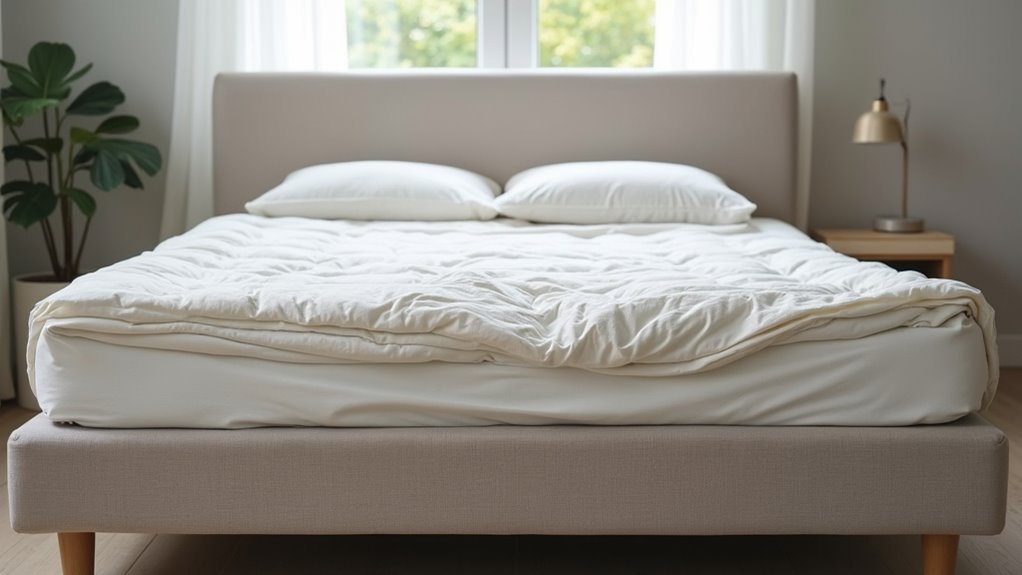

Mattress sag happens when materials and support start to wear out and lose their original shape. Foam can compress and lose resilience, coils can bend or break, and comfort layers can shift or split from repeated pressure. Sleeping in the same spot accelerates localized wear, while a weak frame, widely spaced slats, heat, and moisture worsen sagging. Early signs include visible dips and reduced support during sleep. Quick fixes like rotating the mattress, reinforcing the base, or replacing worn padding can slow further deterioration.
What Causes Mattress Sagging?
Mattress sagging usually starts once the materials inside the bed stop bouncing back like they used to. You’re not doing anything wrong. Over time, material breakdown can soften foam, weaken coils, and leave your body sinking where you sleep most.
Even a small body impression can grow whenever the same spot gets pressed night after night. Sometimes, manufacturing defects make the problem show up sooner, like weak seams, poor support layers, or foam that never had much strength to begin with.
Heat and moisture can speed things along, too, so the bed loses its shape faster. In case you notice a dip, you’re not alone. Many people see the same change, and it usually starts quietly before it feels obvious.
Common Causes of Mattress Sagging
Uneven weight can make your mattress sag faster whenever you sleep in the same spot night after night, since that area takes more pressure than the rest.
At the same time, worn support layers can lose their bounce and stop holding you up the way they should. If both occur together, you might notice dips, soft spots, and less support where you need it most.
Uneven Weight Distribution
Whenever your bed starts to dip, the cause is often more than just age, because your body can wear down one area faster than the rest. In case you sleep in the same spot, the mattress learns that path, and the middle, hip, or shoulder zone takes the hit.
Over time, that steady load can create a soft hollow that feels unfair, but it’s common. Sleep rotation helps spread the pressure, so one side doesn’t carry the whole story.
Pressure mapping can also show where your body pushes hardest, which helps you understand the dip. Should you share the bed, shifting positions can reduce center wear too.
Small changes won’t fix every sag, yet they can slow it and help your bed feel more even again.
Worn Support Layers
Inside the mattress, worn support layers often do the real damage, because they hold up your body night after night and slowly lose their strength. When foam fatigue sets in, you might feel soft spots, then notice a dip where you sleep most. Low foam density breaks down faster, so budget beds often sag sooner. Should layer delamination start, the layers slide apart and stop sharing weight well. | Clue | What you might feel | Why it happens |
| — | — | — |
|---|---|---|
| Soft center | Sinking | Foam has tired out |
| Edge dip | Rolling out | Support has thinned |
| Deep impression | Stuck spot | Layers no longer bond |
You can help yourself through checking the base, rotating the mattress, and using a protector to limit heat and moisture. That keeps your bed feeling more like your own safe place.
Why Some Mattresses Sag Faster
Some mattresses sag faster because a few small issues stack up over time, and that can feel frustrating as you just want a decent night’s sleep.
You might notice this more with budget beds, where material variability and manufacturing defects can make weak spots show up sooner. Low-density foam breaks down faster, so your hips and shoulders sink in sooner. In hybrids or innersprings, thin coils can lose tension and let dips form.
Should you sleep in the same place each night, you keep pressing the same area again and again. Heat, moisture, and humidity can also soften materials.
Even heavy use from couples or kids can speed wear, so you’re not imagining it once one bed gives out sooner.
How Mattress Support Prevents Sagging
Whenever your mattress sits on a solid, level foundation, it gets the steady support it needs to stay flat and feel even.
Good support also spreads your weight across the bed, so one spot doesn’t take all the pressure night after night.
That’s why checking your frame, slats, or base can be one of the easiest ways to slow sagging before it starts.
Proper Foundation Support
A solid foundation does more than hold your mattress up, it helps it keep its shape night after night.
You need a sturdy bed frame that stays level, so your mattress doesn’t flex in ways it shouldn’t. Check the slat reinforcement too, because weak or wide-spaced slats can let the center dip and steal support from below.
Should your base wobbles, your mattress could start feeling tired long before it should. A tight, well-built foundation gives you a steady surface and helps you feel like you belong in a bed that truly backs you up.
Once you notice sagging, inspect the frame initially, then fix loose parts or replace damaged supports. Your mattress can only stay strong provided its base does its job.
Even Weight Distribution
Even nightly weight distribution can make a big difference in how long your mattress stays supportive. Whenever you spread your body weight across the surface, you help the foam and coils recover instead of collapsing in one spot. That’s weight balancing in action, and it can keep you feeling included in a bed that still feels even and welcoming.
- Shift positions through the week
- Use sleep rotation every few months
- Avoid sitting on one edge
- Share center space more evenly
- Check for soft spots promptly
These small habits work together with good support, so the same area doesn’t take the hit night after night. Provided you and your mattress work as a team, you’ll likely notice fewer dips, less strain, and a steadier sleep surface that lasts longer.
Signs Your Mattress Is Sagging
One of the clearest signs your mattress is sagging is that it stops feeling flat and starts feeling uneven, especially in the spots you use most. You could notice a dip under your hips or shoulders, and that hollow spot can make you feel stuck in one place.
Should you look closely, you might see body impressions, edge creases, or a center valley that wasn’t there before. As you shift, the mattress could also make spring noise or feel less steady, which can be a clue in an innerspring bed.
In the morning, you might wake up sore or cramped because your body worked harder all night. Should your bed no longer supports you evenly, that’s a strong sign you’re sharing space with wear, not comfort.
Can You Fix a Sagging Mattress?
Yes, you can sometimes ease a sagging mattress with temporary support like a bunkie board, plywood, or a better foundation. These fixes work best provided the dip is mild and the bed’s frame or base is part of the problem, not provided the foam or coils have truly worn out.
Should the sag be deep, keeps growing, or still hurts your back after a quick fix, it’s probably time to replace the mattress.
Temporary Support Solutions
Whenever sagging starts to creep in, you don’t always need to toss the whole mattress right away. You can try a few temporary support moves that buy you time and comfort.
Should the middle dips, check the base initially, then add temporary slat reinforcement or a bunkie board to even out weak spots. You can also use an inflatable mattress topper to smooth shallow impressions and help you feel less stuck in the dip.
- Rotate the mattress to spread pressure
- Tighten loose frame screws
- Fill wide gaps under slats
- Add firm plywood under the center
- Use a protector to limit moisture
These fixes work best provided the sag feels mild, and they help you stay cozy while you plan your next step.
When Repair Works
Assuming the sag is still small, you can often fix it without buying a new mattress right away. Initially, check the foundation and frame, because weak slats or a missing center support can make a good bed feel tired.
Then rotate the mattress so pressure lands in new spots and body impressions don’t grow deeper. Should you have warranty checks to do, review the rules before you spend money.
A firm bunkie board or plywood sheet can help, but only as a short-term aid. You can also add a mattress protector to limit moisture and heat, which helps foam stay steadier.
In case you’re a pro sleepwalk through this, keep notes on what changes and how it feels. Small fixes work best whenever the sag is early and the support is off.
Time For Replacement
Once the sag gets deep enough, fixing the mattress often stops making sense, and that’s the point where replacement becomes the smarter move.
You can patch a small dip, but deep body impressions usually keep coming back.
Check your replacement timeline and compare it with warranty considerations, because age and coverage matter.
- Try a new foundation initially.
- Rotate whether wear is still light.
- Measure dips over 2 inches.
- Watch for broken coils or soft foam.
- Replace sooner when you wake sore.
When the bed still sinks after support checks, you’re likely done with repairs.
A new mattress can give you steadier sleep and help you feel like you belong in a bed that supports you well.
Simple Ways to Reduce Mattress Sagging
In many homes, a sagging mattress starts with small habits, but the positive news is that you can slow it down with a few simple fixes.
To begin, rotate regularly so the same spots don’t carry your weight every night.
Next, use protector to keep out sweat, spills, and dust that can weaken foam.
You should also check your foundation, since a weak frame or wide slats can create dips fast.
Should your bed sits on a base that doesn’t fit well, add a bunkie board or firmer support.
Also, avoid jumping on the bed and spread out sitting habits.
These small moves help you keep your mattress feeling more even, so your sleep space stays cozy, steady, and welcoming.
When A Sagging Mattress Needs Replacement
Should your mattress still feel uneven after you rotate it, check the foundation, and give it a little time to settle, it could be past the point of easy repair. At that stage, you deserve a bed that supports you well and helps your sleep hygiene, not one that keeps pulling you into the dip.
- You feel a deep body impression every night.
- Your back or hips ache after normal sleep.
- The sag stays visible in the same spot.
- The mattress is near the end of its life.
- warranty considerations show the damage is covered.
If the dip is deeper than 2 inches, replacement often makes more sense than another quick fix. A new mattress can help you rest with the comfort and support your body needs, and that can feel like joining the right sleep crew.
How to Prevent Mattress Sagging
To keep your mattress from sagging too soon, start with the basics and give it steady support. Place it on a solid frame or foundation with center support, so the middle won’t droop. Use a rotational schedule every few months to spread out pressure from your shoulders, hips, and the spot you favor most.
Then add humidity control in the bedroom, because extra moisture can soften foam and wear materials down faster. Keep a mattress protector on it to block sweat and spills, and check slats or legs for wobble before small problems grow.
Also, avoid letting kids bounce on it, since that playful fun can act like a tiny wrecking crew. With these habits, you help your bed stay comfortable and feel like home.
How to Choose a Mattress That Won’t Sag
A mattress that resists sagging starts with the parts you can’t always see, because the inside matters just as much as the cover. Whenever you shop, look for strong material density in the foam layers, since low-density foam breaks down fast. Then check the coils or support core, because weak springs lose shape over time. You also want sturdy edge support so the sides stay firm and the whole bed feels balanced.
- Ask about foam thickness and density
- Choose a tight coil count with strong gauge
- Try the perimeter for firm edge support
- Match the mattress to your base
- Read warranty terms for sagging limits
If you and your partner share the bed, pick a build that spreads weight well. That way, you can feel at home, night after night.
Frequently Asked Questions
How Often Should I Rotate My Mattress?
You should rotate your mattress every 3 to 6 months and flip it occasionally provided it is designed for both sides. That helps share wear, keep comfort even, and maintain support longer.
Does a Mattress Protector Prevent Sagging?
A mattress protector won’t stop sagging, but it helps your mattress last longer by blocking moisture, dirt, and wear. Choose one with breathable fabric and a durable zipper so you feel confident, supported, and cared for.
Can a Sagging Mattress Cause Back Pain?
Yes, it can. When your mattress sags, it throws off spinal alignment and creates pressure points, so you do not feel supported. Since most mattresses wear after 7 to 10 years, you deserve comfort that keeps you cared for.
Is Center Support Necessary for Every Bed Frame?
Not every bed frame needs center support, but you will want it for heavier mattresses, larger sizes, or if you require better weight distribution. It also helps preserve edge support and prevents you from feeling dips.
How Deep Is Too Deep for a Mattress Impression?
Anything over 2 inches is usually too deep; you should treat it as a true impression. Use indentation measurement against depth standards, and you will know you are not alone—many sleepers face this nightly.
