
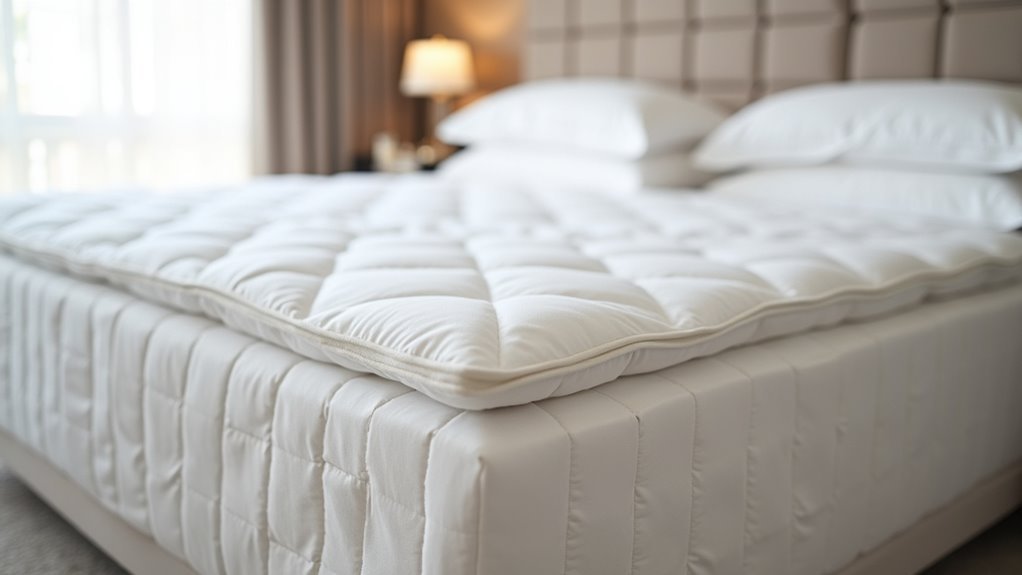

Most hotels use medium-firm hybrid or innerspring mattresses with pillow-top or Euro-top layers. These combine soft surface comfort with a supportive coil core that keeps the spine aligned and improves breathability. Pillow-top or Euro-top foams cushion shoulders and hips for pressure relief. Strong edge support and durable materials prolong mattress life in high-turnover settings. Trusted brands and commercial-grade construction are common choices for consistent guest comfort.
What Mattress Do Hotels Use?
So, what mattress do hotels use? You’ll usually find a medium-firm innerspring or hybrid bed, often topped with pillow-top comfort layers that help you feel settled in and supported.
Big brands like Serta, Sealy, and Simmons build these for hotels, so you get a familiar sleep setup almost anywhere. Hotels pick them because they handle turnover rates well and stay comfortable for many guests, from side sleepers to back sleepers.
They also work for service animals, since sturdy beds hold up to extra wear. Upon checking in, you’re stepping into a sleep style that many travelers already trust, which can make the room feel less陌生 and more like your own space.
Why Hotels Prefer Hybrid Mattresses
A hotel bed has to do a lot of jobs at once, and that’s exactly why hybrids are so popular. You want a bed that feels welcoming after a long trip, but also holds up night after night. Hybrid mattresses blend coils and comfort layers, so you get a familiar hotel feel with steady support.
They also help with temperature regulation, which matters whenever many guests sleep differently. The coil base lets air move, so the bed feels cooler and fresher. At the same time, the upper layers can improve motion isolation, so one person’s tossing doesn’t wake the other. For you, that means a smoother stay and a more restful room.
Hotels like hybrids because they fit more guests without losing that comfy, shared sense of ease.
How Hotels Balance Comfort and Support
Hotels balance comfort and support via aiming for a bed that feels inviting the moment you lie down, yet still keeps your body in a healthy position through the night.
You get that mix from a surface that cushions your shoulders and hips without letting your back sink too far.
Hotels also consider temperature regulation, so you stay cool enough to relax instead of waking up sticky and tense.
At the same time, motion isolation helps your sleep feel calm when a partner turns over.
Because guests arrive with different needs, hotels choose a feel that works for many sleepers, not just one type.
That balance lets you settle in fast, rest deeper, and feel like the room was made for you.
Common Mattress Types in Hotels
The standard hotel mattress usually lands in the medium-firm range, and that choice is no accident. You get a feel that welcomes most sleepers, whether you rest on your back, side, or stomach.
Hotels often pair coil support with comfort layers in hybrid beds, so you feel steady support without giving up softness. In some rooms, innerspring models still do the job, especially whenever a property wants that classic bounce.
You could also notice pillow-top or Euro-top styles, which add a cozy finish and support boutique comfort. A few hotels use all-foam beds, but they’re less common.
Whenever guest feedback matters, managers often choose the mattress type that feels familiar, balanced, and easy for you to enjoy night after night.
What Makes Hotel Mattresses Durable
Durability starts with what you don’t always see, and that concealed build is a big reason hotel mattresses hold up so well.
You benefit from strong coil systems, dense support foam, and tight stitching that keep the bed from sagging fast.
Hotels also use reinforced edges, so you can sit, sleep, and roll over without wearing down the sides too soon.
Then there are stain resistant covers, which help block spills and daily grime from breaking the fabric down.
Because many guests use the same mattress, makers choose materials that bounce back after pressure and heat.
Hotel Mattress Features to Look For
At the point you’re choosing a hotel mattress, start with the features that shape how it feels night after night. You want a cover that breathes, because temperature regulation helps you stay settled instead of waking up sticky or chilled.
Next, look for edge support, since it lets you sit, stretch, and sleep near the sides without that rolled-off feeling. Then check the comfort layers for a smooth, welcoming cushion that eases pressure on shoulders and hips.
You’ll also want strong motion control, so one guest’s turn doesn’t ripple across the bed. Finally, look for sturdy materials that keep the mattress feeling familiar over time. Once these features work together, you feel like you belong in the room, not just passing through.
What Firmness Hotels Prefer Most
Upon staying in a hotel, you’ll usually find a medium-firm mattress because it gives you steady support without feeling too hard.
Hotels choose this feel because it works for more guests, whether you sleep on your back, side, or stomach.
That balanced comfort helps you rest well, and it’s often the secret behind that “just right” hotel bed feeling.
Mid-Firm Comfort Level
A good hotel bed usually feels like a steady middle ground, not too soft and not too hard. You get that mid-firm feel because hotels want you to settle in fast and stay comfortable.
This firmness gives you pressure relief at your shoulders and hips, while edge support helps you feel secure as you sit or sleep near the side. You can relax without sinking too deeply, and that balanced feel makes the room feel welcoming right away.
Since you share that bed with many other guests over time, the mattress needs to stay consistent and dependable. So, a mid-firm design often becomes the best match for a stay that feels easy, restful, and familiar, almost like the room knows what you need.
Broad Guest Preference
Hotels usually pick a mattress that works for the widest mix of sleepers, so medium-firm stays at the top of the list. You get a bed that feels welcoming without making anyone feel left out.
Hotels study guest demographics and use sleep profiling to guess what most people will enjoy after a long day.
- Back sleepers often like steady comfort.
- Side sleepers want enough give for pressure points.
- Stomach sleepers usually need less sink.
That mix helps you fit in, whether you travel for work or fun. It also keeps room choices simple for the brand and familiar for you.
Whenever a hotel aims for broad guest preference, it creates a sleep space that feels easy, shared, and comfortable for almost everyone.
Balanced Support Feel
Although you could notice a soft top initially, the real goal of a hotel mattress is balanced support that feels steady, safe, and easy to relax on.
You want that middle ground because it helps your body settle without sinking too far. Hotels usually choose medium-firm builds, so you can turn over, stretch out, and still feel held. The comfort layers add a welcoming cushion, while the core keeps your spine aligned.
That mix also helps with temperature regulation, since it lets air move instead of trapping heat. Good edge support matters too, because you can sit down, lie near the side, and still feel secure.
In the end, this balanced feel helps you feel at home, even if you’re far from yours.
How Hotels Use Pillow Tops
Whenever you see a pillow top in a hotel bed, you’re usually feeling the comfort layer that sits on top of a firmer core.
It adds a softer initial touch, so the mattress feels plush without giving up support. Hotels use this layered design to help you relax faster and sleep more comfortably, even provided you’ve had a long travel day.
Pillow Top Benefits
A pillow top can make a hotel bed feel instantly more welcoming because it adds a soft, cushioned layer right on top of the mattress. You feel that cozy lift right away, and it can ease pressure relief at your shoulders and hips.
Hotels use pillow tops to help you settle in faster, so the room feels less like a stop and more like your space.
- It softens the initial touch, so you don’t feel the bed’s firmness too sharply.
- It supports temperature regulation by letting air move more freely than a dense surface.
- It helps you relax into the bed, which makes shared travel days feel a little kinder.
That balance matters whenever you want comfort without sinking too deep. It’s the kind of detail that says, “You’re welcome here.”
Layered Comfort Design
Because hotels need comfort that feels rich but still works for many kinds of sleepers, they often build pillow tops into a layered system instead of relying on softness alone.
You feel that design as soon as you lie down. The top layer cushions your shoulders and hips, while the support core keeps your body steady. Hotels often add coil zoning, so your midsection gets firmer support and your joints sink just enough. Then latex underlayers can add bounce and airflow, which helps the bed stay fresh through busy nights.
This stack lets you rest with ease, and it also helps the room feel welcoming, like it was made for you. So you get plush comfort without losing the stable, shared hotel feel people trust.
Common Mattress Sizes in Hotels
Most hotel rooms use a few standard mattress sizes, and that makes planning your stay much easier.
You’ll usually meet these choices:
- Twin or Twin XL for compact rooms and simple sleep setups.
- Queen for one or two guests who want extra elbow room.
- King for suites where room dimensions and bed placement give you more space.
Hotels match size to occupancy trends, so you won’t feel squeezed in busy seasons.
Should you be traveling with family, a bigger bed can help everyone settle in faster.
In smaller rooms, seasonal bedding and layout choices matter too, because they shape how open the space feels.
Once you know the size, you can relax sooner and feel like you picked the right room for your trip.
Which Mattress Brands Hotels Use
At the time you stay at a hotel, you’ll often find big names like Serta, Sealy, Simmons Beautyrest, and Stearns & Fostering behind the mattress. Luxury chains also team up with trusted makers to create custom sleep setups that feel smooth, supportive, and consistent.
These brands matter because hotels need beds that hold up well, sleep well, and keep you comfortable night after night.
Popular Hotel Mattress Brands
Assuming you’ve ever sunk into a hotel bed and thought, “Why does this feel so right?” the answer often starts with the brand name under the sheets.
You’re usually feeling a Serta, Sealy, Simmons Beautyrest, or Stearns & Support build chosen through hotel suppliers and brand partnerships.
These names show up again and again because they help hotels offer comfort that feels familiar, even whenever you’re far from home.
- Serta and Sealy often bring that balanced, medium-firm feel.
- Simmons Beautyrest gives you steady support with a cushioned top.
- Stearns & Support frequently adds a richer, more plush sleep.
Luxury Bedding Partnerships
Because luxury hotels want beds that feel special the moment you lie down, they often team up with trusted mattress makers to get that polished sleep experience right. You’ll see brand collaborations with names like Serta, Sealy, Simmons Beautyrest, and Stearns & Foster, and each one helps shape a bed that feels familiar yet enhanced.
These partnerships don’t stop at the mattress core. They also include textile innovation, from softer quilted tops to breathable covers that help you settle in fast. Whenever a hotel puts its logo on a sleep program, it’s really inviting you into a shared comfort style. So you’re not just booking a room; you’re slipping into a bed chosen to make you feel like you belong there.
Durable Commercial Options
- Serta gives you wide comfort and strong support.
- Sealy helps you get reliable balance for many sleepers.
- Simmons Beautyrest and Stearns & Nurture bring a polished, upscale feel.
You also benefit from replaceable toppers, which keep the bed fresh without replacing everything. That’s smart, and it helps you feel like you belong in a room that’s built to last.
How to Buy a Hotel Mattress
Shopping for a hotel mattress can feel a little overwhelming initially, but it gets much easier once you know what to look for. Start with medium-firm support, since it helps most guests sleep well. Then compare hybrid and innerspring builds, because they often give you that familiar hotel feel with lasting support.
Should you want a softer touch, look for a pillow-top or Euro-top layer. You can also check budget options without giving up comfort, especially from trusted brands like Serta, Sealy, or Beautyrest.
Next, review warranty comparisons so you know which bed protects your money best. Finally, choose a seller that shares clear specs and honest reviews. Whenever you shop this way, you’ll feel more confident and right at home.
How to Recreate the Hotel Sleep Feel
To bring the hotel sleep feel home, start with the mattress itself, since that’s the heart of the whole experience. You don’t need a full suite to feel part of that calm, welcome rhythm. Pick a medium-firm hybrid or pillow-top, then layer on soft touches.
- Use thread count sheets that feel smooth, not stiff.
- Add a fluffy duvet and two pillows for that tucked-in comfort.
- Build a simple turndown ritual: dim lights, clear clutter, and set out water.
Then keep the room cool and quiet, because hotels do that well. Whenever you make your bed with care, you create a space that feels safe, familiar, and a little indulgent. That’s how you turn bedtime into a place you actually want to return to every night.
Frequently Asked Questions
Do Hotels Replace Mattresses on a Set Schedule?
Yes, hotels usually replace mattresses on a schedule, though it isn’t universally standard. Many swap them every 5 to 10 years, depending on mattress lifespan, usage, and replacement logistics.
Can Guests Request a Different Mattress at Hotels?
Yes, you can sometimes request a different mattress at hotels, particularly for firmness preferences. Some luxury properties offer mattress swaps or adjustable bedding, but availability varies, so you should ask before you arrive.
Are Hotel Mattresses Flame-Resistant by Law?
Yes. Most hotel mattresses must meet fire safety codes, and manufacturers use material trials to prove compliance. About 100% of legally sold hotel beds in many regions include smoke barriers, so you can rest easier.
Why Do Hotel Beds Feel Softer Than They Are?
Hotel beds feel softer because you sink into layered toppers and quilted comfort layers, while mattress zoning still supports you underneath. You get that plush, welcoming hotel feel without losing the balanced support you need.
Do Boutique Hotels Use the Same Mattresses as Chains?
Not usually. You will find more brand variety in boutique hotels and they often choose custom comfort over standard chain mattresses. That means you are more likely to sink into a bespoke sleep “signature” made to feel like home.
