
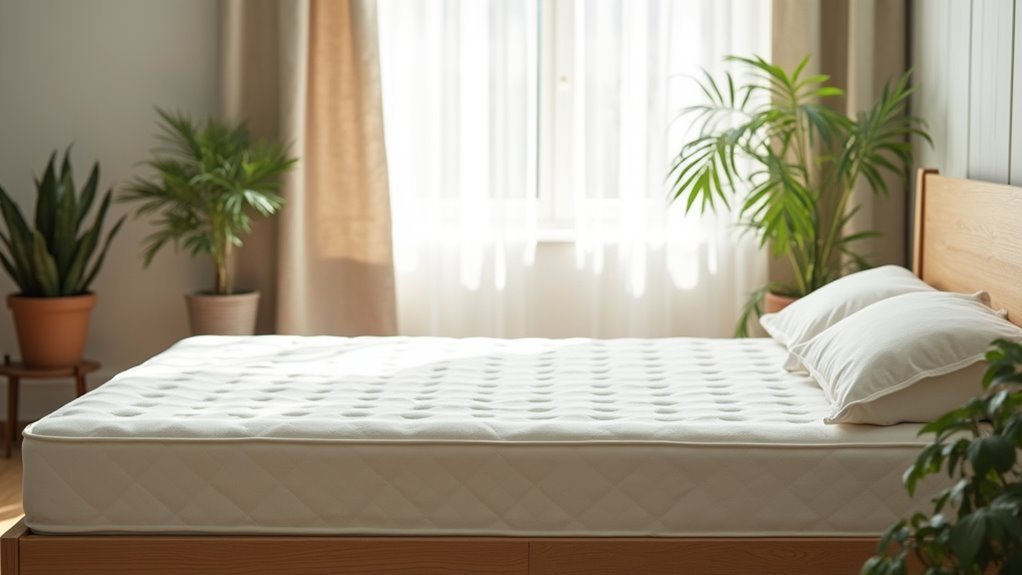

An organic mattress is a bed made from natural, certified materials like organic cotton, wool, and natural latex. It avoids synthetic foams and flame-retardant chemicals, reducing off-gassing and odors. These materials promote better breathability and moisture regulation for cooler, more comfortable sleep. Organic mattress construction often supports proper spinal alignment through responsive natural latex or zoned layers. Look for third-party certifications such as GOTS, GOLS, and GOTS-wool labels to confirm material authenticity and safe manufacturing.
What Is an Organic Mattress?
An organic mattress is a bed made with natural materials like organic cotton, wool, and latex instead of common synthetic foams and chemical-heavy fills. Whenever you choose one, you’re often choosing less chemical exposure and a cleaner feel in your sleep space. That can matter whenever you want rest that supports your body and your peace of mind.
These mattresses focus on sleep ergonomics, so they aim to help your spine stay aligned while giving you steady comfort. You might also notice a calmer, fresher bed that feels easier to trust. For many people, that sense of safety and belonging in the bedroom makes bedtime feel more personal.
Should you value comfort and a healthier routine, this kind of mattress can fit your life well.
What Materials Are in Organic Mattresses?
Organic mattresses usually start with organic latex layers, which give you gentle support without the harsh feel of many synthetic foams.
You’ll also often find natural fiber covers made from organic cotton or wool, and they can help the bed feel softer and more breathable.
To finish the build, many brands use non-toxic flame barriers so you get safer sleep without heavy chemical additives.
Organic Latex Layers
Latex often does the quiet heavy lifting inside an organic mattress. You feel its springy support right away, and you also benefit from latex durability. Makers shape it through latex vulcanization, which helps create a stable, resilient layer that keeps its bounce longer. Whenever you choose a latex bed, you join a crowd that wants comfort without the usual synthetic feel.
- It cushions pressure points.
- It stays responsive as you move.
- It can help air flow through the bed.
- It pairs well with certified organic materials.
If you’ve felt stuck between softness and support, latex can bridge that gap. It gives you a familiar, easygoing feel, so your mattress feels like it belongs in your room and in your routine.
Natural Fiber Covers
Consider the cover as the mattress’s initial handshake, because it’s the part you touch every night. Whenever you choose natural fiber covers, you invite a softer, friendlier feel into your bed.
If you choose organic cotton often leads the way because it stays light, feels clean, and works well with breathable knits that let air move. Wool can add gentle warmth control and help you stay dry through the night. These fibers also support allergen barriers, so your sleep space can feel calmer and more protected.
Because the cover sits closest to your skin, it shapes comfort right away. You want a surface that feels welcoming, not scratchy or stiff. With the right natural cover, your mattress doesn’t just look certified, it feels like it belongs in your room.
Non-Toxic Flame Barriers
Even though a mattress looks soft and simple on top, the fire barrier inside can make a big difference in what you’re actually sleeping on.
Once you choose an organic mattress, you want protection that still feels like it belongs in your home. That’s where non-toxic flame barriers help. They use chemical free barriers and plant based liners to slow flame spread without adding harsh additives.
You’ll often see:
- organic wool layers
- tightly woven cotton fabric
- plant based liners
- certified natural blends.
These materials work together so you can sleep with less worry and more comfort. They also fit the clean, shared values many shoppers want.
How Are Organic Mattresses Made?
Upon inspecting how organic mattresses are made, you’ll see that makers start with natural fibers and latex from trusted organic sources.
They then use careful production methods that limit harsh chemicals and keep the materials as clean as possible.
That way, you get a mattress that feels safer, and it’s easier to trust what’s inside it.
Natural Material Sourcing
Organic mattresses start with careful material sourcing, and that’s where their quality really begins. You want materials you can trust, and that starts with sustainability traceability and supplier transparency. Whenever brands know where each fiber comes from, you can feel more confident about what’s in your bed and what’s not.
- Organic cotton often comes from fields with strict growing rules.
- Wool might come from farms that avoid harsh chemical treatments.
- Latex can be sourced from rubber trees and checked for purity.
- Trusted suppliers share records so you’re not guessing.
This matters because your mattress should feel like part of your values, not a compromise. Whenever sourcing stays clear, you join a community that cares about cleaner choices, honest labels, and a healthier home for everyone.
Organic Production Methods
After the materials are sourced, the making process turns them into a mattress you can actually sleep on, and that process matters just as much as the fibers themselves. You want makers who use low-impact methods, because thoughtful production protects both your bed and your values.
In a real organic factory, workers keep certified cotton, wool, and latex separate from synthetic fillers. They avoid polyurethane foam and skip harsh flame retardants, which helps keep your space calmer. Many brands also choose sustainable farming partners and energy-saving equipment, so your mattress leaves a smaller carbon footprint.
Next, they press, layer, and stitch with care, then seal each part under GOTS or GOLS rules. That way, you can rest easy appreciating your mattress was made with honesty and respect.
Which Organic Mattress Certifications Matter?
The labels on a mattress can feel confusing, but the right certifications make the choice much clearer and safer for you. Look for proof, not promises, so you can join the group of shoppers who know what they’re getting. Certification transparency matters because it shows what was examined and what wasn’t.
- GOTS checks organic fibers and limits extra materials.
- GOLS helps you confirm certified latex.
- Third party audits back up the claims.
- USDA references can support GOTS-based organic claims.
When you see these marks, you know the brand did more than dress up a product with a green name. You get clearer rules, fewer surprises, and more peace of mind.
That kind of trust makes shopping feel less lonely and a lot more human.
How Do Organic, Natural, and Conventional Mattresses Compare?
As you compare organic, natural, and conventional mattresses side by side, the biggest difference usually comes down to what’s inside and how clearly the maker proves it.
Organic mattresses use certified cotton, wool, and latex, so you can trust tighter limits on chemical residues and concealed fillers.
Natural mattresses might use some of the same materials, but they don’t always meet the same standards, so you need to check labels carefully.
Conventional mattresses often rely on polyurethane foam and more chemical treatments, which can change how they feel and how they age.
Should you care about belonging to a more mindful home, look at certification, not just the word “natural.”
You’ll also want to weigh lifecycle impact, since sourcing, production, and disposal all shape the full story.
What Are the Benefits of an Organic Mattress?
An organic mattress can give you more than a clean label, because it can also make bedtime feel calmer, fresher, and a little more comforting.
Whenever you rest on natural cotton, wool, and latex, you might notice less pollutant exposure and a cleaner feel in your room. That could support your sleep hygiene and help you settle in with confidence.
- It can feel breathable and keep you cooler.
- It might cut down on unwanted chemical odors.
- It often feels supportive and cozy at once.
- It can help you feel like you belong in a healthier home.
Because you spend so many hours in bed, that gentler setup matters.
With the right organic materials, your sleep space could feel more restful and more like your own.
How Do You Choose the Right Organic Mattress?
Because shopping for a mattress can feel overwhelming, start checking what sits within it, not just what the tag says. You deserve a bed that fits your body and your values.
Look for GOTS and GOLS labels, since they help you spot real organic materials and skip greenwashing. Then compare cotton, wool, and latex to see what feels best for you. Wool can help with cooling, while latex adds bounce and support.
Next, make sure the mattress matches your sleep style, whether you need firmer edges or a softer feel. A sleep trial matters too, because comfort can surprise you at home.
Finally, use budget planning to balance quality and price, so you can join the group of sleepers who rest easy without buyer’s remorse.
Frequently Asked Questions
Can Organic Mattresses Be Customized for Different Sleep Positions?
Yes, you can customize organic mattresses for your sleep position by choosing firmness, latex layers, and coil support. You’ll get better pressure relief or edge support, so you can sleep comfortably and feel understood.
How Long Does an Organic Mattress Typically Last?
Typically, you’ll get 8 to 15 years from an organic mattress, sometimes longer. Its natural durability depends on materials and craftsmanship, and your lifecycle expectations improve once you rotate it, protect it, and choose certified components.
Are Organic Mattresses Suitable for Adjustable Bed Frames?
Yes, you can use many organic mattresses with adjustable bed frames, especially flexible latex or coil designs. Check adjustable compatibility initially. You will also enjoy better motion isolation, so you and your partner can rest comfortably together.
How Should You Clean and Maintain an Organic Mattress?
You’ll keep it fresh like a well tended garden: vacuum regularly, use natural cleaners, and apply spot treatments gently. Rotate it, air it out, and use a breathable protector so you’re caring for it together.
Do Organic Mattresses Require a Special Foundation or Base?
No, you usually don’t need a special base, but you should use sturdy, vented slats or an adjustable boxspring. They will support your mattress, improve airflow, and help you feel confident and comfortable.
