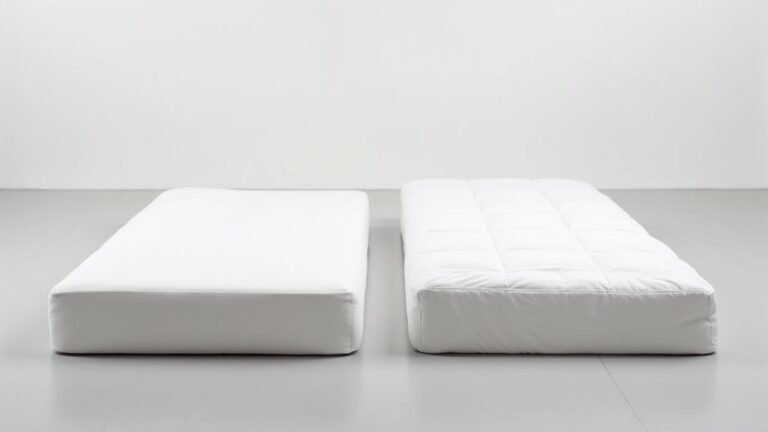

A hybrid mattress generally lasts about 6 to 8 years. Proper support, a sturdy foundation, a mattress protector, and regular rotation can extend lifespan to 7 to 10 years. Coil quality, foam density, sleeper weight, and sleep patterns all influence durability. Signs of wear include sagging, reduced support, and new noises from coils. This guide explains what shortens lifespan and practical steps to keep a hybrid mattress comfortable longer.
How Long Do Hybrid Mattresses Last?
Generally, hybrid mattresses last about 6 to 8 years with regular use, and many shoppers can expect a useful life closer to 7 to 10 years provided the bed gets decent care.
You’ll usually see better results whenever you choose strong materials, check eco certifications, and keep the mattress on a solid base.
Because hybrids mix foam and coils, both parts affect how long the bed feels comfy and supportive.
If you’re hoping your room still feels inviting, watch how the mattress holds up with your bedroom aesthetics too.
A sagging bed can throw off the whole space, even whilst your sheets look great.
With regular rotating, a protector, and clean care, you can help your mattress stay in the comfort zone longer and sleep with your people-level peace intact.
Hybrid Mattress Lifespan by Type
At the time you look at a hybrid mattress according to type, the coil core usually sets the support lifespan, while the foam layers shape how long it stays comfy.
You might notice the coils hold up well for years, but softer foams can degrade sooner and change how the bed feels.
Coil Support Duration
Although a hybrid mattress can feel sturdy at initially, the coil support is often the part that decides how long it really stays comfortable. You rely on those springs for lift, so their coil longevity shapes your nights. Good coils keep you feeling centered, while weak ones can make the bed lose its friendly feel.
- Thicker steel usually holds up better.
- Better edge support can slow wear.
- Moisture can speed spring corrosion.
- Regular rotation helps the load stay even.
If you share the bed, the coils work harder, so quality matters even more. Whenever the support stays firm, you keep that easy, at-home feeling. Whenever it softens, you might notice more motion and less trust in the mattress.
Foam Layer Longevity
Foam layers often decide how long your hybrid mattress stays soft, supportive, and easy to sleep on.
You’ll usually get more life when the foam resists body impressions and keeps its bounce. High-density foams can hold up for years, while softer foams might flatten sooner, especially with nightly use.
Temperature sensitivity also matters because heat can make some foams feel weaker or clingier over time. That’s why your bed could age differently from a friend’s, even assuming you bought similar models.
Manufacturing variations can also change durability, so one batch might last longer than another. Should you notice deep dips, a tired feel, or less pressure relief, the foam layer could be wearing out faster than the coils underneath.
What Wears Out a Hybrid Mattress Faster?
Heavy daily use can wear out your hybrid mattress faster because your body presses the foam and coils down night after night.
Should your mattress also have weak support layers, it might sag sooner and stop giving you the comfort you need.
That can leave you waking up sore, and nobody wants a bed that quits before you do.
Heavy Daily Use
Nightly use can wear a hybrid mattress down faster because every sleep cycle presses on the foam and coils in the same spots. Provided you sleep there every night, those materials don’t get much time to rebound. That’s why a bed in a busy home can age faster than one used only on weekends.
Whenever you work the night shift or grab commuter naps, your mattress could also see odd-hour use that adds up quickly.
- Your body leaves the same pressure marks.
- Heat and moisture build up more often.
- Movements during sleep flex the coils again and again.
- Shared use means more total load each day.
Poor Support Layers
Should edge padding collapse, you can feel less stable near the sides, which makes the whole mattress seem smaller and less secure.
Weak center support can also bend cover integrity, letting stitches pull and fabrics stretch. You deserve a bed that holds you well, not one that gives up prematurely.
How Hybrid Mattress Materials Affect Durability
A hybrid mattress lasts or wears out based on how its parts work together, so the materials inside matter a lot more than many people expect. Whenever you choose stronger foams, sturdy coils, and durable cover materials, you give your bed a better chance to stay supportive and comfortable for years. Good manufacturing standards also matter, because careful building helps each layer stay bonded and balanced.
- Dense foam resists premature sagging.
- Tempered coils keep their bounce longer.
- Breathable covers help protect inner layers.
- Tight stitching supports daily use.
Together, these choices help you feel secure in your sleep space, and that matters whenever you want a bed that truly fits your life. Even small upgrades can make a real difference, so you’re not just buying comfort, you’re joining a smarter crowd of sleepers.
Signs Your Hybrid Mattress Is Wearing Out
As your hybrid mattress wears out, you could start to feel sagging support that leaves you sinking in the middle or rolling toward the edge.
You might also notice an uneven surface that no longer feels steady under you, and that can make sleep feel a lot less restful.
Should the springs start to squeak or creak, that’s another clear sign your mattress is getting tired and isn’t backing you up like it should.
Sagging Support
Once your hybrid mattress starts to sag, you usually feel it before you see it. You could sink in more deeply, lose steady support, and wake up feeling less refreshed.
That change often shows up near the edges too, where edge resilience drops and the bed feels weaker when you sit or lie down. Should the cover starts to look loose, stretched, or worn, cover degradation can hint that the layers below are aging as well.
- Your body could feel less lifted.
- You might notice softer support at the sides.
- You may sleep better on some nights than others.
- You can feel less settled after a full night.
Whenever these signs build up, your mattress is asking for help, and your sleep crew deserves better.
Uneven Surface
Once a hybrid mattress starts to wear out, an uneven surface often shows up right after sagging does. You could notice small hills, dips, or lumpy spots where you sleep most. Those surface irregularities can make your body feel off balance, even when the bed still looks fine from far away.
As the foam loses mattress cushioning, the top can feel patchy instead of smooth and welcoming. Then you might roll toward one side or wake up feeling like you slept on a tilted raft, which no one signed up for. To check, press across the surface with your hands and feel for spots that sink differently. Should the texture keep changing under you, your mattress could be telling you it’s time for a new one.
Noisy Springs
Sometimes the initial sign that your hybrid mattress is wearing out is a squeak, creak, or little springy groan as you move. You might hear metal squeaks when you roll over, and that sound can make bedtime feel less cozy. Should you notice coil rattling, your support core could be loosening or wearing down.
- Listen near the edges and center.
- Press down gently and hear whether noise grows.
- Check whether the sound matches your weight shifts.
- Rotate the mattress and see whether it quiets.
These noises often show up with age, after many nights of shared use and body pressure. You don’t have to panic, but you should pay attention. Should the sounds keep getting louder, your mattress mightn’t be giving you the calm, steady support your body wants.
How Sleep Position Affects Mattress Longevity
Your sleep position can speed up wear in different parts of a hybrid mattress, because your body doesn’t press down on the surface in the same way every night.
Should you sleep on your side, your shoulders and hips create deeper dips, so pressure mapping matters more there. Back sleepers spread weight more evenly, which can help the foam and coils last longer. Stomach sleepers often push harder through the middle, and that can strain support over time.
Whenever you switch positions, you also spread stress across more of the bed, which gives your mattress a fairer chance to stay comfortable. You don’t need perfect habits, just steady ones that let your bed age evenly and keep your sleep space feeling like it still fits you.
How Body Weight Changes Mattress Lifespan
Heavier body weight can quietly shorten a hybrid mattress’s life because it puts more pressure on the foam and coils every night. That extra load changes sleep biomechanics, so your bed works harder to support you. Whenever pressure distribution stays uneven, the comfort layers can soften faster and the support core can lose its spring. You’re not doing anything wrong; your body just asks more from the mattress.
- You might notice deeper body impressions sooner.
- Edge support can feel weaker with time.
- Foams might compress faster under constant use.
- Coils can lose firmness as stress builds.
If you share a bed, that weight adds up too. Still, a well-made hybrid can handle daily use whenever it matches your body better, helping you feel steady, supported, and at home in your sleep.
Best Ways to Make a Hybrid Mattress Last
A heavier body can make a hybrid mattress wear out faster, but smart care can slow that down and keep the bed feeling good for longer.
Start with a sturdy base, because strong support helps the coils and foam share weight more evenly.
Next, use a mattress protector to block sweat and spills, and keep the surface clean so materials stay fresh.
Good temperature regulation also matters, since less heat buildup can help foam hold its shape.
Whenever you sleep, try gentle alignment tips like keeping your head, hips, and knees in line with pillows that fit your body.
Finally, avoid jumping on the bed, since that kind of fun can be hard on both comfort and support.
When to Rotate or Flip Your Mattress
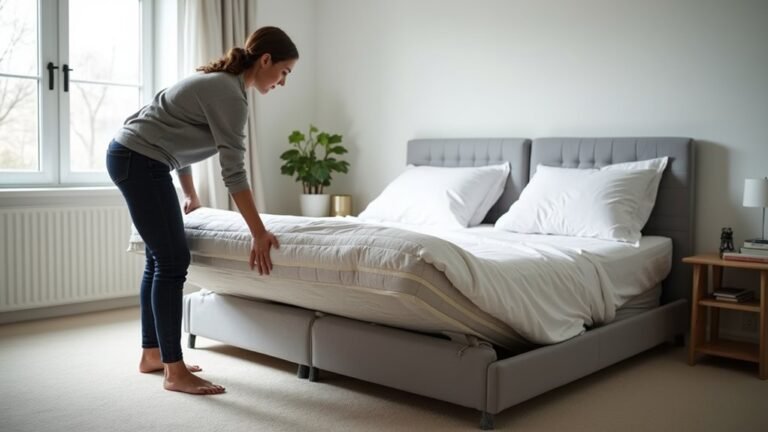
Most hybrid mattresses need a little turning now and then, because wear doesn’t spread out evenly as you sleep. You’ll help your bed stay comfy longer whenever you make rotation part of your seasonal rotation, like spring cleaning for your sleep space. Should your model be one-sided, skip flipping and just rotate it end to end. In case it’s flippable, you can alternate sides with care.
- Rotate every 3 to 6 months
- Check edge maintenance after heavy use
- Turn it more often in case you sleep alone in one spot
- Keep the schedule simple so you’ll actually stick with it
That small habit keeps pressure from piling up in one place. It also helps you feel like you’re caring for the same bed as everyone else who values a steady night’s rest.
How to Tell It’s Time to Replace It
As your hybrid mattress starts sending clear warning signs, it’s usually telling you it’s near the end of its useful life.
Should you wake up stiff, feel dips under your hips, or notice squeaks from the coils, trust those clues. Your bed should support your body, not fight it.
Whenever comfort fades and you toss and turn more, your sleep hygiene takes a hit. You might also see poor bedroom ergonomics at work, especially should your spine feel out of line in the morning.
Another sign is that fresh sheets and a good routine still don’t help. At that point, your mattress isn’t just old. It’s no longer giving you the steady, cozy support your nights deserve.
What to Expect From a Hybrid Mattress Warranty
Upon purchasing a hybrid mattress, the warranty can feel like a safety net, and that’s a good thing to have.
You usually get a set period for defects in foam, coils, or stitching, but coverage limits can trim what you expect.
Here’s what to watch for:
- Structural sagging beyond the stated depth
- Broken coils or torn seams
- Stains or misuse that voids protection
- Prorated replacements after the initial years
You’ll often need proof of purchase and photos, so keep your records close.
Should your bed starts failing prematurely, the warranty can help you feel less alone in the process.
Still, read the fine print, because each brand sets its own rules.
That way, you know whenever support is real and when it stops.
Frequently Asked Questions
How Often Should I Vacuum a Hybrid Mattress?
You should vacuum your hybrid mattress monthly; it’s like giving your bed a tiny spa day. Use spot treatments for spills, and you will keep it fresh, comfy, and part of your sleep sanctuary.
Can a Mattress Protector Improve Hybrid Mattress Lifespan?
Yes, you can improve your hybrid mattress’s lifespan with a protector. It adds stain protection, helps with temperature regulation, and keeps moisture and dirt out, so you will protect your bed and feel more at home.
Do Hybrid Mattresses Need a Specific Bed Frame?
Absolutely—you can’t just plop a hybrid mattress on any old surface and hope for the best. You will want a sturdy bed frame with proper weight distribution and frame ventilation, so you feel supported and part of a cozy sleep setup.
Will Room Humidity Affect a Hybrid Mattress?
Yes, room humidity can affect your hybrid mattress. You will want good temperature regulation and mold prevention, because excess moisture can trap heat, encourage mildew, and make your bed feel less fresh, less supportive, and less inviting.
Can Pets Shorten the Life of a Hybrid Mattress?
Yes, pets can shorten your hybrid mattress life. Pet hair traps dirt, and chew damage can ruin foam or coils. Use a protector, clean regularly, and you will keep your bed feeling comfortable longer.