
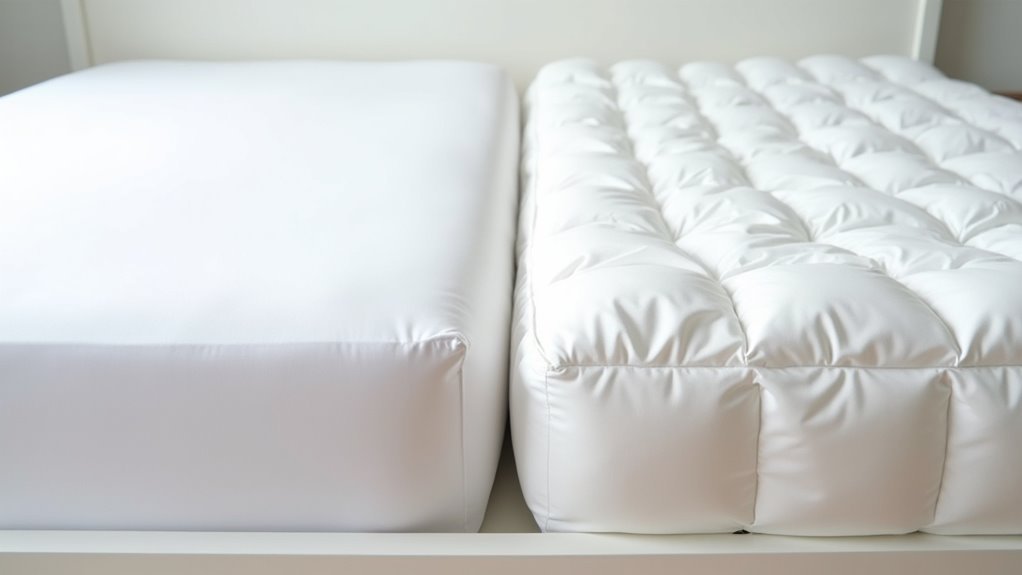

A mattress protector shields your mattress from spills, stains, and allergens. A mattress pad adds cushioning and can change mattress firmness or softness. Protectors are thin and focused on defense, while pads are thicker and focused on comfort. Using both keeps a mattress clean and improves sleep comfort at once. Choose a protector for longevity and a pad for extra plushness.
Mattress Protector vs Mattress Pad: Main Differences
Although they sound similar, a mattress protector and a mattress pad do very different jobs.
You choose a mattress protector whenever you want a thin shield against spills, sweat, stains, and allergens. You choose a mattress pad whenever you want more softness and a little extra cushioning.
Because pads add a quilted layer, they can improve a firm bed and offer some noise reduction, too. Protectors usually stay flatter, so they change the feel less and often support better fabric breathability.
In case you share a bed, have kids, or just want your mattress to last, the protector keeps things cleaner. In case you want a cozier sleep surface, the pad helps you settle in.
Many people use both, and that works well.
What Is a Mattress Protector?
You can count on it to block spills, sweat, dust, and allergens while staying almost concealed under your sheets. That means you get peace of mind without changing how your bed feels much.
Many protectors also support fabric durability, so your mattress can stay cleaner for longer. In the event you share your bed with kids or pets, this layer can feel like a smart team player.
For best results, follow simple installation tips: fit it snugly, smooth the corners, and check the seal after washing. Then you’ll sleep easier, aware your bed’s protected and your space feels cared for.
What Is a Mattress Pad?
Consider a mattress pad as the comfort layer your bed has been waiting for. You slip it under your sheets, and it adds a softer, cozier feel without changing your mattress too much. In this quick overview functions, you get gentle cushioning, a bit of warmth, and a smoother sleep surface. That’s why many people like it for firm beds or older mattresses.
- You can enjoy a plusher feel.
- You can choose seasonal variations for cooler or warmer nights.
- You can give your bed a more welcoming, lived-in comfort.
Unlike a protector, a pad leans into comfort primarily, so it helps you feel settled and at home. Should you want your bed to feel more like your space, a mattress pad can fit right in.
When a Mattress Protector Makes Sense
A mattress protector makes sense whenever you want to guard your bed against spills, stains, and everyday messes prior to them soaking in.
It also helps should you deal with allergies or dust, since it adds a simple barrier that can keep irritants out of your mattress.
In case you have kids or pets, you’ll probably feel better appreciating your bed has that extra layer of defense.
Spill And Stain Defense
Spills happen fast, and that’s exactly at which point a mattress protector proves its worth. You don’t want coffee, soup, or a midnight water glass soaking into your bed. A protector gives you a thin, steady barrier, so the mess stays on top while you clean it up with less stress.
- You can trust absorbency evaluation when you compare options.
- Stain resistant treatments help some fabrics resist marks.
- You’ll feel calmer appreciating cleanup won’t ruin your mattress.
A mattress pad could add softness, but it usually can’t match this level of spill defense. In case you share a home with kids, pets, or clumsy moments, a protector fits right in. It helps you protect your space and feel like you belong in a bed that’s ready for real life.
Allergy And Dust Shield
Should allergies make your bed feel less like a safe place and more like a dusty trap, a mattress protector can help bring some relief.
You get a thin barrier that sits close to the mattress and keeps dust, dander, and tiny irritants from settling in. Whenever you choose hypoallergenic fabrics, you can rest easier because the surface feels cleaner and kinder to your skin.
Good airflow management also matters, since it helps the protector stay breathable instead of stuffy. That means you can sleep without feeling boxed in through extra heat.
In case you want a bed that feels like yours again, this simple layer can make your space calmer, fresher, and a little more welcoming every night.
Child And Pet Protection
Whenever kids or pets share your bed, a mattress protector starts to feel less like a nice extra and more like a quiet necessity. You deal with spills, diaper leaks, muddy paws, and the odd bedtime snack crumb, so you need a barrier that works fast and stays calm under pressure. Unlike a mattress pad, which mainly adds softness, a protector helps guard against stains and moisture during stain resistant training.
- You keep cleanup simple after messy mornings.
- You protect the mattress from repeated accidents.
- You choose pet safe fabrics that feel gentler on busy skin.
That kind of protection helps you feel part of a home that can handle real life. And whenever your bed stays fresher, you can relax with your crew without worrying about the next surprise.
When a Mattress Pad Is the Better Pick
In case you want your bed to feel softer without making a big change, a mattress pad can be the better pick.
It adds a comfy layer that can ease a firm mattress and make sleep feel more inviting.
You’ll also get a little protection, so it’s a practical, budget-friendly upgrade whenever you want comfort to come first.
Added Comfort Layer
A mattress pad earns its place whenever your bed feels a little too hard, too flat, or just plain tired. You get a softer surface without changing your whole setup, and that can make bedtime feel more welcoming.
It’s the better pick whenever you want pressure relief on your shoulders and hips, plus a bit of temperature regulation from cushioned materials.
- It adds a cozy, quilted feel.
- It can soften a firm mattress.
- It helps you settle in more easily.
If you’ve been sleeping on the same mattress for years, a pad can give you a small but real lift. You won’t get the heavy barrier of a protector, but you’ll feel more comfort right away. That matters whenever you want your bed to feel like yours again, not just a place to crash.
Minor Mattress Protection
Even though a mattress pad isn’t built for heavy-duty defense, it can still offer light protection that helps in everyday life.
You might like it whenever you want a little extra cover from sweat, small spills, and daily wear without changing how your bed feels too much.
Its quilted layers can also add moisture wicking, which helps you stay drier through the night.
At the same time, the softer surface can support pressure redistribution, so your body gets a more relaxed feel.
In case you share your bed with kids, pets, or a partner, that gentle buffer can feel reassuring.
You get comfort, a modest shield, and a cozy setup that still feels like home, not a hospital room.
Budget-Friendly Upgrade
Whenever you want a softer bed without spending a lot, a mattress pad can feel like a smart win. You get a cozy upgrade, and you stay within a budget that fits real life. Should you’re comparing a mattress protector vs mattress pad, this is where the pad shines for comfort-first shoppers.
- You can use discount strategies during sales or bundle deals.
- You can check thrift finds for gently used pads with clean, intact stitching.
- You can refresh a firm dorm bed without buying a pricier topper.
A pad won’t block spills like a protector, but it can make your bed feel more welcoming tonight.
Were you want your room to feel like it belongs to you, a pad helps you get there fast, without the big spend.
How Each One Changes Bed Feel
The biggest change you’ll notice comes from the mattress pad, not the mattress protector. A pad adds softness, so your bed feels plusher right away. It can also improve temperature regulation, thickness perception, pressure redistribution, and edge support a little. A protector stays almost invisible, so you still feel like yourself in bed.
| Item | Feel change | Best for |
|---|---|---|
| Mattress pad | Softer, cushier | A firmer bed |
| Mattress protector | Barely noticeable | Keeping the same feel |
| Both together | Balanced comfort | People who want a cozy, protected setup |
Should you enjoy a gentle hug from your bed, the pad helps you belong to that cozier feel. In case you want your mattress to stay familiar, the protector keeps things steady.
Protection Levels for Spills and Allergens
Now that you know how each one changes bed feel, it helps to look at what they actually block out. A mattress protector gives you the stronger shield, so you can relax after a spill or sneeze attack. It helps with liquid, stains, dust, and common allergens, which makes your bed feel like part of your safe zone. A mattress pad offers some defense too, but it’s lighter, so it’s better for small mishaps than big ones.
- Use spill response strategies fast whenever drinks tip over.
- Choose a protector provided allergies keep joining your nights.
- Rely on allergen screening methods in case you want proof of coverage.
In case you want your bed to stay fresh and your sleep circle to stay comfortable, the protector usually does more heavy lifting.
Materials That Affect Comfort and Protection
A few key materials can change how a mattress pad or protector feels and how well it works, so it helps to look past the label and check what’s inside.
You’ll often see cotton, polyester, or fiber blends, and each one shifts the feel in a small but real way. Cotton can breathe well and feel familiar, while polyester often adds strength and helps keep the product light.
Should you want extra comfort, quilted fills and cooling infills can soften pressure and help you stay less sweaty at night.
On the protection side, thin barrier layers matter most, since they block moisture and dust without adding bulk. So you may pick a bed layer that matches your sleep style and still feels like it belongs in your room.
Can You Use Both Together?
Yes, you can use both together, and for many sleepers, that combo makes a lot of sense. You get a soft, cozy layer plus a strong shield for your mattress, so you don’t have to pick one need over the other.
- Put the protector on to begin for the barrier.
- Add the pad above it for comfort and Noise reduction.
- Tuck your sheets over both layers so they stay put.
That Layering order helps you keep spills, sweat, and allergens away from the mattress while still making the bed feel gentler. Should your bed feels a little too firm, this setup can help you sleep more easily without losing protection.
It’s a simple way to make your bed feel like yours.
How to Choose the Right Fit
As you’re choosing the right fit, start with what your bed actually needs, because the best choice depends on your goal more than the label on the package. Should you want softness, look for a mattress pad that matches your size guide and adds a little cushion.
In case you want spill protection, choose a mattress protector with the right fit depth so it hugs your mattress without slipping. Check your mattress height, especially if you use a pillow-top or an extra-deep bed. Then compare the product’s pocket range before you buy.
You’ll feel more at home whenever the fit looks neat and stays put, not unless you keep tugging at corners at midnight. That small detail can make your whole bed feel calmer.
Care, Cleaning, and Replacement Tips
You should wash your mattress protector or pad on a regular schedule so dirt, sweat, and spills don’t build up and wear it out prematurely.
After cleaning, let it dry fully on low heat or air dry it, because leftover moisture can lead to musty smells or damage the material.
You’ll know it’s time to replace it once the fabric thins, the waterproof layer fails, or it stops fitting snugly and doing its job.
Cleaning Frequency
Often, the easiest way to keep a mattress pad or mattress protector in good shape is to stay ahead of the mess instead of waiting for it to build up. For cleaning frequency, check the care tag initially, then match your routine to how much you use the bed. In most homes, seasonal washing works well, and stain prevention starts with quick spot checks after spills or sweat.
- Wash a protector more often provided you eat in bed or have kids.
- Clean a pad once it starts to feel dusty, flat, or stale.
- Freshen both sooner during allergy season or after illness.
You’ll feel more settled whenever your bedding stays clean, and that small habit can make your whole bed feel more like your own.
Drying Best Practices
Once your mattress pad or protector is clean, drying it the right way keeps it from shrinking, warping, or holding onto that damp, musty smell nobody wants in a bedroom. You want a gentle process that protects the fabric and keeps your bed feeling fresh.
| Method | Best for | Tip |
|---|---|---|
| Air dry | Most pads and protectors | Lay it flat or hang it so air moves around it. |
| Low heat tumble | Quick drying | Use a low setting and pull it out before it gets too warm. |
| Finish well | Both | Make sure every layer feels dry before you put it back on. |
If you rush this step, you can trap moisture inside. That’s why patience matters. After washing, smooth it out, give it space, and let it dry fully so it can keep doing its job.
When To Replace
Whenever a mattress pad or protector starts looking tired, losing its shape, or no longer washing up well, it’s usually time to contemplate about a replacement. You don’t need to guess. Watch for age indicators like thinning fabric, leaking seams, yellow stains, or a stiff feel that won’t go away. These signs often mean the barrier isn’t doing its job, and your bed deserves better.
- In case water soaks through, replace it soon.
- In case the elastic slips and bunches, swap it out.
- In case odors stay after washing, it’s time.
For protectors, replacement matters most because warranty implications can show up after a spill or stain. For pads, worn padding can flatten your comfort fast. Should uncertainty arise, trust your senses and upgrade with confidence.
Frequently Asked Questions
How Do Mattress Protectors Affect Bed Height?
Mattress protectors usually add very little height, so you will not notice much height change. If you stack layers, they sit thinly under sheets and barely affect your bed’s overall profile or feel.
Do Mattress Pads Make Sheets Fit Differently?
Yes, they can. If you add a thicker pad your sheets might feel tighter or shift differently, and the fabric texture and temperature regulation can change too. You will likely notice a cozier, more fitted sleep.
Which Is Quieter During Movement, a Pad or Protector?
A mattress pad is usually quieter during movement because its soft material cushions rustling better. You’ll likely notice lower noise levels with a quilted pad, while a protector can sound crinklier, especially if it is waterproof.
Are Mattress Pads Washable Like Protectors?
Yes, you can usually wash mattress pads, though care varies by material. Like a cozy shield, they are often machine washable, but check labels. You will keep allergen barriers and temperature regulation working better when you clean them regularly.
Can Either One Help Extend Mattress Lifespan?
Yes, both can help extend your mattress’s lifespan, but you’ll get the biggest lift from a protector. It fights spills, stains, and allergens, while a pad adds comfort and some temperature regulation.
