
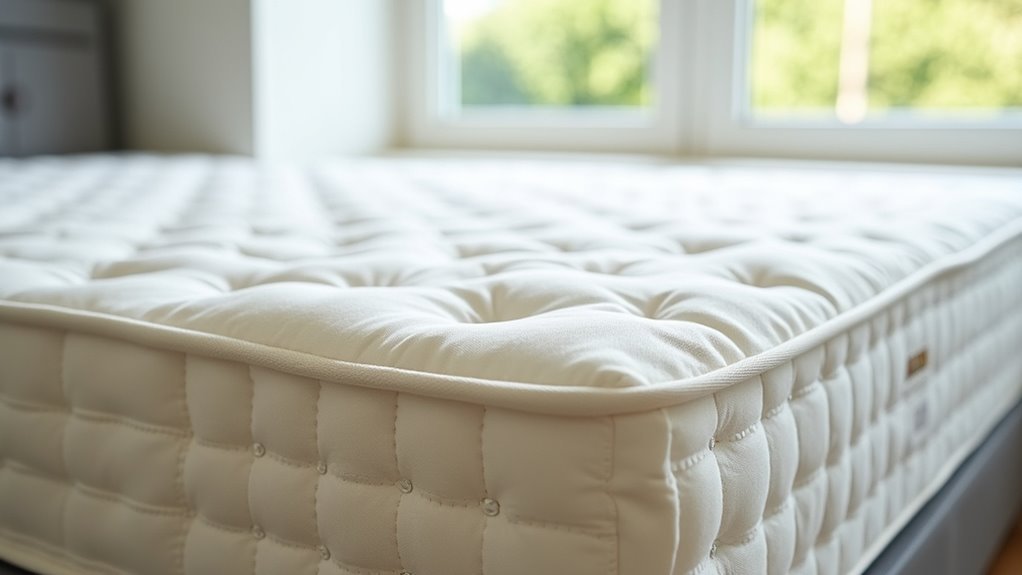

A pillow top mattress has an extra soft, cushioned layer stitched onto the top of a firm support core. This design provides immediate pressure relief for shoulders and hips while retaining underlying support. Materials inside the pillow top—foam, latex, fiber, or down alternatives—determine feel, breathability, and durability. Thicker, denser fillings generally last longer and offer deeper cushioning. Choosing the right pillow top depends on sleep position, body weight, and temperature preferences.
What Is a Pillow Top Mattress?
This style usually sits on an innerspring or hybrid base, and the cushioned surface helps your shoulders and hips relax, especially should you sleep on your side. Whenever you compare brand comparisons, you’ll notice some feel smoother and others feel more buoyant, so your best match depends on how you like to rest.
It also adds seasonal comfort, since the softer top can feel welcoming in cool weather and still breathable enough for many sleepers. In case you want a bed that feels inviting and familiar, this design can help you feel at home.
What’s Inside a Pillow Top Mattress?
Inside a pillow top mattress, you’ll usually find more than one comfort material working together to create that soft, cushioned feel you notice right away. You’re not just resting on fluff. You’re sinking into layers built for comfort and support.
| Material | What it adds |
|---|---|
| Memory foam | Gentle contouring |
| Latex | Springy support |
| Cotton | Breathable softness |
| Wool | Cozy cushioning |
| Fiberfill | Plush loft |
These manufacturing materials sit above the support core, usually an innerspring or hybrid base. The stitching keeps the pillow top in place, so you get a steady surface each night. That fixed design can affect layer durability, but it also gives you a familiar, welcoming feel. Should you love a bed that feels warm, plush, and easy to relax into, this setup could feel like home.
Pillow Top Mattress vs. Euro Top
As you compare a pillow top mattress vs. a Euro top, the initial thing you’ll notice is that both aim to soften the bed, but they don’t look or feel quite the same.
A pillow top usually sits on the surface like a plush cushion, so you can often spot seam visibility around the edge. A Euro top tucks its padding under the cover, which gives it a flatter, cleaner look. That difference can change how the bed feels to you, too. Pillow tops often feel plusher right away, while Euro tops can feel a bit more balanced and stable.
Should you care about edge support, a Euro top might feel firmer around the sides, whereas a pillow top can feel softer and more cloud-like.
Who Should Sleep on a Pillow Top Mattress?
Comfort matters most whenever your body needs real relief, and that’s where a pillow top mattress can feel like a kind choice.
You might fit this style in case you like a softer surface that eases pressure on your shoulders and hips.
Side sleepers often feel at home on it, and combination sleepers could enjoy its gentle cushion too.
In case you’re an older adult, that extra padding can feel welcoming as getting settled matters.
You might also like it in case you want a bed that feels cozy without losing the steady support underneath.
Still, hot sleeper considerations matter, so you should look for breathable materials should you run warm at night.
As soon as you want softness, comfort, and a more inviting sleep space, this mattress can suit you well.
Benefits of a Pillow Top Mattress
One of the biggest benefits of a pillow top mattress is the way it softens the feel of your bed without taking away the support underneath. You get a gentler surface that hugs your body, so your shoulders and hips can rest easier.
That extra layer can bring real pressure relief after a long day, especially provided you sleep on your side or like a cushiony feel. It also adds luxurious comfort that can make bedtime feel more inviting and restful.
Because the padding is built in, you enjoy a smooth, even surface that stays in place. So assuming you want a bed that feels welcoming, cozy, and easy to settle into, a pillow top mattress can help you feel right at home.
Drawbacks of a Pillow Top Mattress
Still, a pillow top mattress isn’t the right fit for everyone, and the same softness that feels lovely initially can create real problems over time.
You could notice increased sagging because the extra cushioning takes more stress than the support core alone. That can leave you feeling uneven, especially when you share the bed and want steady comfort night after night.
You might also deal with cleaning challenges, since the sewn-on layer traps dust, sweat, and crumbs more easily than a flat surface. The plush top can wear faster too, so the bed could lose that cozy feel sooner than you’d like.
Should you love a soft, wrapped-in feeling, that’s okay. Just know the comfort can ask more from you, and your mattress, than it initially seems.
How to Choose the Right Pillow Top Mattress for You
Start with how you sleep, because your position changes the kind of pillow top that will feel best. Should you sleep on your side, you’ll usually want more cushioning for your shoulders and hips, while back or stomach sleepers often need a firmer feel so you don’t sink too far.
Then check the support under the soft top, since the right balance of plush comfort and steady support can make the mattress feel just right for your body.
Sleep Position Needs
Choosing a pillow top mattress becomes much easier whenever you match it to how you sleep, because your body asks for different support in different positions.
In case you’re a side sleeper, you’ll usually like the extra cushion around your shoulders and hips, since that softer top can help you feel less pinched and more at ease.
Should you’re a combo sleeper, look for a pillow top that lets you shift without feeling stuck in one spot.
Back sleepers often enjoy a balanced feel that keeps the surface comfortable without letting it sink too deeply.
Stomach sleepers usually need less plushness, so they can avoid that “sinking into a cloud” feeling.
Whenever you choose with your sleep style in mind, you’ll feel more at home in bed.
Firmness And Support
So, look for a mattress that matches your body weight and sleep position. Side sleepers often want more give, while back and stomach sleepers usually need more lift. Check the edge support too, since weak edges can make the bed feel smaller. Also, ask how the comfort layer holds up over time, because long term sagging can steal the feel you liked in the beginning.
Upon balancing softness with structure, you find a bed that feels like it was made for you.
How to Care for a Pillow Top Mattress
A pillow top mattress can stay cozy for years provided you care for it the right way, and fortunately most of the work is simple.
Use these maintenance tips to protect the plush layer and keep your bed feeling like home.
- Rotate your mattress every 3 to 6 months so the cushioning wears evenly.
- Use a breathable protector to guard against sweat, spills, and dust.
- For stain removal, blot fast with mild soap and cool water, then let the area dry fully.
You should also vacuum the surface gently to lift dust and crumbs.
Don’t jump or sit on the same edge every day, because that can flatten the top faster.
With a little steady care, your mattress keeps its soft, welcoming feel, and you’ll rest easier in a bed that still feels made for you.
Frequently Asked Questions
How Long Does a Pillow Top Mattress Usually Last?
You’ll usually get 7 to 10 years, though your durability expectations should hinge on care and use. Watch for material breakdown in the plush top; once it sags, your cozy haven starts feeling less supportive.
Can You Add a Pillow Top to Any Mattress?
Not really. You cannot permanently add a pillow top to every mattress. You can use add-on toppers for DIY cushioning, though, if you want softer comfort and a cozier, more supportive sleep feel.
Do Pillow Top Mattresses Need Special Sheets?
No, you usually don’t need special sheets, but you might want deep pocket ones for a snug fit. Pillow tops can work with regular linens, yet fitted covers and high loft protectors help keep you comfortable, supported, and secure.
Are Pillow Top Mattresses Good for Back Pain?
Yes, pillow top mattresses can help your back if you need pressure relief and better spinal alignment. You will often feel more cushioning at your shoulders and hips, but you still want enough support for your body.
Can Pillow Tops Be Flipped or Rotated Regularly?
Usually you can’t flip pillow tops, but you should rotate them regularly. I once rotated mine monthly, like turning a garden bed; it kept edge support steadier and helped cooling technology breathe better.
